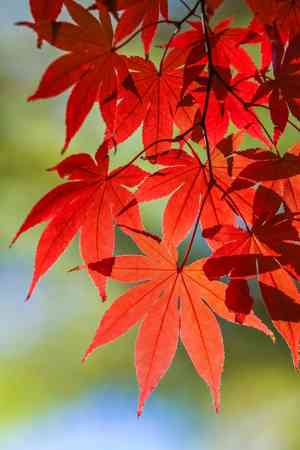
Japanese maple (Acer palmatum)
Also known as: Palmate maple
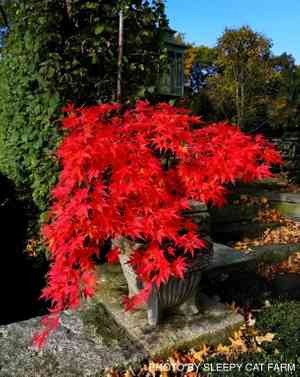
The Japanese Maple (Acer palmatum) is a woody plant native to East Asia, known for its distinctive hand-shaped leaves with five-pointed lobes. It has been cultivated in Japan for centuries, particularly for bonsai. Additionally, its branches and leaves are utilized in traditional Chinese medicine.
In This Article
Attributes of Japanese maple
Lifespan
Perennial
Plant Type
Tree, Shrub
Plant Height
4 m to 15 m
Spread
6 m
Leaf Color
Green Red Orange Yellow Variegated Gold Purple Brown
Flower Size
6 mm to 8 mm
Flower Color
Red Purple
Images of Japanese maple
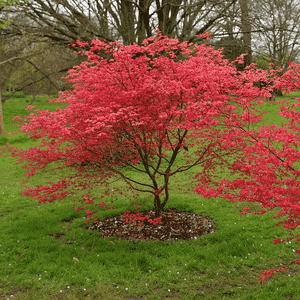
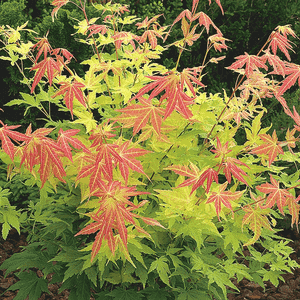
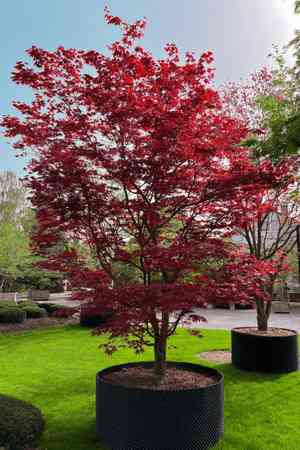
Quickly Identify Japanese maple
1
Serrated palmate leaves with 5-9 lobes
2
Flowers red-purple, 0.2-0.4 inches (5-10 mm) wide
3
Distinct dual-winged samaras that split into two
4
Opposite leaves, 2-5 inches (5-13 cm) with smooth texture
5
Slender stem varying from green to red, double terminal buds
Scientific Classification of Japanese maple
Phylum
Vascular plants
Class
Dicotyledons
Order
Maples, mangos, mahogany, citrus, and allies
Family
Soapberry
Genus
Maples
Species
Japanese maple
Planting and Growing of Japanese maple
Care Difficulty
Hard
Watering Schedule
Every 3 days
Sunlight Requirements
Partial sun
Sunshine Duration
4-6 hours
Ideal Temperature
68-86℉
Soil Type
Potting Mix, Peat Mix
Soil pH
6-7.5
Fertilizer Type
Balanced
Pruning Season
Spring, Summer
Pruning Area
Branches, Leaves
Pruning Frequency
2 times a year
Repotting Season
Spring
Pot Type
Terracotta, Plastic
 How to Water Japanese maple?
Acer palmatum, often known as the Japanese maple, requires watering that thoroughly moistens the soil around the root ball. It is essential to ensure the soil is well-drained to prevent waterlogging. Aim for about 700 ml per session, ensuring the upper 2-3 inches of soil are moist while avoiding saturation.
More About Watering Techniques→
What are the symptoms of an underwatered Japanese maple?
›
What should I do if my Japanese maple is not getting enough water?
›
What are the symptoms of an overwatered Japanese maple?
›
How to save an overwatered Japanese maple?
›
 What Are the Sunlight Requirements for Japanese maple?
Acer palmatum thrives best with partial to full sun exposure in conditions resembling a natural woodland canopy. Ensuring ideal light helps maintain vibrant leaf colors and robust plant growth, ensuring overall health.
More About Sunlight Requirements Techniques→
What amount of sunlight does Acer palmatum prefer?
›
How can I ensure Acer palmatum gets the ideal sunlight it needs?
›
What benefits does Acer palmatum gain from ideal sunlight?
›
 What Is the Ideal Temperature Range for Japanese maple?
Acer palmatum, commonly known as the Japanese Maple, thrives best in temperatures between 68°F and 86°F. This specific range ensures optimal photosynthesis and growth, allowing the plant to maximize its development and maintain vibrant foliage. Maintaining this range supports enzyme activity and cellular functions that are crucial for its health.
 What Soil is Best for Japanese maple?
Acer palmatum thrives in well-drained soil, as it prevents waterlogging and root rot. Good drainage ensures that the roots receive sufficient oxygen, promoting healthy growth and vibrant foliage. This plant requires a nutrient-rich soil, which provides essential minerals and elements necessary for robust growth and the production of colorful leaves. Regular incorporation of organic matter can enhance soil fertility. While good drainage is vital, the soil must also retain some moisture to keep the roots hydrated. Mulching can help maintain soil moisture levels, offering continual support to the plant, especially during dry seasons.
More About Soil→
 How to Fertilize Japanese maple?
Acer palmatum requires a balanced amount of nutrients. Generally, using a 10-10-10 NPK fertilizer, apply at a rate of 1 tablespoon per square foot to avoid nutrient burn while ensuring healthy leaf growth and strong root development.
More About Fertilizing Techniques→
 How to Prune Japanese maple?
Start by removing any dead, damaged, or diseased wood. Use clean, sharp pruning shears to make cuts at a 45-degree angle. Focus on opening up the center of the tree to improve air circulation. Trim back any branches that cross over one another, and ensure that the remaining branches have adequate space to grow. Be conservative with cuts to retain the tree's natural shape. Acer palmatum can be shaped into various forms, from a low shrub to an upright small tree. Determine your desired form and prune accordingly. For a bushier appearance, tip prune by removing the tips of branches to encourage branching. For a more tree-like structure, maintain a single leader stem with evenly spaced side branches. Regularly step back to assess the overall shape and symmetry.
More About Pruning Techniques→
 How to Propagate Japanese maple plant?
1
Seeds are collected in autumn once they have matured. They should be dried and stored in a cool, dry place until spring when they can be sown. It's vital to stratify seeds, mimicking winter conditions, to break dormancy before sowing.
2
Cuttings are taken in early summer, preferably from semi-hardwood stems. Each cutting should be approximately 10-15 centimeters long, and the lower leaves should be removed before dipping in rooting hormone.
3
Grafting is often performed in late winter or early spring. Selected scions are grafted onto compatible rootstocks. The grafting junction is then tightly secured, and the plant should be kept in a humid environment to encourage the union.
 How to Repot Japanese maple plant?
1
Acer palmatum typically requires repotting when it becomes root-bound, which is when roots start to circle the pot or protrude from the drainage holes. A reduction in growth rate or leaf size can also be signals. The best time to repot is during early spring or autumn, when the plant is not actively growing, thus minimizing stress.
2
Select a pot that is 2-3 inches larger in diameter than the current one. It should have adequate drainage holes to prevent waterlogging. The material can be either plastic or ceramic. A larger pot allows for healthier root growth and prevents overcrowding, while good drainage prevents root rot.
3
Opt for a well-draining loamy soil mix that retains some moisture but doesn't waterlog. A mix containing peat moss, decomposed pine bark, and a bit of sand or perlite is ideal. This soil promotes healthy root aeration and provides essential nutrients, keeping the tree nourished while preventing water accumulation.



