
Sugar maple (Acer saccharum)
Also known as: Rock maple
Acer saccharum, or sugar maple, is a deciduous tree native to North America, renowned for its role in producing maple syrup from its xylem sap. However, its standout feature in the fall is its strikingly colorful foliage, which transforms into vivid shades of red, orange, and yellow.
In This Article
Attributes of Sugar maple
Lifespan
Perennial
Plant Type
Tree
Plant Height
12 m to 35 m
Spread
9 m to 18 m
Leaf Color
Green Yellow Orange Red
Flower Size
2.5 cm
Flower Color
Yellow Green
Images of Sugar maple

Quickly Identify Sugar maple
1
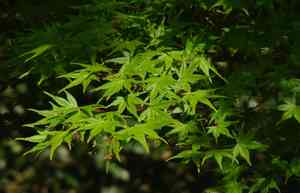
Distinctive palmate leaves with five pointed lobes, transitioning to vibrant autumn colors.
2
Drooping greenish-yellow panicles with separate male and female flowers in spring.
3
U-shaped paired samaras with thin wings, transitioning from green to brown.
4
Slender stems with lenticels, cone-shaped buds, and varying colors.
5
Rugged, deeply furrowed bark with flaky scales, protecting a wide trunk.
Scientific Classification of Sugar maple
Phylum
Vascular plants
Class
Dicotyledons
Order
Sapindales
Family
Soapberry
Genus
Maples
Species
Sugar maple
Planting and Growing of Sugar maple
Care Difficulty
Moderate
Watering Schedule
Every 2 days
Sunlight Requirements
Full sun
Sunshine Duration
4-6 hours
Ideal Temperature
60-75℉
Soil Type
Potting Mix, Peat Mix
Soil pH
6.5-7.5
Fertilizer Type
Balanced
Pruning Season
Spring, Summer
Pruning Area
Branches, Leaves
Pruning Frequency
2 times a year
Repotting Season
Spring
Pot Type
Plastic, Ceramic
 How to Water Sugar maple?
For Acer saccharum, or sugar maple, it is crucial to water deeply so that the entire root zone is moist but not waterlogged. This typically involves providing around 1200 milliliters of water each time, ensuring the soil is evenly saturated without leaving standing water.
More About Watering Techniques→
What are the symptoms of an underwatered Sugar maple?
›
What should I do if my Sugar maple is not getting enough water?
›
What are the symptoms of an overwatered Sugar maple?
›
How to save an overwatered Sugar maple?
›
 What Are the Sunlight Requirements for Sugar maple?
Ideally, Acer saccharum should receive full to partial sunlight. Such conditions enhance photosynthesis, foster robust growth, and strengthen its brilliant fall colors.
More About Sunlight Requirements Techniques→
What is the perfect light condition for Acer saccharum?
›
How can I achieve ideal light conditions for my Sugar Maple?
›
What benefits does ideal sunlight bring to Sugar Maple?
›
 What Is the Ideal Temperature Range for Sugar maple?
The Acer saccharum thrives best in temperatures ranging from 60°F to 75°F. This range maintains optimal growth and sugar production. If maintained, these conditions support the maple's health and potential for syrup production.
 What Soil is Best for Sugar maple?
Sugar maples thrive in well-drained soil, preventing root rot and enhancing air circulation around roots, crucial for robust growth and stability. These trees prefer consistently moist soil without excessive waterlogging, essential for nutrient absorption and preventing nutrient leaching. Rich loamy soil provides ample nutrients for sugar maples, supporting vibrant leaves and healthy growth, crucial during their active growing seasons.
More About Soil→
 How to Fertilize Sugar maple?
When fertilizing Acer saccharum, apply a balanced 10-10-10 NPK fertilizer. For liquid fertilizer, use approximately 1 tablespoon per gallon of water, and ensure the solution is well mixed before application. For slow-release granular fertilizers, follow the package instructions, usually involving around 1 pound per 100 square feet. These amounts provide essential nutrients without risking nutrient burns.
More About Fertilizing Techniques→
 How to Prune Sugar maple?
Start by examining the branches for signs of disease or damage. Look for crossing branches, as these can rub together and cause wounds, making the tree susceptible to diseases. Trim these back to maintain a clean and healthy structure. To maintain the tree's natural shape, prune with a focus on developing a strong central leader. Ensure that lateral branches are evenly spaced and that any vigorous, vertical branches are removed if they compete with the main leader. Use sharp, clean pruning tools. Make cuts just beyond the branch collar to ensure good wound healing. Avoid leaving stubs, as these can attract pests and lead to disease.
More About Pruning Techniques→
 How to Propagate Sugar maple plant?
1
To improve germination rates, Acer saccharum seeds require cold stratification. Place seeds in a moist medium and store them in a refrigerator for about 90-120 days to mimic winter conditions.
2
After stratification, sow the seeds in seed starting trays filled with a well-draining soil mix. Cover them lightly with soil and maintain consistent moisture to aid germination.
3
For grafting, select healthy rootstocks and scions. Make clean cuts on both, ensuring cambial contact. Secure the graft union with grafting tape and maintain high humidity to promote healing.
 How to Repot Sugar maple plant?
1
Look for signs such as roots growing out of drainage holes or the soil drying out quickly. Spring is the best time as Acer saccharum breaks dormancy and starts its growth phase, providing the best conditions for recovery and root establishment.
2
Select a pot that's one size larger than the current one, with good drainage holes. A slightly larger pot allows room for growth without overwhelming the roots, improving aeration and preventing root rot from excess moisture.
3
Opt for a loamy soil mix that is well-draining yet retains some moisture. The ideal mix supports root development by providing essential nutrients while ensuring water doesn't accumulate, thus preventing fungal issues and root rot.
Toxicity
Ingestion of wilted or dried leaves
WARNING
The judgment on toxicity and danger is for reference only. We DO NOT GUARANTEE any accuracy of such judgment. Therefore, you SHALL NOT rely on such judgment. It is IMPORTANT TO SEEK PROFESSIONAL ADVICE in advance when necessary.



