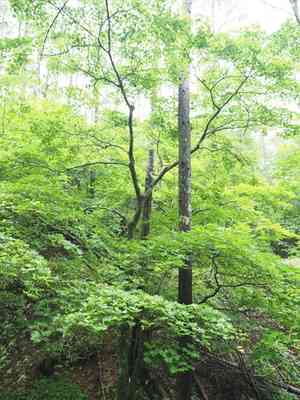
Golden full-moon maple (Acer shirasawanum)
Also known as: Shirasawa maple
This species grows as a deciduous large shrub or small tree growing to 8 to 15 m tall with a trunk up to 50 cm diameter. The shoots are slender, and hairless. The leaves are rounded, 4.5 to 8 cm long and 6 to 12 cm broad, palmately veined and lobed, with 9–13 (rarely 7) serrate shallowly incised lobes; they are hairless, or thinly hairy at first with white hairs; the petiole is 3 to 7 cm long and hairless. In autumn, the leaves turn bright gold or orange to dark red. The flowers are 1 cm diameter, with five dark purplish-red sepals, five small whitish petals (soon lost), and red stamens.
In This Article
Attributes of Golden full-moon maple
Lifespan
Perennial
Plant Type
Tree
Plant Height
8 m
Spread
8 m
Leaf Color
Yellow Red Green Orange
Flower Size
Small, typically 0.5 cm
Flower Color
Red Pink Cream
Images of Golden full-moon maple
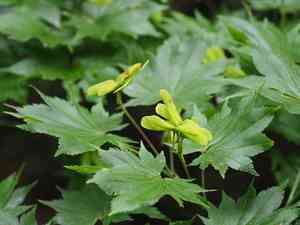
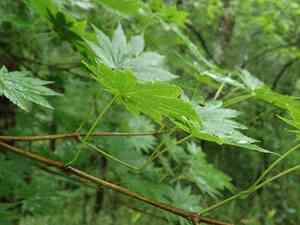
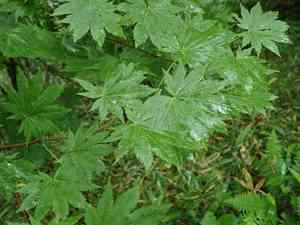
Quickly Identify Golden full-moon maple
1
Palmate leaves resembling full moons, transitioning from green to purple/red, 3-6 inches (7.5-15 cm) wide.
2
Distinct winged samaras with a helical shape, red to brown color, 0.8-1 inch (2-2.5 cm) long.
3
Star-like, small, reddish flowers in clusters with narrow, fringed petals under 0.5 inches (1.3 cm) diameter.
4
Smooth, gray bark with a slender form, maintaining smooth texture without pronounced ridges, 6-12 inches (15-30 cm) diameter.
5
9-13 lobed leaves with serrated margins, acuminate tips, transitioning to vibrant fall colors, 2-3 inches (5-7.5 cm).
Scientific Classification of Golden full-moon maple
Phylum
Vascular plants
Class
Dicotyledons
Order
Sapindales
Family
Soapberry
Genus
Maples
Species
Golden full-moon maple
Planting and Growing of Golden full-moon maple
Care Difficulty
Moderate
Watering Schedule
Every 6 days
Sunlight Requirements
Partial sun
Sunshine Duration
4-8 hours
Ideal Temperature
50-75℉
Soil Type
Potting Mix, Peat Mix
Soil pH
6.5-7.5
Fertilizer Type
Balanced
Pruning Season
Spring, Summer
Pruning Area
Branches, Leaves
Pruning Frequency
2 times a year
Repotting Season
Spring
Pot Type
Plastic, Ceramic
 How to Water Golden full-moon maple?
Acer shirasawanum prefers its soil to be consistently moist but not soggy. Watering should aim to provide around 1000 ml each time to ensure proper hydration. It’s essential to water the plant deeply so that the root zone receives adequate moisture, but avoid pooling water to prevent root rot.
What are the symptoms of an underwatered Golden full-moon maple?
›
What should I do if my Golden full-moon maple is not getting enough water?
›
What are the symptoms of an overwatered Golden full-moon maple?
›
How to save an overwatered Golden full-moon maple?
›
 What Are the Sunlight Requirements for Golden full-moon maple?
Partial sun to full sun is ideal for Acer shirasawanum, ensuring the plant gets enough light to enhance foliage color and overall health while avoiding the risks of overexposure.
What is the best light condition for Acer shirasawanum?
›
How can I ensure Acer shirasawanum receives this ideal lighting?
›
What benefits does Acer shirasawanum receive with ideal light conditions?
›
 What Is the Ideal Temperature Range for Golden full-moon maple?
The ideal temperature range for Acer shirasawanum is between 50°F and 75°F. This range provides an optimal environment for growth and ensures that the plant can perform essential physiological processes effectively. Keeping the plant within this range will help maintain its health and vibrant appearance, particularly during its active growing periods in the spring and summer months.
 What Soil is Best for Golden full-moon maple?
The right soil for Acer shirasawanum ensures excellent drainage, allowing excess water to escape easily. This trait prevents waterlogging, which can lead to root rot—a dire condition for this delicate maple. A soil mix that mimics its natural habitat, combining loam and sandy components, helps maintain the ideal moisture balance. While drainage is crucial, the soil must also retain adequate moisture to sustain Acer shirasawanum's needs, especially during dry spells. A loamy soil enriched with organic matter balances both retention and drainage, thus fostering vigorous growth. This maple demands nutrient-rich soil to fuel its vivid foliage. Organic compounds, such as decomposed leaves or well-rotted compost, mixed into loam or sandy loam soils, provide a steady nutrient supply, ensuring lush, healthy foliage and robust growth.
 How to Fertilize Golden full-moon maple?
For Acer shirasawanum, apply a balanced fertilizer with an NPK ratio of 10-10-10. When using liquid fertilizer, dilute it to half strength to prevent root burn. For solid fertilizers, use around 1 to 2 ounces per plant, evenly distributed around the base.
 How to Prune Golden full-moon maple?
Begin your pruning by carefully identifying any dead, damaged, or crossing branches that could harm the plant's structure. Cut back these branches to the point of healthy wood using clean, sharp pruning shears. This method helps open up the tree to sunlight and air while maintaining its natural form. For aesthetic shaping, focus on thinning out crowded areas to maintain a balanced, attractive form. Cut back to an outward-facing bud to encourage outward growth and shape the tree according to your desired appearance. This will also prevent congestion within the canopy.
More About Pruning Techniques→
 How to Propagate Golden full-moon maple plant?
1
Collect seeds in late autumn and store them in a cool, dry place. Before planting, soak them in warm water for 24 hours to encourage germination.
2
Prepare a well-draining, acidic potting mix. Fill small pots or trays, ensuring they have drainage holes to prevent water logging and root rot.
3
Select compatible rootstock and scion. Make a clean, matching cut on both and join them securely, ensuring contact of the cambium layers, and wrap with grafting tape.
 How to Repot Golden full-moon maple plant?
1
Repotting Acer shirasawanum should be done when you notice the roots are circling the pot or coming out of drainage holes. Another hint is if the plant's growth becomes stunted, which signals it's running out of space.
2
Select a pot that is only slightly larger than the current one to avoid excessive moisture retention. A pot with proper drainage holes helps prevent waterlogging and root rot, keeping the roots healthy and ensuring steady growth.
3
Choose a well-draining, slightly acidic soil mix rich in organic matter. This provides the nutrients needed for healthy growth, while the drainage prevents overwatering issues, which Acer shirasawanum is sensitive to.



