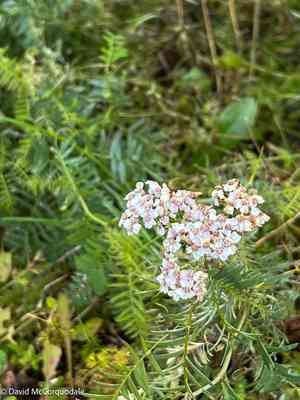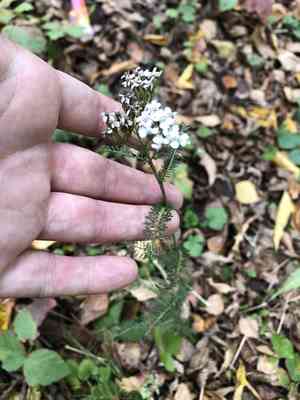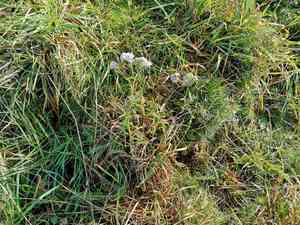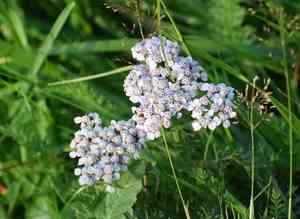
Common yarrow(Achillea millefolium)

Common yarrow (Achillea millefolium)

Also known as: Western Yarrow, Thousand-Seal, Old man's pepper, Soldier's woundwort, Milfoil, Sanguinary

Common yarrow (Achillea millefolium) is a hardy wildflower with distinctive feathery leaves and blossoms that can be white, yellow, or pink. Across different cultures, it has been associated with various traditional uses and beliefs:

1. **Cultural Significance**:
- **China**: Yarrow is often regarded as a symbol of good fortune.
- **Scotland**: Historically, it was believed to possess magical properties and was sometimes used in rituals.

2. **Culinary and Medicinal Uses**:
- Yarrow has been used to brew beer, teas, and liquors, though it is important to note that it should be consumed in moderation due to its low toxicity.

3. **Animal Considerations**:
- While yarrow’s bitter leaves can be harmful to pets and horses, other livestock can consume it. However, it can impart an unpleasant taste to cow's milk.

These diverse uses underscore yarrow's multifaceted role in traditional practices and caution against its overconsumption.

Attributes of Common yarrow

Lifespan
Perennial, Annual
Plant Type
Herb
Plant Height
30 cm to 1 m
Spread
30 cm to 60 cm
Leaf Color
Green Gray
Flower Size
2 cm to 10 cm
Flower Color
White Pink Cream Red Orange Yellow Purple

PlantJoy - Identify plants with a snap

Identify and diagnose plants, get toxicity alerts, and explore safety guides for all types of fungi.

Try for Free

Images of Common yarrow

Common yarrow(Achillea millefolium)

Quickly Identify Common yarrow

1
Fern-like, pinnatifid foliage with narrow leaflets resembling a delicate tapestry.
2
Intricate inflorescence with small, clustered flower heads in dense umbels.
3
Flat-topped corymbs of tiny flowers (0.2 inches/5 mm) in white, pink, red, or yellow.
4
Leaves are narrowly oblong, fragrant, and deeply divided like fern leaves.
5
Basal rosette of finely dissected leaves, alternately arranged along the stem.

Scientific Classification of Common yarrow

Phylum
Vascular plants
Class
Dicotyledons
Order
Asterales
Family
Daisy
Genus
Yarrows
Species
Common yarrow

Planting and Growing of Common yarrow

Care Difficulty
Easy
Watering Schedule
Every 4 days
Sunlight Requirements
Full sun
Sunshine Duration
4-8 hours
Ideal Temperature
60-75℉
Soil Type
Potting Mix, Peat Mix
Soil pH
6.5-7.5
Fertilizer Type
Balanced
Pruning Season
Spring, Summer
Pruning Area
Branches, Leaves
Pruning Frequency
2 times a year
Repotting Season
Spring
Pot Type
Plastic, Ceramic

water icon How to Water Common yarrow?

Achillea millefolium, commonly known as yarrow, prefers well-drained soil that is not overly moist. Watering should be sufficient to soak the root zone, which usually means about 250 milliliters per watering session. It's crucial to ensure the water only moistens the soil without leaving it damp or waterlogged, as the plant thrives better in slightly drier conditions than overly wet ones.
What are the symptoms of an underwatered Common yarrow?
What should I do if my Common yarrow is not getting enough water?
What are the symptoms of an overwatered Common yarrow?
How to save an overwatered Common yarrow?

sunlight icon What Are the Sunlight Requirements for Common yarrow?

Sunlight Requirements: Full sun, Partial sun
Duration of light: 6 to 8 hours daily
Achillea millefolium flourishes best in full sun, translating to a minimum of 6 hours of sunlight daily. Optimal light fosters excellent growth and abundant flowering.
What conditions promote optimal growth?
How to ensure ideal sunlight exposure?
What are the benefits of ideal lighting?

temperature icon What Is the Ideal Temperature Range for Common yarrow?

Ideal Temperature: 60 ~ 75℉
The ideal temperature range for Achillea millefolium, or common yarrow, is between 60°F and 75°F. This range ensures optimal growth and flowering, providing the right environment for its physiological processes. During this temperature range, the plant efficiently photosynthesizes and maintains healthy cellular functions.

soil icon What Soil is Best for Common yarrow?

Soil type: Sandy soil, Loam, Clay soil, Calcareous soil, Sandy loam
Soil PH: 6.5 ~ 7.5
Achillea millefolium thrives in well-drained soils. This means the soil should not retain water for long periods, preventing root rot. Good drainage allows the plant to absorb necessary oxygen and nutrients efficiently, supporting healthy growth. While Achillea millefolium is not overly fussy, it does best in nutrient-rich soils. Soils with a good mix of organic matter provide essential nutrients that encourage robust blooming and foliage development. Yarrow does not require extremely fertile soil, but it benefits from moderate fertility. Balanced soil fertility supports its growth and flowering without causing excessive leaf growth, which can weaken the plant's structure.

fertilize icon How to Fertilize Common yarrow?

Fertilizer type: Balanced
For Achillea millefolium, it is essential to choose balanced, all-purpose fertilizers suitable for blooming plants. A standard application rate would be 1/4 to 1/2 the recommended dose on the package to avoid over-fertilization. This allows the plant to thrive without accumulating excess nutrients that could harm it.

prune icon How to Prune Common yarrow?

Pruning Time: Spring, Summer, Autumn
Achillea millefolium benefits greatly from deadheading. Gently snip off the faded flower heads just above a pair of leaves. This will encourage the plant to produce more blooms while maintaining a neat appearance. Remember to use clean and sharp pruning shears for a clean cut. In early spring or late fall, trim back the stems to about one third of their height. This encourages bushier growth and prevents the plant from becoming too straggly. Make sure to cut above a node or a growing bud for optimal growth.

propagate icon How to Propagate Common yarrow plant?

Propagate Time: Spring, Early summer
1
Sow the seeds evenly on the surface of the soil in containers or seed trays. Lightly cover them with a thin layer of soil, as they need light to germinate. Keep the soil moist but not waterlogged, and place in a sunny location.
2
Select healthy stems and cut about 4-6 inches from the tip. Remove lower leaves to expose nodes and dip the cut end in rooting hormone. Place the cuttings in a container with moist potting mix and keep them covered to maintain humidity.
3
Carefully dig up the entire plant. Use a sharp tool to divide the root ball into sections, each with healthy roots and shoots. Replant each division at the same depth as the original plant and water thoroughly.

repot icon How to Repot Common yarrow plant?

Repotting frequency: Every 2-3 years
1
Repot Achillea millefolium when you notice the roots circling around the root ball, poking out of the drainage holes, or if it's been several years since the last repotting. These are signs the plant needs more space to grow and thrive.
2
Select a pot that is only slightly larger than the current one, with ample drainage holes. This size helps prevent overwatering and allows for gradual root expansion, reducing the risk of root rot and providing stability for the plant.
3
Use a well-draining, sandy loam soil mix. This soil type promotes effective drainage, preventing waterlogging that could damage the roots. It retains enough moisture for the plant's needs while allowing air circulation to keep the roots healthy.

PlantJoy - Identify plants with a snap

Find the best spots for them to optimize their health, simply using your phone.

Try for Free

Toxicity of Common yarrow

Is Common yarrow toxic to cat?

Although common yarrow (Achillea millefolium) is classified as toxic, instances of poisoning are infrequent, as substantial quantities of leaves, stems, or flowers need to be consumed for any significant effect to manifest, and the plant’s unpleasant bitter flavor tends to deter overconsumption. Nonetheless, symptoms may include nausea, diarrhea, vomiting, and signs of depression, with fragments of the plant possibly being present in the vomit. If this occurs, please consult a veterinarian for guidance.

Is Common yarrow toxic to dog?

Common yarrow exhibits moderate toxicity to dogs. If ingested, its flowers, leaves, and stems may provoke negative reactions. Common symptoms include diarrhea, vomiting, and stomach discomfort; if these symptoms become severe, it is crucial to seek veterinary attention for your dog immediately. Fortunately, dogs rarely consume common yarrow due to its pronounced bitterness.

Identify toxic plants for your safety

Learn which plants are harmful to you and your pets, and make informed choices for a safer home!

Try for Free
WARNING
The judgment on toxicity and danger is for reference only. We DO NOT GUARANTEE any accuracy of such judgment. Therefore, you SHALL NOT rely on such judgment. It is IMPORTANT TO SEEK PROFESSIONAL ADVICE in advance when necessary.