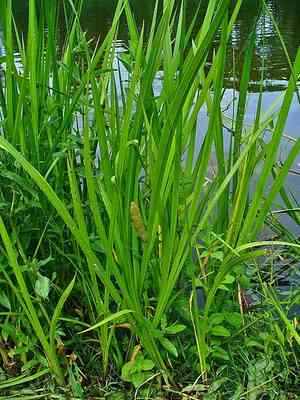
Sweet flag(Acorus calamus)

Sweet flag (Acorus calamus)

Also known as: Muskrat Root, Bitter Pepper Root, Myrtle Flag, Myrtle Root, Pine Root, Sweet Cane, Sweet Grass, Sweet Root, Flag root, Calamus root

Sweet flag (Acorus calamus) is a perennial grass that will grow from 61 to 91 cm tall and 46 to 61 cm wide. It spreads by rhizomes and grows slowly to form a dense ground cover. It thrives in full sun or partial shade and is not invasive. The foliage has a sweet fragrance and in late spring blooms small yellow-green flowers followed by tiny red berries that ripen in fall.

Attributes of Sweet flag

Lifespan
Perennial
Plant Type
Herb
Plant Height
2 m
Spread
45 cm to 60 cm
Leaf Color
Green Blue White Variegated
Flower Size
3 mm to 4 mm
Flower Color
Green Yellow White

PlantJoy - Identify plants with a snap

Identify and diagnose plants, get toxicity alerts, and explore safety guides for all types of fungi.

Try for Free

Images of Sweet flag

Sweet flag(Acorus calamus)

Quickly Identify Sweet flag

1
Fragrant lance-shaped leaves, bright green, reaching 4 feet (120 cm).
2
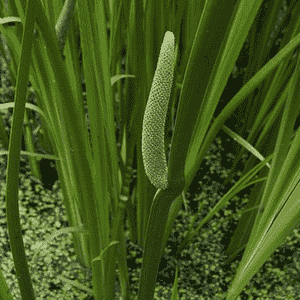
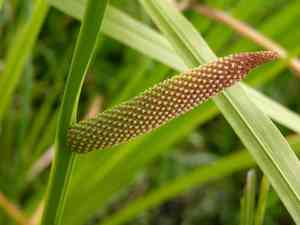
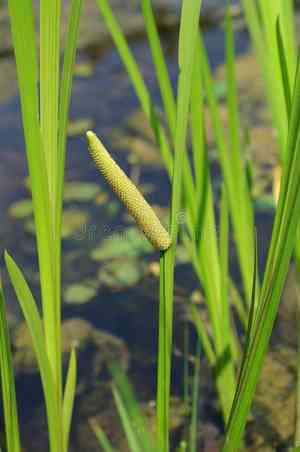
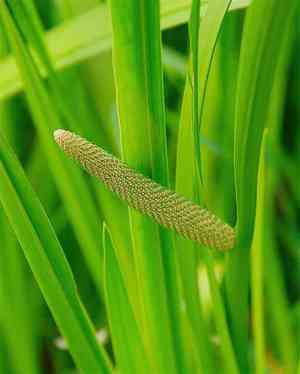
Modest greenish flowers in compact clusters with 6 tepals and stamens.
3
Inconspicuous berry-like fruit, spongy texture, greenish-yellow, within inflorescence.
4
Sword-shaped aromatic leaves with wavy margin, red base, and sweet fragrance when crushed.
5
Thick, fleshy rhizome with cylindrical yellowish-brown stems, supporting upright growth.

Scientific Classification of Sweet flag

Phylum
Vascular plants
Class
Monocotyledons
Order
Acorales
Family
Calamus
Genus
Calamus
Species
Sweet flag

Planting and Growing of Sweet flag

Care Difficulty
Easy
Watering Schedule
Every 8 days
Sunlight Requirements
Partial sun
Sunshine Duration
6-10 hours
Ideal Temperature
60-77℉
Soil Type
Potting Mix, Peat Mix
Soil pH
6.5-7.5
Fertilizer Type
Balanced
Pruning Season
Spring, Summer
Pruning Area
Branches, Leaves
Pruning Frequency
2 times a year
Repotting Season
Spring
Pot Type
Plastic, Ceramic

water icon How to Water Sweet flag?

For Acorus calamus, watering should be done thoroughly but not excessively. The aim is to soak the soil until water begins to drain from the pot's base. This ensures the entire root system is hydrated without waterlogging it.
What are the symptoms of an underwatered Sweet flag?
What should I do if my Sweet flag is not getting enough water?
What are the symptoms of an overwatered Sweet flag?
How to save an overwatered Sweet flag?

sunlight icon What Are the Sunlight Requirements for Sweet flag?

Sunlight Requirements: Partial sun, Full sun
Duration of light: 4 to 6 hours
Partial sun to full sun ensures optimal growth, promoting vibrant leaf colors and healthy overall development. It balances light intensity to support both leaf and root vigor.
What kind of light does Acorus calamus thrive in?
How can I achieve the best lighting for Acorus calamus?
What benefits does Acorus calamus gain from ideal lighting conditions?
More About Sunlight Requirements Techniques

temperature icon What Is the Ideal Temperature Range for Sweet flag?

Ideal Temperature: 60 ~ 77℉
For Acorus calamus cultivation, maintaining an ideal temperature range between 60°F and 77°F is crucial. This range supports optimal metabolic processes and growth, ensuring the plant remains healthy and exhibits vibrant foliage. Ensuring consistent temperatures within this range helps avoid stress-induced growth interruptions.

soil icon What Soil is Best for Sweet flag?

Soil type: Loam, Sandy loam, Peat soil
Soil PH: 6.5 ~ 7.5
Acorus calamus thrives in moisture-retentive soil, ensuring its roots are consistently hydrated. Such soil prevents drying out and supports healthy growth and vibrant foliage. The plant benefits from a nutrient-rich soil composition that supplies essential minerals and nutrients, promoting robust growth and a resilient structure. High organic matter in soil supports healthy microbial activity which aids in nutrient uptake and improves soil aeration, vital for the well-being of Acorus calamus.

fertilize icon How to Fertilize Sweet flag?

Fertilizer type: Balanced
Acorus calamus, also known as sweet flag, is not a heavy feeder. Apply liquid fertilizer diluted to half strength, about 2 tablespoons per gallon of water, every time you fertilize. For slow-release fertilizer, use approximately 1 tablespoon per plant, distributed evenly around the base.

prune icon How to Prune Sweet flag?

Pruning Time: Spring, Summer, Autumn, Winter
Start by sterilizing your pruning shears to prevent the spread of disease. Remove any yellow or brown leaves by cutting as close to the base as possible. Trim away any flower spikes after blooming to encourage new growth. Make sure to cut at a slight angle to prevent water from collecting on the cut surfaces. More About Pruning Techniques

propagate icon How to Propagate Sweet flag plant?

Propagate Time: Spring, Early spring, Late spring
1
Begin by preparing a well-draining soil mix. Acorus calamus prefers moist soils, so ensure that the soil retains some moisture without becoming waterlogged.
2
Spread the seeds evenly over the prepared soil. Lightly cover them with a thin layer of soil or compost, and gently water to avoid disturbing the seeds.
3
For division propagation, carefully dig up the mature plant and cut the rhizomes into sections, ensuring each section has roots and shoots. Replant immediately to prevent drying out.
More About Propagating Techniques

repot icon How to Repot Sweet flag plant?

Repotting frequency: Every 2-3 years
1
Acorus calamus should be repotted when you notice it becoming root-bound, which can be identified by roots creeping out of the drainage holes, or if growth is stagnating despite optimal conditions. Repotting in spring or autumn allows the plant to settle before peak growing conditions.
2
Choose a pot that is just one size larger than the current one and made of material like ceramic or plastic to retain moisture. Ensure it has drainage holes to prevent waterlogging, which can severely impact the roots.
3
Opt for a soil rich in organic matter with good moisture retention, yet well-draining, like a mix of peat, bark, and perlite. This ensures the roots receive the necessary nutrients and aeration, promoting healthy growth.

PlantJoy - Identify plants with a snap

Find the best spots for them to optimize their health, simply using your phone.

Try for Free

Toxicity of Sweet flag

Is Sweet flag toxic to humans?

Sweet flag is classified as a mildly toxic plant, containing trace amounts of alkylbenzenes—known carcinogens—that could potentially lead to certain types of cancer when consumed in substantial quantities. Although the risk of toxicity is minimal due to these small quantities, the plant's leaves, stem, and flowers harbor additional toxins that can provoke skin irritation in sensitive individuals. Common reactions include rashes, redness, and swelling. If ingested, more serious symptoms may arise, such as nausea, vomiting, and abdominal pain. Furthermore, high consumption of the plant's matter can act as a depressant on the central nervous system. Those who are on monoamine oxidase inhibitors are particularly vulnerable to experiencing severe side effects.

Identify toxic plants for your safety

Learn which plants are harmful to you and your pets, and make informed choices for a safer home!

Try for Free
WARNING
The judgment on toxicity and danger is for reference only. We DO NOT GUARANTEE any accuracy of such judgment. Therefore, you SHALL NOT rely on such judgment. It is IMPORTANT TO SEEK PROFESSIONAL ADVICE in advance when necessary.
More About Toxic Techniques