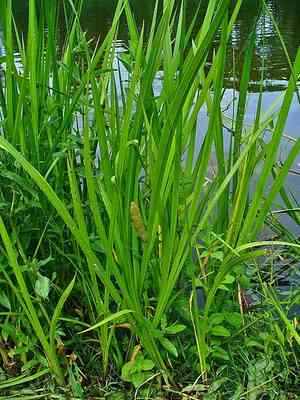
Sweet flag (Acorus calamus)
Also known as: Muskrat Root, Bitter Pepper Root, Myrtle Flag, Myrtle Root, Pine Root, Sweet Cane, Sweet Grass, Sweet Root, Flag root, Calamus root
Sweet flag (Acorus calamus) is a perennial grass that will grow from 61 to 91 cm tall and 46 to 61 cm wide. It spreads by rhizomes and grows slowly to form a dense ground cover. It thrives in full sun or partial shade and is not invasive. The foliage has a sweet fragrance and in late spring blooms small yellow-green flowers followed by tiny red berries that ripen in fall.
Attributes of Sweet flag
Images of Sweet flag
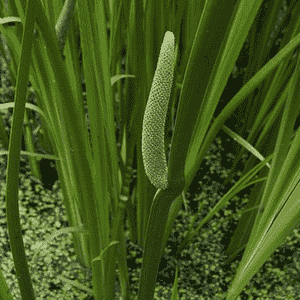
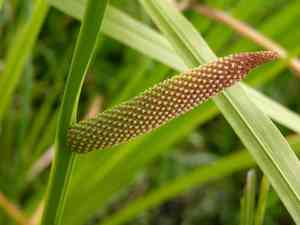
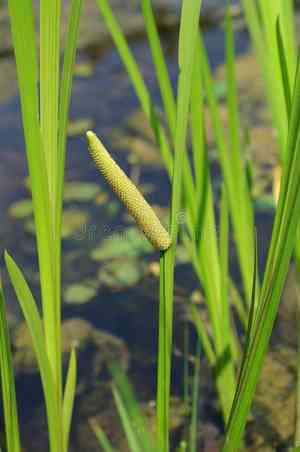
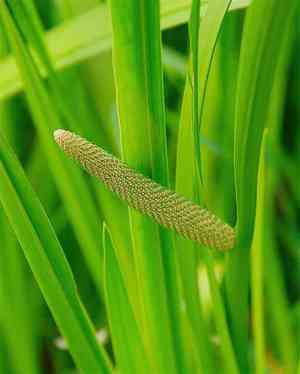
Quickly Identify Sweet flag
Scientific Classification of Sweet flag
Planting and Growing of Sweet flag
 How to Water Sweet flag?
 What Are the Sunlight Requirements for Sweet flag?
 What Is the Ideal Temperature Range for Sweet flag?
 What Soil is Best for Sweet flag?
 How to Fertilize Sweet flag?
 How to Prune Sweet flag?
 How to Propagate Sweet flag plant?
 How to Repot Sweet flag plant?
Toxicity of Sweet flag
Is Sweet flag toxic to humans?
Sweet flag is classified as a mildly toxic plant, containing trace amounts of alkylbenzenes—known carcinogens—that could potentially lead to certain types of cancer when consumed in substantial quantities. Although the risk of toxicity is minimal due to these small quantities, the plant's leaves, stem, and flowers harbor additional toxins that can provoke skin irritation in sensitive individuals. Common reactions include rashes, redness, and swelling. If ingested, more serious symptoms may arise, such as nausea, vomiting, and abdominal pain. Furthermore, high consumption of the plant's matter can act as a depressant on the central nervous system. Those who are on monoamine oxidase inhibitors are particularly vulnerable to experiencing severe side effects.



