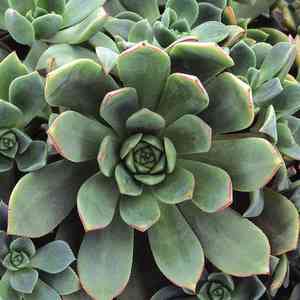
Haworth's aeonium (Aeonium haworthii)
Also known as: Pinwheel Aeonium, Houseleek Tree
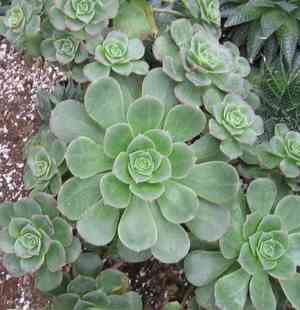
Aeonium haworthii, often called Haworth's aeonium, is a succulent shrub featuring rosettes of bluish-green leaves. It's a popular houseplant in cooler climates and has received the Garden Merit Award from the Royal Horticultural Society. In late spring or early summer, it produces blossoms that are white, off-white, or pale yellow with a hint of pink.
In This Article
Attributes of Haworth's aeonium
Lifespan
Perennial
Plant Type
Succulent, Herb
Plant Height
60 cm to 90 cm
Spread
60 cm to 90 cm
Leaf Color
Green Gray Red Silver Yellow
Flower Size
6 cm to 16 cm
Flower Color
Yellow White Pink
Images of Haworth's aeonium
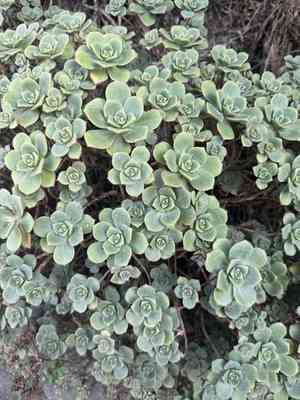
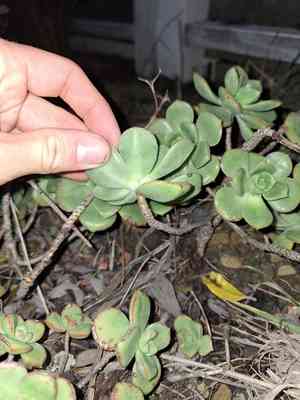
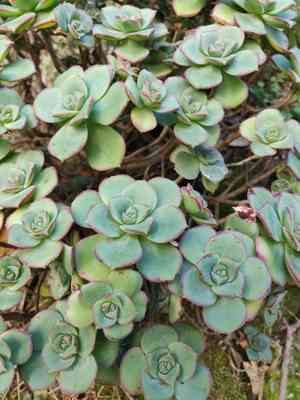
Quickly Identify Haworth's aeonium
1
Rosettes of bluish-green, keeled leaves
2
Leaves with red tinge along fringed margins
3
Branched inflorescence with very pale yellow to white flowers
4
Occasional pink hue in flower clusters
5
Succulent shrub reaching 24 inches (61 cm) in height and width
Scientific Classification of Haworth's aeonium
Phylum
Vascular plants
Class
Dicotyledons
Order
Saxifragales
Family
Stonecrop
Genus
Tree houseleeks
Species
Haworth's aeonium
Planting and Growing of Haworth's aeonium
Care Difficulty
Easy
Watering Schedule
Every 2 days
Sunlight Requirements
Full sun
Sunshine Duration
6-10 hours
Ideal Temperature
60-75℉
Soil Type
Potting Mix, Peat Mix
Soil pH
6.5-7.5
Fertilizer Type
Balanced
Pruning Season
Spring, Summer
Pruning Area
Branches, Leaves
Pruning Frequency
2 times a year
Repotting Season
Spring
Pot Type
Plastic, Ceramic
 How to Water Haworth's aeonium?
Aeonium haworthii, commonly known as Haworth's Aeonium, thrives on a careful balance of moisture. Water thoroughly until water drains slightly from the bottom of the pot while ensuring the soil feels moist but not waterlogged.
More About Watering Techniques→
What are the symptoms of an underwatered Haworth's aeonium?
›
What should I do if my Haworth's aeonium is not getting enough water?
›
What are the symptoms of an overwatered Haworth's aeonium?
›
How to save an overwatered Haworth's aeonium?
›
 What Are the Sunlight Requirements for Haworth's aeonium?
Aeonium haworthii prefers full to partial sun exposure. Ideal lighting ensures healthy, vibrant foliage and compact growth, activating essential processes like photosynthesis that fuel its metabolic functions.
More About Sunlight Requirements Techniques→
How much sun does Aeonium haworthii need?
›
How to ensure Aeonium haworthii gets enough light indoors?
›
What are the benefits of proper lighting for Aeonium haworthii?
›
 What Is the Ideal Temperature Range for Haworth's aeonium?
The ideal temperature range for Aeonium haworthii is between 60°F to 75°F. This succulent thrives in mild conditions that mimic its native Canary Islands environment. Temperatures within this range allow for optimal growth and development.
 What Soil is Best for Haworth's aeonium?
Aeonium haworthii thrives in well-draining soil as it prevents root rot by allowing excess water to escape swiftly. This characteristic is vital for maintaining optimal root health and promoting vigorous growth. While not overly demanding, a slightly nutrient-rich soil can boost Aeonium haworthii's growth. It supports the plant’s development and helps it maintain its vibrant rosette of leaves. Soil that allows air circulation is crucial in preventing compactness, thereby aiding in oxygen availability to roots. This condition encourages healthy root systems and prevents suffocation.
More About Soil→
 How to Fertilize Haworth's aeonium?
When fertilizing Aeonium haworthii, use a balanced 20-20-20 fertilizer diluted to quarter strength. This succulent is sensitive and prefers a lighter feeding approach to prevent nutrient burn.
 How to Prune Haworth's aeonium?
Begin by inspecting your Aeonium haworthii for any dead leaves, leggy stems, or overgrown areas. Target these sections first, as they can hinder growth and affect the plant's overall appearance. Cut back overgrown stems just above a leaf node, which is the point where leaves join the stem. This encourages new growth and maintains the plant's bushy shape. Avoid cutting too close to the node as it may damage the plant. After the Aeonium haworthii blooms, remove spent flower stalks to avoid seed formation. This redirects the plant's energy towards new growth and keeps it looking vibrant and vigorous.
 How to Propagate Haworth's aeonium plant?
1
Choose healthy, disease-free stems from the parent plant. Ideally, the stems should be at least a few inches long with a few leaves, ensuring they have enough energy to establish roots.
2
Use clean, sharp pruning shears to take a clean cut just below a node or where leaves join the stem. This helps in forming roots and avoids introducing diseases through jagged cuts.
3
Allow cuttings to dry for a few days until the cutting ends have calloused over. This step is vital to prevent rot when the cuttings are placed into the potting mix.
 How to Repot Haworth's aeonium plant?
1
Aeonium haworthii typically requires repotting when you notice roots poking out of the drainage holes, or the plant appears top-heavy. The ideal time is in the spring when the plant is actively growing. This timing helps minimize transplant shock and promotes healthy root establishment.
2
Select a pot that is just slightly larger than the current one, with good drainage holes. A clay pot is ideal as it allows the soil to dry out more quickly, which is beneficial for succulents like Aeonium haworthii. Adequate drainage prevents root rot, ensuring the plant remains healthy.
3
When selecting soil, opt for a well-draining cactus or succulent mix. This type of soil prevents water retention, thereby reducing the chances of root rot. It provides the right texture and composition that mimics the plant’s natural habitat, supporting growth and stability.



