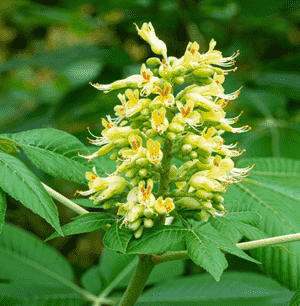
Ohio buckeye(Aesculus glabra)

Ohio buckeye (Aesculus glabra)

Also known as: American buckeye

The Ohio buckeye (Aesculus glabra) is a well-known tree species native to the Midwest and is designated as Ohio's state tree. Its seeds contain tannic acid, making them poisonous to both humans and cattle.

Attributes of Ohio buckeye

Lifespan
Perennial
Plant Type
Tree
Plant Height
15 m to 25 m
Spread
6 m to 12 m
Leaf Color
Green
Flower Size
2 cm to 3 cm
Flower Color
Yellow Green Orange

PlantJoy - Identify plants with a snap

Identify and diagnose plants, get toxicity alerts, and explore safety guides for all types of fungi.

Try for Free

Images of Ohio buckeye

Ohio buckeye(Aesculus glabra)

Quickly Identify Ohio buckeye

1
Distinct Corky Gray Bark
2
Flowers with Longer Stamens
3
Seeds with Pale 'Buck's Eye' Scar
4
Smooth, Veined Leaflets
5
Robust, Fissured Stem with Unpleasant Odor

Scientific Classification of Ohio buckeye

Phylum
Vascular plants
Class
Dicotyledons
Order
Maples, mangos, mahogany, citrus, and allies
Family
Soapberry
Genus
Buckeye
Species
Ohio buckeye

Planting and Growing of Ohio buckeye

Care Difficulty
Easy
Watering Schedule
Every 3 days
Sunlight Requirements
Partial sun
Sunshine Duration
4-8 hours
Ideal Temperature
60-75℉
Soil Type
Potting Mix, Peat Mix
Soil pH
6.5-7.5
Fertilizer Type
Balanced
Pruning Season
Spring, Summer
Pruning Area
Branches, Leaves
Pruning Frequency
2 times a year
Repotting Season
Spring
Pot Type
Plastic, Ceramic

water icon How to Water Ohio buckeye?

For Aesculus glabra, water until the soil is evenly moist but not waterlogged. This typically means about 500 milliliters per watering. Make sure the water reaches the root zone but does not saturate the soil to the point of standing water.
What are the symptoms of an underwatered Ohio buckeye?
What should I do if my Ohio buckeye is not getting enough water?
What are the symptoms of an overwatered Ohio buckeye?
How to save an overwatered Ohio buckeye?
More About Watering Techniques

sunlight icon What Are the Sunlight Requirements for Ohio buckeye?

Sunlight Requirements: Partial sun, Full sun
Duration of light: 6 to 8 hours daily
Aesculus glabra benefits from partial sun to full sun conditions, enhancing leaf color and promoting flowering. This ensures robust health and resilience against potential pest pressures.
What is the ideal light intensity?
How to achieve ideal lighting conditions?
What are the benefits of ideal lighting?
More About Sunlight Requirements Techniques

temperature icon What Is the Ideal Temperature Range for Ohio buckeye?

Ideal Temperature: 60 ~ 75℉
Aesculus glabra thrives best in an environment where temperatures range from 60°F to 75°F. This range allows the plant to maintain optimal metabolic rates and ensures efficient photosynthesis and growth. Consistent temperatures within this range can significantly improve the density and lushness of foliage.

soil icon What Soil is Best for Ohio buckeye?

Soil type: Sandy loam, Loam
Soil PH: 6.5 ~ 7.5
Aesculus glabra thrives in well-drained soils, as it helps prevent waterlogging, which can damage roots and inhibit plant growth. Well-drained soil ensures that the tree receives the necessary oxygen and nutrients for healthy development. This tree species requires soil with good moisture retention properties to maintain adequate hydration. While it must be well-drained, the soil should also hold enough water to prevent drought stress, promoting lush foliage. A soil with moderate fertility is ideal for Aesculus glabra, as it supports vigorous growth without causing excessive foliage production. Balanced soil nutrients enable the tree to develop strong branches and vibrant leaves. More About Soil

fertilize icon How to Fertilize Ohio buckeye?

Fertilizer type: Balanced
For Aesculus glabra, a moderate amount of fertilizer is essential. It's best to use a fertilizer with a balanced NPK ratio like 10-10-10. For liquid fertilizers, apply 1 cup per plant base. For slow-release fertilizers, use about 1 pound per square inch of trunk diameter. More About Fertilizing Techniques

prune icon How to Prune Ohio buckeye?

Pruning Time: Spring, Winter
Begin by removing any dead or damaged branches. Next, thin out congested areas to enhance airflow and light penetration. Make cuts at a 45-degree angle just above a node to encourage regrowth. Prune in late winter or early spring just before the new growth begins. Avoid heavy pruning in the summer as it can stress the plant and reduce its vigor. More About Pruning Techniques

propagate icon How to Propagate Ohio buckeye plant?

Propagate Time: Spring, Early autumn
1
Collect mature seeds from Aesculus glabra in autumn when they fall from the tree. Clean the seeds and remove any outer husks. For best results, soak the seeds in water for 24 hours before planting to enhance germination rates.
2
Plant the seeds in seed trays filled with a sterile potting mix. Sow seeds approximately an inch deep, spaced evenly apart. Cover lightly with soil and water gently. Ensure the seeds remain moist but not waterlogged to promote germination.
3
Once seedlings emerge, provide them with bright, indirect light and maintain consistent moisture in the soil. Ensure the seedlings have enough space to develop strong roots, as overcrowding can lead to weak growth.
More About Propagating Techniques

repot icon How to Repot Ohio buckeye plant?

Repotting frequency: Every 2-3 years
1
Aesculus glabra shows signs of needing a new pot when its roots begin to circle the edge of the pot, or when water drains too quickly through the pot, indicating a lack of soil. Spring is ideal as the tree awakens with energy and is ready to extend its roots into fresh soil.
2
Opt for a pot slightly larger than the current one, with ample drainage holes. This allows for gradual root expansion, prevents water stagnation, and ensures the plant has enough room to grow without becoming root-bound too quickly. A light-colored pot can help maintain stable root temperatures in sunny spots.
3
The soil should be a well-draining loamy mix, balanced with organic matter to retain some moisture while preventing sogginess. A mix that supports aeration is ideal, reducing root rot risks and supporting nutrient uptake, giving the horse chestnut a thriving environment.

PlantJoy - Identify plants with a snap

Find the best spots for them to optimize their health, simply using your phone.

Try for Free

Toxicity of Ohio buckeye

Is Ohio buckeye toxic to humans?

Each component of the Ohio buckeye is known to contain glycosides and saponins, which can lead to serious health issues. Ingesting significant quantities of this plant results in a range of symptoms including loss of coordination, muscular spasms, agitation, depressive states, gastrointestinal disturbances, colic, vomiting, diarrhea, weakness, paralysis, and potentially, coma. It appears that the nuts are occasionally mistakenly roasted and consumed by humans, which constitutes a primary source of poisoning incidents. Additionally, it is crucial to ensure that small children are kept away from this hazardous plant.

Is Ohio buckeye toxic to cat?

The 'Ohio buckeye' possesses mild toxic properties for cats, particularly when consumed in excessive quantities. Every part of the 'Ohio buckeye' plant can be harmful if ingested by a cat. Symptoms may present as overall signs of discomfort and illness. Pet owners are advised to observe their cats closely for any signs of distress or medical issues following exposure to the 'Ohio buckeye'. In cases where poisoning is suspected, it is essential to obtain immediate veterinary care to protect the health and safety of the affected cat.

Is Ohio buckeye toxic to dog?

The Ohio buckeye presents a mild toxicity risk to dogs. Poisoning generally occurs when dogs consume significant quantities of the plant, which encompasses all its components, including leaves, seeds, and bark. If a dog ingests Ohio buckeye, they might display symptoms such as gastrointestinal distress, weakness, or dilated pupils. It is vital for dog owners to supervise their pets diligently and restrict access to Ohio buckeye to prevent possible poisoning. Should ingestion be suspected, prompt veterinary attention is crucial to safeguard the health and welfare of the affected animal.

Identify toxic plants for your safety

Learn which plants are harmful to you and your pets, and make informed choices for a safer home!

Try for Free
WARNING
The judgment on toxicity and danger is for reference only. We DO NOT GUARANTEE any accuracy of such judgment. Therefore, you SHALL NOT rely on such judgment. It is IMPORTANT TO SEEK PROFESSIONAL ADVICE in advance when necessary.
More About Toxic Techniques

