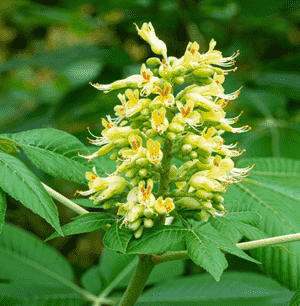
Ohio buckeye (Aesculus glabra)
Also known as: American buckeye
The Ohio buckeye (Aesculus glabra) is a well-known tree species native to the Midwest and is designated as Ohio's state tree. Its seeds contain tannic acid, making them poisonous to both humans and cattle.
Attributes of Ohio buckeye
Images of Ohio buckeye
Quickly Identify Ohio buckeye
Scientific Classification of Ohio buckeye
Planting and Growing of Ohio buckeye
 How to Water Ohio buckeye?
 What Are the Sunlight Requirements for Ohio buckeye?
 What Is the Ideal Temperature Range for Ohio buckeye?
 What Soil is Best for Ohio buckeye?
 How to Fertilize Ohio buckeye?
 How to Prune Ohio buckeye?
 How to Propagate Ohio buckeye plant?
 How to Repot Ohio buckeye plant?
Toxicity of Ohio buckeye
Is Ohio buckeye toxic to humans?
Each component of the Ohio buckeye is known to contain glycosides and saponins, which can lead to serious health issues. Ingesting significant quantities of this plant results in a range of symptoms including loss of coordination, muscular spasms, agitation, depressive states, gastrointestinal disturbances, colic, vomiting, diarrhea, weakness, paralysis, and potentially, coma. It appears that the nuts are occasionally mistakenly roasted and consumed by humans, which constitutes a primary source of poisoning incidents. Additionally, it is crucial to ensure that small children are kept away from this hazardous plant.
Is Ohio buckeye toxic to cat?
The 'Ohio buckeye' possesses mild toxic properties for cats, particularly when consumed in excessive quantities. Every part of the 'Ohio buckeye' plant can be harmful if ingested by a cat. Symptoms may present as overall signs of discomfort and illness. Pet owners are advised to observe their cats closely for any signs of distress or medical issues following exposure to the 'Ohio buckeye'. In cases where poisoning is suspected, it is essential to obtain immediate veterinary care to protect the health and safety of the affected cat.
Is Ohio buckeye toxic to dog?
The Ohio buckeye presents a mild toxicity risk to dogs. Poisoning generally occurs when dogs consume significant quantities of the plant, which encompasses all its components, including leaves, seeds, and bark. If a dog ingests Ohio buckeye, they might display symptoms such as gastrointestinal distress, weakness, or dilated pupils. It is vital for dog owners to supervise their pets diligently and restrict access to Ohio buckeye to prevent possible poisoning. Should ingestion be suspected, prompt veterinary attention is crucial to safeguard the health and welfare of the affected animal.



