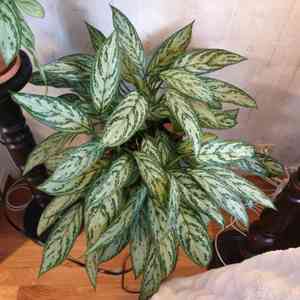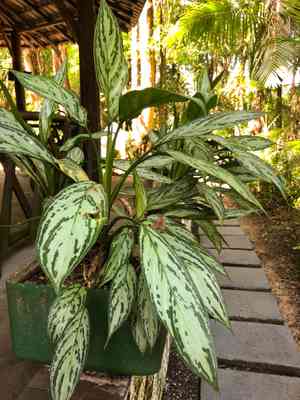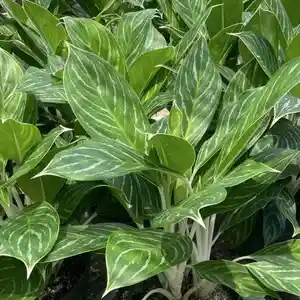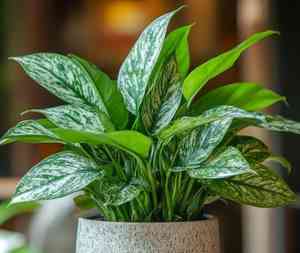
Chinese evergreen(Aglaonema commutatum)

Chinese evergreen (Aglaonema commutatum)

Also known as: Poison dart plant

Chinese evergreen, also known as the Philippine Evergreen or Chinese Evergreen, is a highly popular tropical houseplant from Southeast Asia. It is prized for its thick, glossy, lance-shaped foliage, which is typically dark green and beautifully variegated with striking silver-gray blotches or stripes. Valued for its tolerance of low light and ease of care, it is an ideal, resilient choice for adding a lush, exotic touch to any indoor space.

Attributes of Chinese evergreen

Lifespan
Perennial
Plant Type
Herb
Plant Height
30 cm to 91 cm
Spread
30 cm to 45 cm
Leaf Color
Green Variegated Gray Red
Flower Size
2.5 cm to 8 cm
Flower Color
White Green Cream

PlantJoy - Identify plants with a snap

Identify and diagnose plants, get toxicity alerts, and explore safety guides for all types of fungi.

Try for Free

Images of Chinese evergreen

Chinese evergreen(Aglaonema commutatum)

Quickly Identify Chinese evergreen

1
Variegated lance-shaped leaves with 5–8 primary lateral veins.
2
Greenish-white spathe with white spadix inflorescence on sugarcane-like stems.
3
Rare cylindrical whitish-yellow spadix flowers with yellow-green ovate spathe.
4
Compact globular to cylindrical fruit transitioning from green to white or red.
5
Erect stem with silver-gray blotches, around 1 inch (2.5 cm) thick, becoming decumbent.

Scientific Classification of Chinese evergreen

Phylum
Vascular plants
Class
Monocotyledons
Order
Water plantains and allies
Family
Arum
Genus
Chinese evergreens
Species
Chinese evergreen

Planting and Growing of Chinese evergreen

Care Difficulty
Easy
Watering Schedule
Every 3 days
Sunlight Requirements
Partial sun
Sunshine Duration
6-10 hours
Ideal Temperature
65-77℉
Soil Type
Potting Mix, Peat Mix
Soil pH
6.5-7.5
Fertilizer Type
Balanced
Pruning Season
Spring, Summer
Pruning Area
Branches, Leaves
Pruning Frequency
2 times a year
Repotting Season
Spring
Pot Type
Plastic, Terracotta

water icon How to Water Chinese evergreen?

For Aglaonema commutatum, it's essential to water just enough so that the soil feels slightly moist without becoming soggy. Ensure that the top inch of the soil dries out between waterings to prevent root rot. Typically, 200ml should suffice per session, allowing the plant to absorb adequately.
What are the symptoms of an underwatered Chinese evergreen?
What should I do if my Chinese evergreen is not getting enough water?
What are the symptoms of an overwatered Chinese evergreen?
How to save an overwatered Chinese evergreen?
More About Watering Techniques

sunlight icon What Are the Sunlight Requirements for Chinese evergreen?

Sunlight Requirements: Partial sun
Duration of light: 2 to 4 hours
Aglaonema commutatum thrives best in partial sun, with 2 to 4 hours of indirect light daily, enhancing foliage vibrancy and plant vigor.
What light condition does Aglaonema commutatum prefer?
How can you ensure the plant receives ideal light conditions?
What are the benefits of providing ideal light conditions?
More About Sunlight Requirements Techniques

temperature icon What Is the Ideal Temperature Range for Chinese evergreen?

Ideal Temperature: 65 ~ 77℉
Aglaonema commutatum thrives best in a temperature range between 65°F and 77°F. This range supports optimal growth and overall plant health by providing a stable environment with minimal stress.

soil icon What Soil is Best for Chinese evergreen?

Soil type: Loam, Sandy loam, Peat soil
Soil PH: 6.5 ~ 7.5
Aglaonema commutatum thrives in well-drained soil, preventing root rot and other water-related issues. This kind of soil ensures that water doesn’t pool around the roots, giving the plant the perfect balance of moisture and aeration it needs to flourish. The plant benefits from soil rich in organic matter, which provides essential nutrients and improves soil texture. This nutrient richness supports vigorous growth, healthy foliage, and vibrant colors, embodying the plant's natural beauty. The soil should have excellent moisture retention properties to keep the plant hydrated between waterings without becoming waterlogged. This ensures consistent soil moisture levels, lessening stress on the plant and promoting robust health. More About Soil

fertilize icon How to Fertilize Chinese evergreen?

Fertilizer type: Balanced
Aglaonema commutatum benefits from moderate fertilization. Apply a balanced, water-soluble liquid fertilizer at half strength every two weeks during the growing season. This allows the plant to uptake essential nutrients without overwhelming it, promoting healthy leaves and vibrant variegation. More About Fertilizing Techniques

prune icon How to Prune Chinese evergreen?

Pruning Time: Spring, Summer, Autumn
Begin by examining your Aglaonema commutatum to identify any leaves that appear yellowed, damaged, or dead. These are the primary candidates for removal. Using your clean pruning shears, cut the damaged or unwanted leaves as close to the base as possible without harming the surrounding healthy foliage. If the plant appears to be growing unevenly, you can trim it selectively to promote a more balanced shape. This can also help ensure that all parts of the plant receive adequate light. More About Pruning Techniques

propagate icon How to Propagate Chinese evergreen plant?

Propagate Time: Spring, Early spring
1
Choose a healthy stem with at least 2-3 leaves for cutting propagation. Ensure that the stem is not too young or too old, as younger stems root better but should be mature enough to withstand the process.
2
Using pruning shears, cut a stem section below a node. The node is crucial as it is the part where roots will develop. If using rooting hormone, dip the cut end in the powder at this stage.
3
Insert the treated cutting into a pot filled with a well-draining soil mix. Ensure the cutting is stable and the leaves are not submerged. Water lightly to settle the soil.
More About Propagating Techniques

repot icon How to Repot Chinese evergreen plant?

Repotting frequency: Every 2-3 years
1
You should repot Aglaonema commutatum when you notice roots growing out of the drainage holes or soil compacting and drying too quickly. Ideally, do this during the growing season, such as spring and summer, when the plant can recover swiftly. If the plant shows stunted growth despite normal care, it's a good sign that it might need a larger pot.
2
Selecting the proper pot is crucial. It should be only slightly larger than the current one to help prevent overwatering and root rot. A pot with drainage holes is essential to allow excess water to escape, promoting healthy root systems and preventing waterlogged roots, which can lead to diseases.
3
The ideal soil for Aglaonema commutatum should be well-draining yet retain some moisture. A mix of peat, perlite, and vermiculite works well. This combination ensures that the roots won't sit in water, offers support, and takes advantage of organic nutrients, enhancing the plant's growth while preventing root decay.
More About Repotting Techniques

PlantJoy - Identify plants with a snap

Find the best spots for them to optimize their health, simply using your phone.

Try for Free

Toxicity of Chinese evergreen

Is Chinese evergreen toxic to humans?

The Chinese evergreen, a toxic plant, can pose risks to humans if they consume or come into contact with it. Typically, the effects range from mild to moderate. The plant's toxicity is attributed to the presence of calcium oxalate crystals found throughout all its parts, which include fruits, flowers, bark, leaves, sap, and stems. Contact with the sap may lead to dermatitis, while ingestion can cause symptoms such as vomiting and diarrhea. As a houseplant, this species can be easily accessible to children. It is advisable to wear gloves when handling the plant to prevent the sap from coming into contact with your skin.

Is Chinese evergreen toxic to cat?

The Chinese evergreen plant poses a toxicity risk to cats and can cause poisoning if any part of it is ingested. Cats might unintentionally consume sections of the plant, given that all its components are toxic. Upon consumption, affected felines may exhibit symptoms of physical discomfort or illness. It is vital for cat owners to observe their pets for any indications of distress and to pursue immediate veterinary assistance if poisoning is suspected. Timely treatment at a veterinary clinic is essential for the recovery and wellbeing of the affected cat.

Is Chinese evergreen toxic to dog?

Chinese evergreen is recognized as toxic for dogs. When dogs consume any part of this plant, they may become poisoned due to the inherent toxicity found throughout its entirety. Dogs might inadvertently eat the leaves or stems, which can result in various health complications. Signs of poisoning from Chinese evergreen may include vomiting, diarrhea, oral irritation, and difficulty in swallowing. It is vital for dog owners to keep a close eye on their pets and restrict their access to Chinese evergreen, as ingestion can provoke these harmful reactions. Should a dog ingest any portion of Chinese evergreen, it is essential to seek prompt veterinary assistance to ensure the best possible outcome for the animal.

Identify toxic plants for your safety

Learn which plants are harmful to you and your pets, and make informed choices for a safer home!

Try for Free
WARNING
The judgment on toxicity and danger is for reference only. We DO NOT GUARANTEE any accuracy of such judgment. Therefore, you SHALL NOT rely on such judgment. It is IMPORTANT TO SEEK PROFESSIONAL ADVICE in advance when necessary.
More About Toxic Techniques