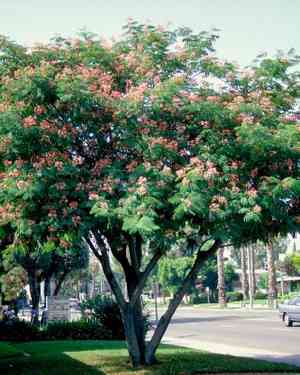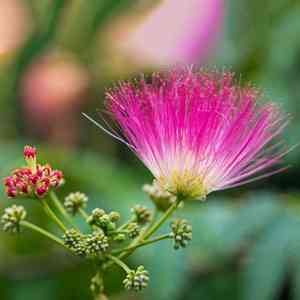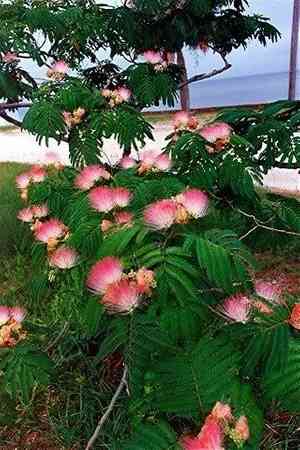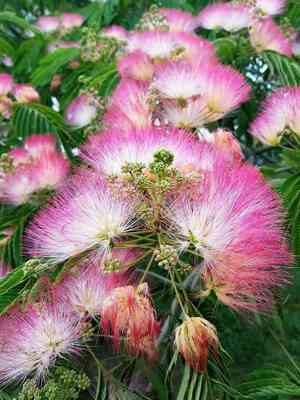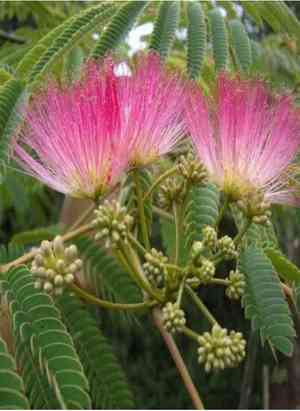
Persian silk tree(Albizia julibrissin)

Persian silk tree (Albizia julibrissin)

Also known as: Silk Tree, Pink siris, Bastard tamarind, Nemu Tree

Albizia julibrissin, commonly known as the Persian silk tree, is a deciduous plant recognized for its distinctive pink, fluffy flowers. Often grown for its ornamental appeal, this tree's mildly fragrant blooms attract butterflies, bees, and hummingbirds.

Attributes of Persian silk tree

Lifespan
Perennial
Plant Type
Tree
Plant Height
3 m to 16 m
Spread
6 m to 15 m
Leaf Color
Green
Flower Size
2.5 cm to 5 cm
Flower Color
Pink White

PlantJoy - Identify plants with a snap

Identify and diagnose plants, get toxicity alerts, and explore safety guides for all types of fungi.

Try for Free

Images of Persian silk tree

Persian silk tree(Albizia julibrissin)

Quickly Identify Persian silk tree

1
Umbrella-shaped canopy spanning 20-25 feet (6-7.6 meters)
2
Fluffy, vibrant pink and white pom-pom flowers, 5-8 inches (13-20 cm) in diameter
3
Brown, flattened pods, 10-20 cm (4-8 inches) long, containing 5-10 seeds
4
Fern-like leaves with 4-30 pairs of opposite pinnae, each 2-4 inches (5-10 cm) long
5
Smooth, delicate trunk transitioning from light brown to gray, featuring lenticels

Scientific Classification of Persian silk tree

Phylum
Vascular plants
Class
Dicotyledons
Order
Legumes, milkworts and allies
Family
Legume
Genus
Silk plants
Species
Persian silk tree

Planting and Growing of Persian silk tree

Care Difficulty
Easy
Watering Schedule
Every 8 days
Sunlight Requirements
Full sun
Sunshine Duration
4-10 hours
Ideal Temperature
68-77℉
Soil Type
Potting Mix, Peat Mix
Soil pH
6.5-7.5
Fertilizer Type
Balanced
Pruning Season
Spring, Summer
Pruning Area
Branches, Leaves
Pruning Frequency
2 times a year
Repotting Season
Spring
Pot Type
Plastic, Ceramic

water icon How to Water Persian silk tree?

Albizia julibrissin, also known as the silk tree, needs about 800 ml of water each time you water it. Ensure the water reaches the root zone, ensuring it penetrates the soil without causing waterlogging. The key is to keep the soil consistently moist but not soggy.
What are the symptoms of an underwatered Persian silk tree?
What should I do if my Persian silk tree is not getting enough water?
What are the symptoms of an overwatered Persian silk tree?
How to save an overwatered Persian silk tree?

sunlight icon What Are the Sunlight Requirements for Persian silk tree?

Sunlight Requirements: Full sun, Partial sun
Duration of light: 6 to 8 hours
Albizia julibrissin prefers full sun to partial sun, flourishing with 6 to 8 hours of sunlight. Optimal light conditions result in robust growth, increased flowering, and overall plant vitality, ensuring maximum aesthetic appeal.
Best Position for Sunlight
Dealing with Shade
Sunlight Intensity Management

temperature icon What Is the Ideal Temperature Range for Persian silk tree?

Ideal Temperature: 68 ~ 77℉
The ideal temperature range for Albizia julibrissin is between 68°F and 77°F. This temperature range provides the best conditions for growth and flowering, ensuring that the plant receives enough warmth without being exposed to excessive heat that can stress the plant.

soil icon What Soil is Best for Persian silk tree?

Soil type: Sandy loam, Loam, Clay soil
Soil PH: 6.5 ~ 7.5
Albizia julibrissin thrives in well-drained soil conditions which prevent root rot by ensuring that excess water drains away quickly, maintaining optimal plant health and growth. This tree flourishes in nutrient-rich soils that provide essential minerals and nutrients, supporting vigorous growth and vibrant flowering. The soil should ideally retain some moisture while still allowing air circulation, facilitating balanced hydration and promoting the development of a robust root system.

fertilize icon How to Fertilize Persian silk tree?

Fertilizer type: Balanced
For Albizia julibrissin, it's essential to carefully manage the amount of fertilizer used, as excessive amounts can harm the plant. Generally, applying around one tablespoon of balanced fertilizer per square foot of root zone is recommended during the growing season.

prune icon How to Prune Persian silk tree?

Pruning Time: Spring, Summer, Autumn
Begin by removing any dead or diseased branches to maintain plant health. Next, prune back any crossing or rubbing branches to prevent damage and improve airflow. Lastly, shape the tree by trimming overly long shoots to promote a desired balanced shape. For experienced gardeners, consider a more specialized approach like thinning cuts deeper within the canopy to reduce density without altering the overall size. This improves sunlight penetration and boosts bloom production.

propagate icon How to Propagate Persian silk tree plant?

Propagate Time: Spring,Late spring,Early spring,Summer
1
To propagate Albizia julibrissin via seeds, soak the seeds in warm water for 24 hours before sowing. This breaks seed dormancy and aides in germination by softening the seed coat.
2
For cutting propagation, select a healthy, disease-free branch and trim a 6-8 inch cutting just below a leaf node. Ensure the cutting has multiple leaves and remove any excessive foliage.
3
Plant the seeds or cuttings in a well-draining potting mix. Keep the medium consistently moist and place it in a bright, indirect sunlight location. Regular misting helps maintain humidity levels.

repot icon How to Repot Persian silk tree plant?

Repotting frequency: Every 2-3 years
1
Albizia julibrissin should be repotted when you notice roots emerging from the drainage holes or if water is not being absorbed properly. These signs indicate the plant has outgrown its pot. Repotting during the growing seasons, ideally in spring or summer, allows the plant to recover rapidly.
2
Select a pot that is one size larger than the current one, featuring sufficient drainage holes to prevent waterlogging. Using a pot that provides ample space for root development promotes healthier growth and reduces the risk of root rot ensuring your Albizia julibrissin thrives.
3
Opt for a well-draining loamy soil mix. This type of soil ensures adequate drainage while retaining essential moisture, which is crucial for Albizia julibrissin. Good aeration in the soil supports healthy root growth and allows the plant to access nutrients efficiently.

PlantJoy - Identify plants with a snap

Find the best spots for them to optimize their health, simply using your phone.

Try for Free

Toxicity of Persian silk tree

Is Persian silk tree toxic to cat?

The Persian silk tree presents a moderate risk of toxicity to cats. When a cat consumes the seeds of the Persian silk tree, which contain harmful substances, it may display signs of physical distress. In these situations, it is essential for the cat to receive prompt attention from a veterinarian to avert any additional health issues. Cat owners must be watchful and restrict their pets' access to the seeds of this plant to prevent possible poisoning events.

Is Persian silk tree toxic to dog?

The Persian silk tree presents a moderate toxicity risk to dogs. The primary way in which dogs can experience poisoning is through the consumption of this plant. In particular, the seeds of the Persian silk tree contain toxic substances that are detrimental to canines. If a dog ingests these seeds, it may show signs indicative of poisoning. Symptoms might involve gastrointestinal distress, vomiting, diarrhea, lethargy, or potentially more severe reactions based on the quantity ingested and the dog's individual sensitivity. It is essential for dog owners to vigilantly supervise their pets and restrict their access to the seeds of the Persian silk tree. Should a dog ingest any portion of this plant and begin to exhibit poisoning symptoms, it is vital to seek immediate veterinary assistance to guarantee appropriate treatment and care.

Identify toxic plants for your safety

Learn which plants are harmful to you and your pets, and make informed choices for a safer home!

Try for Free
WARNING
The judgment on toxicity and danger is for reference only. We DO NOT GUARANTEE any accuracy of such judgment. Therefore, you SHALL NOT rely on such judgment. It is IMPORTANT TO SEEK PROFESSIONAL ADVICE in advance when necessary.