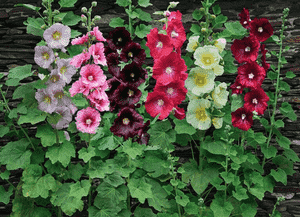
Common hollyhock (Alcea rosea)
Also known as: Garden hollyhock
Common hollyhock (Alcea rosea) is renowned for its towering stalks and striking blooms, often growing between 1.5 to 2.5 meters tall. These impressive heights add vertical interest to garden spaces, making them stand out. Additionally, the vibrant flowers are a magnet for pollinators, such as butterflies and hummingbirds, which can enhance the ecological health of your garden.
In This Article
Attributes of Common hollyhock
Lifespan
Perennial, Biennial, Annual
Plant Type
Herb
Plant Height
1.5 m to 2.5 m
Spread
50 cm to 1 m
Leaf Color
Green
Flower Size
5 cm to 10 cm
Flower Color
Pink Red White Yellow Purple Orange Cream Violet
Images of Common hollyhock
Quickly Identify Common hollyhock
1
Towering stalks up to 8 feet (2.4 meters) tall
2
Large, showy flowers 3-5 inches (7.6-12.7 cm) in diameter
3
Heart-shaped base on broad leaves
4
Schizocarp fruits with segmented structure
5
Robust, unbranched stem with fine hairs
Scientific Classification of Common hollyhock
Phylum
Vascular plants
Class
Dicotyledons
Order
Mallows, rock-roses, and allies
Family
Mallow
Genus
Hollyhocks
Species
Common hollyhock
Planting and Growing of Common hollyhock
Care Difficulty
Easy
Watering Schedule
Every 4 days
Sunlight Requirements
Full sun
Sunshine Duration
6-12 hours
Ideal Temperature
65-75℉
Soil Type
Potting Mix, Peat Mix
Soil pH
6.5-7.5
Fertilizer Type
Balanced
Pruning Season
Spring, Summer
Pruning Area
Branches, Leaves
Pruning Frequency
2 times a year
Repotting Season
Spring
Pot Type
Plastic, Ceramic
 How to Water Common hollyhock?
When watering the Alcea rosea, a general rule of thumb is to provide about 500 ml of water each time. This amount ensures that the soil is thoroughly moistened but not waterlogged. The top inch of soil should feel damp after watering, while still allowing proper drainage to prevent root rot.
More About Watering Techniques→
What are the symptoms of an underwatered Common hollyhock?
›
What should I do if my Common hollyhock is not getting enough water?
›
What are the symptoms of an overwatered Common hollyhock?
›
How to save an overwatered Common hollyhock?
›
 What Are the Sunlight Requirements for Common hollyhock?
Alcea rosea flourishes in environments providing full sun exposure. Such conditions foster healthy growth, increased flowering potential, and enhance the plant’s structural integrity.
More About Sunlight Requirements Techniques→
What type of sunlight does Alcea rosea require?
›
How can I ensure my Alcea rosea gets adequate sunlight?
›
What benefits does proper sunlight provide to Alcea rosea?
›
 What Is the Ideal Temperature Range for Common hollyhock?
The ideal temperature range for Alcea rosea, commonly known as hollyhock, is between 65°F to 75°F. This range supports optimal growth and flowering. Temperatures within this spectrum encourage healthy foliage and robust flowering by providing the right conditions for photosynthesis and other physiological processes.
 What Soil is Best for Common hollyhock?
Alcea rosea thrives in soil that offers good drainage, preventing root rot and other moisture-related issues. Well-drained soil ensures oxygen reaches the roots, promoting healthy plant growth. This plant benefits from a soil rich in organic matter, which supplies essential nutrients for robust flowering. A nutrient-dense environment enhances the plant's ability to produce vibrant blooms throughout the growing season. Soil with moderate moisture retention helps this plant withstand dry spells without waterlogging its roots. This balance allows for sustained growth and resilience against drought conditions.
More About Soil→
 How to Fertilize Common hollyhock?
When fertilizing Alcea rosea, aim for a balanced approach to provide all necessary nutrients. Use about 1 tablespoon of liquid fertilizer per gallon of water when using liquid fertilizers. For granular or slow-release fertilizers, a small handful spread evenly around the base should suffice.
More About Fertilizing Techniques→
 How to Prune Common hollyhock?
In early spring, remove any dead, damaged, or diseased stems to promote healthy new growth. Cut back to the ground to allow fresh shoots to emerge, focusing on maintaining the plant's overall shape and vigor. During summer, conduct light maintenance by deadheading spent blooms. This encourages continuous flowering and keeps the plant looking tidy and vibrant. Use sharp scissors to snip off the flower heads just above the first set of healthy leaves. In the fall, cut back Alcea rosea to about six inches above the ground after the first frost. This prevents the plant from overwintering pests and diseases and prepares it for a renewed spring growth. Cover with mulch to protect roots from harsh winter conditions.
More About Pruning Techniques→
 How to Propagate Common hollyhock plant?
1
Begin by filling seed trays with potting soil. Space the seeds evenly on the surface and cover them with a thin layer of soil. Water lightly to keep the soil moist but not waterlogged.
2
Place the trays in a warm location with indirect sunlight. Maintain a temperature around 15-20°C (59-68°F). Seeds usually germinate in 10 to 14 days, and it's crucial to ensure consistent moisture during this period.
3
Once the seedlings have developed true leaves, transplant them to individual pots or directly into well-prepared garden beds. Ensure they receive full sun and water them regularly until established.
 How to Repot Common hollyhock plant?
1
Alcea rosea should be repotted when you notice that roots are growing through the drainage holes, or the plant appears to be overly large and top-heavy for its current pot. It's also advisable to check if the soil is drying out too quickly, indicating circled roots. The best time to repot is during the active growing season when the plant can recover more easily from the stress.
2
Select a pot that is about one size larger than the current one. This allows ample space for root expansion without overwhelming the plant. Opt for pots with good drainage holes to prevent waterlogged soil — crucial for preventing root rot and ensuring healthy growth. Well-selected pots encourage robust development and reduce watering frequency.
3
Choose a well-draining potting mix that caters to Alcea rosea's moisture preferences. A rich, loamy soil with organic matter like compost is ideal. This soil type supports proper aeration and nutrition, helping the plant establish well in its new pot without risking water retention issues. The balanced nutrients in the soil also promote vibrant growth and blooming.
Learn More About Common hollyhock Diseases
Anthracnose
Bacterial Leaf Spot
Bacterial Soft Rot
Bacterial Wilt
Black Spot
Chemical Injury
Crown Gall
Damping-off
Downy Mildew
Drought Stress
Fusarium Wilt
Gray Mold
Leaf Curl
Leaf Spot
Mosaic
Nutrient Deficiency
Nutrient Toxicity
Powdery Mildew
Root Rot
Root-knot Nematode
Rusts
Sooty Mold
Spider Mites
Temperature Stress
Thrips Damage
White Mold



