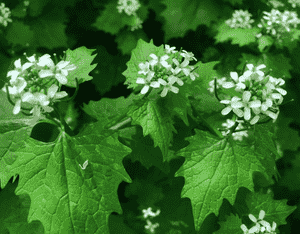
Garlic mustard(Alliaria petiolata)

Garlic mustard (Alliaria petiolata)

Also known as: Garlic Mustard, Hedge Garlic, Jack-by-the-Hedge

Allium ursinum, commonly referred to as wild garlic or ramsons, is a biennial herbaceous plant recognized for its strong garlic scent. It thrives in moist, partially shaded areas such as woodland edges and roadsides. In European cooking, its aromatic leaves are often utilized to enhance the flavor of salads and sauces.

Attributes of Garlic mustard

Lifespan
Biennial, Annual, Perennial
Plant Type
Herb
Plant Height
10 cm to 1.3 m
Spread
40 cm
Leaf Color
Green
Flower Size
1.5 mm to 3.5 mm
Flower Color
White

PlantJoy - Identify plants with a snap

Identify and diagnose plants, get toxicity alerts, and explore safety guides for all types of fungi.

Try for Free

Images of Garlic mustard

Garlic mustard(Alliaria petiolata)

Quickly Identify Garlic mustard

1
Distinct round to heart-shaped leaves with coarse, toothed edges emit a garlic odor when crushed.
2
Clusters of small, cruciform white flowers with four petals in elongated racemes from spring to early summer.
3
Distinctive four-sided pods, 1 1/2 to 2 inches (3.8 to 5 cm) long, containing glossy black seeds.
4
Smooth, green stems up to 3 feet (90 cm) tall, occasionally with fine hairs on 2nd-year plants.
5
Herbaceous biennial with a low rosette in the 1st year, tall stems up to 3.3 feet (1 meter) in 2nd year.

Scientific Classification of Garlic mustard

Phylum
Vascular plants
Class
Dicotyledons
Order
Brassicales
Family
Cruciferae
Genus
Alliaria
Species
Garlic mustard

Planting and Growing of Garlic mustard

Care Difficulty
Easy
Watering Schedule
Every 2 days
Sunlight Requirements
Partial sun
Sunshine Duration
4-6 hours
Ideal Temperature
60-75℉
Soil Type
Potting Mix, Peat Mix
Soil pH
6.5-7.5
Fertilizer Type
Balanced
Pruning Season
Spring, Summer
Pruning Area
Branches, Leaves
Pruning Frequency
2 times a year
Repotting Season
Spring
Pot Type
Plastic, Terracotta

water icon How to Water Garlic mustard?

For Alliaria petiolata, each watering session should provide around 250 milliliters of water. This amount ensures that the soil stays moderately moist without becoming overly saturated, which is crucial for maintaining the plant's health.
What are the symptoms of an underwatered Garlic mustard?
What should I do if my Garlic mustard is not getting enough water?
What are the symptoms of an overwatered Garlic mustard?
How to save an overwatered Garlic mustard?

sunlight icon What Are the Sunlight Requirements for Garlic mustard?

Sunlight Requirements: Partial sun, Full shade
Duration of light: 2 to 4 hours
Alliaria petiolata thrives in partial sun to full shade, replicating its natural forest floor environment. The ideal light range boosts growth, enhances foliage vibrance, and promotes healthy flowering patterns essential for ecological interactions.
What is the optimal lighting environment for Alliaria petiolata?
How can Alliaria petiolata be protected from excessive sun?
What are the benefits of providing the ideal lighting for Alliaria petiolata?

temperature icon What Is the Ideal Temperature Range for Garlic mustard?

Ideal Temperature: 60 ~ 75℉
Alliaria petiolata thrives best within a temperature range of 60°F to 75°F. This range provides an optimal environment for the plant's metabolic processes and ensures healthy growth and development.

soil icon What Soil is Best for Garlic mustard?

Soil type: Loam, Sandy loam, Calcareous soil
Soil PH: 6.5 ~ 7.5
Alliaria petiolata thrives in well-drained soil which prevents waterlogging and root rot. The soil's ability to hold but not retain excess water helps the plant maintain healthy root systems and robust growth. The plant prefers soil with good moisture retention capabilities, which helps it during dry spells by maintaining consistent moisture availability crucial for its survival and vigor. Alliaria petiolata requires soil with moderate nutrient content, which provides the essential nutrients for growth without overwhelming the plant with excess fertility that may cause leggy growth.

fertilize icon How to Fertilize Garlic mustard?

Fertilizer type: Balanced
For Alliaria petiolata, moderate fertilizing is key. Too much can hurt this delicate plant, so aim for a balanced approach. Use half the recommended amount of a balanced liquid fertilizer once a month during the growing season to provide sufficient nutrients without overwhelming the plant.

prune icon How to Prune Garlic mustard?

Pruning Time: Spring, Summer, Autumn, Winter
Start by assessing the plant for any dead or diseased stems. Use a pair of sharp pruning shears to cut these back to the base. For overly long shoots, trim them by up to a third, targeting stems with fewer leaves to encourage denser growth. After removing unwanted growth, focus on shaping the plant. Cut just above a healthy leaf node to stimulate new branching. This technique not only controls the plant's shape but also promotes a fuller, bushier appearance.

propagate icon How to Propagate Garlic mustard plant?

Propagate Time: Spring
1
Start by selecting a well-draining seed-starting mix. Fill the seed tray with this mix, lightly patting the surface to ensure it's firm yet not compacted, allowing for good root penetration.
2
Spread the Alliaria petiolata seeds evenly over the surface of the prepared soil. Lightly cover the seeds with a thin layer of the seed-starting mix, ensuring they are not too deeply buried.
3
Gently water the seeds using a fine spray to maintain moisture without washing the seeds away. Place the seed tray in a warm location with indirect light to promote germination, keeping an eye on soil moisture levels.

repot icon How to Repot Garlic mustard plant?

Repotting frequency: Every 2 years
1
Repot your Alliaria petiolata when you notice that the roots are densely packed or growing out of the drainage holes. Another sign that it's time for repotting is when the soil's ability to hold moisture seems reduced, indicating it's losing its quality.
2
Select a pot that is one size larger than the current one and has sufficient drainage holes. This not only prevents overwatering but also allows the roots to grow freely, promoting overall health and stability to support the plant’s growth.
3
Use soil that is rich in nutrients and has excellent drainage properties, such as a mix with equal parts of peat, compost, and perlite. This ensures that the plant has access to nutrients and avoids waterlogged conditions which can lead to root rot.

PlantJoy - Identify plants with a snap

Find the best spots for them to optimize their health, simply using your phone.

Try for Free

Toxicity of Garlic mustard

Is Garlic mustard toxic to humans?

Garlic mustard inherently contains compounds that can transform into hydrogen cyanide upon consumption. Hydrogen cyanide is recognized as one of the most lethal toxins found in nature. This compound deprives cells of oxygen, leading to their demise by targeting vital organs such as the heart, lungs, and the nervous system. Signs of poisoning encompass nausea, abdominal distress, vomiting, diarrhea, headaches, fatigue, gasping, difficulty in breathing, dizziness, confusion, a bluish tint to the skin and lips, fainting, seizures, and ultimately, it can lead to death. It is crucial to remove garlic mustard from your yard or garden if it appears, and until that is accomplished, ensure that young children, individuals with cognitive impairments, and potential foragers are kept away from it.

Is Garlic mustard toxic to cat?

Garlic mustard presents a mild toxic risk to cats, as every part of the plant can be harmful if ingested in substantial amounts. A cat may unintentionally consume garlic mustard while enjoying outdoor activities. Should a feline ingest a considerable quantity of garlic mustard, it could display general signs of distress or discomfort, including gastrointestinal issues. Given the mild toxicity associated with garlic mustard, it is vital for cat owners to keep a close eye on their pets and to seek prompt veterinary assistance if they suspect their cat has eaten garlic mustard. Rapid professional evaluation and intervention are critical to reduce any potential health risks linked to this plant.

Is Garlic mustard toxic to dog?

Garlic mustard presents a mild toxicity threat to dogs. Although the plant is not classified as highly toxic, consuming it in significant amounts may result in poisoning. Dogs may find various parts of garlic mustard appealing and can ingest them since all areas of the plant are deemed toxic. Signs of garlic mustard poisoning could include gastrointestinal disturbances, such as vomiting and diarrhea, or more serious reactions, depending on the quantity consumed. Therefore, it is crucial for dog owners to supervise their pets and prevent them from eating garlic mustard, particularly in locations where the plant is abundant. If it is suspected that a dog has ingested garlic mustard and is experiencing poisoning, it is imperative to obtain immediate veterinary assistance to guarantee appropriate care and recovery.

Identify toxic plants for your safety

Learn which plants are harmful to you and your pets, and make informed choices for a safer home!

Try for Free
WARNING
The judgment on toxicity and danger is for reference only. We DO NOT GUARANTEE any accuracy of such judgment. Therefore, you SHALL NOT rely on such judgment. It is IMPORTANT TO SEEK PROFESSIONAL ADVICE in advance when necessary.

