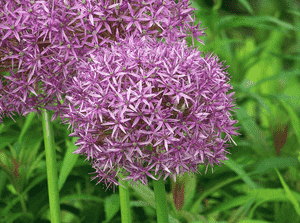
Broadleaf wild leek(Allium ampeloprasum)

Broadleaf wild leek (Allium ampeloprasum)

Also known as: Elephant garlic, Pearl onion

Allium ampeloprasum, a member of the onion genus, produces several well-known vegetables including leeks, pearl onions, salad leek, Persian leek, and elephant garlic.

Attributes of Broadleaf wild leek

Lifespan
Perennial, Annual
Plant Type
Herb
Plant Height
1.8 m
Spread
30 cm
Leaf Color
Green
Flower Size
4 cm to 12 cm
Flower Color
White Purple Pink

PlantJoy - Identify plants with a snap

Identify and diagnose plants, get toxicity alerts, and explore safety guides for all types of fungi.

Try for Free

Images of Broadleaf wild leek

Broadleaf wild leek(Allium ampeloprasum)

Quickly Identify Broadleaf wild leek

1
Upright, strap-like leaves up to 3 feet (90 cm) tall with a lush green hue.
2
Flowering stalk produces spherical umbel of small, pink star-shaped flowers.
3
Leaves are linear, 40-100 cm (1.3-3.2 feet) long, 1.5-2.5 cm (0.6-1 inch) wide.
4
Thick, cylindrical stem up to 2 inches (5 cm) in diameter, solid and edible.
5
Basal rosette of leaves with parallel vein pattern, glossy green surface.

Scientific Classification of Broadleaf wild leek

Phylum
Vascular plants
Class
Monocotyledons
Order
Asparagus and allies
Family
Amaryllis
Genus
Onions
Species
Broadleaf wild leek

Planting and Growing of Broadleaf wild leek

Care Difficulty
Easy
Watering Schedule
Every 4 days
Sunlight Requirements
Full sun
Sunshine Duration
4-8 hours
Ideal Temperature
60-77℉
Soil Type
Potting Mix, Peat Mix
Soil pH
6-8
Fertilizer Type
Balanced
Pruning Season
Spring, Summer
Pruning Area
Branches, Leaves
Pruning Frequency
2 times a year
Repotting Season
Spring
Pot Type
Plastic, Ceramic

water icon How to Water Broadleaf wild leek?

For Allium ampeloprasum, the watering amount should be substantial enough to moisten the soil thoroughly but not so much that it becomes waterlogged. Approximately 500 milliliters per watering session is ideal. The goal is to keep the soil consistently moist without allowing the roots to sit in standing water.
What are the symptoms of an underwatered Broadleaf wild leek?
What should I do if my Broadleaf wild leek is not getting enough water?
What are the symptoms of an overwatered Broadleaf wild leek?
How to save an overwatered Broadleaf wild leek?
More About Watering Techniques

sunlight icon What Are the Sunlight Requirements for Broadleaf wild leek?

Sunlight Requirements: Full sun, Partial sun
Duration of light: 6–8 hours daily
The plant's ideal light range is full sun to partial sun, with benefits including enhanced growth, flavor improvement, increased oil production, and resilience against diseases and pests.
How much sun does Allium ampeloprasum need?
What if I don't have enough sunlight?
Why is this sunlight important for Allium ampeloprasum?
More About Sunlight Requirements Techniques

temperature icon What Is the Ideal Temperature Range for Broadleaf wild leek?

Ideal Temperature: 60 ~ 77℉
The ideal temperature range for Allium ampeloprasum should be between 60°F and 77°F. This range provides the best conditions for photosynthesis, nutrient uptake, and overall growth. It ensures the plant develops fully without stress.

soil icon What Soil is Best for Broadleaf wild leek?

Soil type: Loam, Sandy loam, Sand soil
Soil PH: 6 ~ 8
Allium ampeloprasum thrives in well-draining soil. This characteristic prevents waterlogging, which can lead to root rot. Ensuring good drainage promotes healthy root growth, essential for nutrient uptake and overall plant vigor. Rich, fertile soil with ample organic matter is ideal. This not only provides the essential nutrients necessary for robust growth, but also supports the microbial ecosystem, which in turn aids in nutrient breakdown and availability. A slightly acidic to neutral pH range of 6.0 to 8.0 is preferred. This pH balance facilitates nutrient availability and absorption, helping the plant maintain optimal health and productivity. More About Soil

fertilize icon How to Fertilize Broadleaf wild leek?

Fertilizer type: Balanced
For Allium ampeloprasum, the recommended fertilizer amount should be modest. When using a liquid fertilizer, mix it at half the strength recommended for general vegetables. For slow-release fertilizers, use around 50 grams per square meter. More About Fertilizing Techniques

prune icon How to Prune Broadleaf wild leek?

Pruning Time: Spring, Summer, Autumn
To prune Allium ampeloprasum, start by removing any dead or yellowing leaves. Use clean, sharp scissors or pruning shears. Trim the leaves down to the base where they meet the healthy green foliage. This prevents the plant from wasting energy on dead growth and helps improve air circulation. After the flowering season, cut the spent flower stalks down to the base. This will direct the plant's energy back into root and leaf growth, ensuring a more vigorous plant in the following season. Be gentle not to damage the healthy stems and leaves during this process. If Allium ampeloprasum becomes overcrowded, usually every few years, divide the clumps in early Spring or Autumn. Dig up the entire plant mass, and gently separate the bulbs, replanting them adequately spaced. This reduces competition for nutrients and promotes flowering. More About Pruning Techniques

propagate icon How to Propagate Broadleaf wild leek plant?

Propagate Time: Spring, Late spring, Early spring, Late autumn
1
Prepare well-draining soil with organic matter. Rich, loose soil helps in promoting root development and provides necessary nutrients for initial growth.
2
Sow the seeds about 1 centimeter deep in the prepared soil. Ensure they are evenly spread and lightly cover them with soil to maintain moisture and temperature consistency.
3
Water gently but thoroughly after planting. Keep the soil consistently moist but not waterlogged to prevent seed rot and ensure successful germination.
More About Propagating Techniques

repot icon How to Repot Broadleaf wild leek plant?

Repotting frequency: Every 2-3 years
1
Allium ampeloprasum needs repotting when overgrown roots are visible through drainage holes or the plant appears stunted despite regular watering and fertilization. Also, if the soil doesn't retain moisture as it used to or the plant isn't thriving, these are strong indicators that it's time to change its pot.
2
Select a pot that is 2-3 inches larger in diameter than the current one. This gives roots room to grow without overwhelming the plant. A pot with drainage holes is essential to prevent waterlogging, which can lead to root rot. Ceramic or clay pots are preferred for their breathability.
3
Opt for well-draining loamy soil, rich in organic matter. This type of soil provides essential nutrients and allows air to reach the roots, promoting healthy growth. Avoid soils that compact easily as they can suffocate roots and inhibit growth.

PlantJoy - Identify plants with a snap

Find the best spots for them to optimize their health, simply using your phone.

Try for Free

Toxicity of Broadleaf wild leek

Is Broadleaf wild leek toxic to humans?

Mature broadleaf wild leek emits a potent garlicky and onion-like aroma, which can attract the curiosity of children and even unsuspecting adults. This plant contains sulfides, which are known to lead to various types of gastrointestinal disturbances such as indigestion, nausea, vomiting, and severe colic. Individuals with sensitivity to sulfides, as well as small children or those who have consumed large amounts of this plant, are likely to experience more severe reactions. It is crucial that they receive medical attention without delay. To ensure the safety of all, broadleaf wild leek should be eradicated if it takes root in your garden.

Is Broadleaf wild leek toxic to cat?

Regardless of whether it is consumed in its raw form or after being cooked, the broadleaf wild leek (Allium ampeloprasum) poses a significant risk of severe reactions in cats. While the plant's aroma may deter some felines, those that choose to nibble on any part of it could face various symptoms such as nausea, diarrhea, vomiting, decreased appetite, mouth irritation, lethargy, and excessive drooling. A distinctly strong onion-like odor is frequently noticeable on the breath, as well as in urine and feces. The potential for broadleaf wild leek poisoning can lead to serious health concerns if substantial quantities are ingested, so it is essential to seek veterinary assistance immediately if you suspect your cat has consumed this plant.

Is Broadleaf wild leek toxic to dog?

The broadleaf wild leek, similar to its Allium family members such as onions, garlic, and chives, poses a moderate toxicity risk to dogs. This widely cultivated plant is incorporated into various culinary dishes, providing dogs with frequent opportunities for contact with it. Every part of the broadleaf wild leek contains substances that can harm a dog's red blood cells. Consequently, this can result in symptoms like fatigue, anemia, and discolored urine. Although coma and death can occur, they are uncommon, as a significant quantity must be consumed for such severe effects to manifest.

Identify toxic plants for your safety

Learn which plants are harmful to you and your pets, and make informed choices for a safer home!

Try for Free
WARNING
The judgment on toxicity and danger is for reference only. We DO NOT GUARANTEE any accuracy of such judgment. Therefore, you SHALL NOT rely on such judgment. It is IMPORTANT TO SEEK PROFESSIONAL ADVICE in advance when necessary.
More About Toxic Techniques

