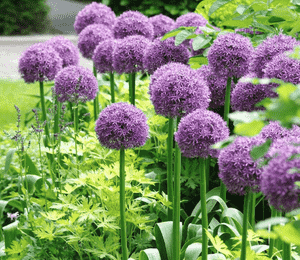
Giant onion(Allium giganteum)

Giant onion (Allium giganteum)

Also known as: Ornamental onion

The Allium giganteum, often referred to as giant onion or ornamental onion, belongs to the Amaryllidaceae family. This robust perennial is known for its impressive clusters of small purple flowers. As the largest species among ornamental onions, it emits an onion-like scent but is not cultivated for edible purposes.

Attributes of Giant onion

Lifespan
Perennial, Annual
Plant Type
Herb
Plant Height
50 cm to 60 cm
Spread
20 cm
Leaf Color
Green Gray Blue
Flower Size
15 cm to 20 cm
Flower Color
Purple Pink Violet

PlantJoy - Identify plants with a snap

Identify and diagnose plants, get toxicity alerts, and explore safety guides for all types of fungi.

Try for Free

Images of Giant onion

Giant onion(Allium giganteum)

Quickly Identify Giant onion

1
Majestic umbel with vivid pink florets clustered tightly atop a leafless stalk.
2
Small, star-shaped purple flowers with six-parted petals in a 5-6 inch cluster.
3
Long, slender, strap-like leaves with a green color and garlic-onion fragrance.
4
Sturdy, upright stem reaching 3-4 feet with unbranched growth, supporting large flowers.
5
Leaves typically lie flat at the plant's base, exhibiting a bluish-gray tinge.

Scientific Classification of Giant onion

Phylum
Vascular plants
Class
Monocotyledons
Order
Asparagus and allies
Family
Amaryllis
Genus
Onions
Species
Giant onion

Planting and Growing of Giant onion

Care Difficulty
Easy
Watering Schedule
Every 3 days
Sunlight Requirements
Full sun
Sunshine Duration
6-10 hours
Ideal Temperature
60-75℉
Soil Type
Potting Mix, Peat Mix
Soil pH
6.5-7.5
Fertilizer Type
Balanced
Pruning Season
Spring, Summer
Pruning Area
Branches, Leaves
Pruning Frequency
2 times a year
Repotting Season
Spring
Pot Type
Plastic, Ceramic

water icon How to Water Giant onion?

The amount of water for Allium giganteum should ideally keep the soil consistently moist but not waterlogged. Water deeply allowing approximately 500 ml of water to soak the soil, ensuring moisture reaches the root zone without causing pooling on the surface.
What are the symptoms of an underwatered Giant onion?
What should I do if my Giant onion is not getting enough water?
What are the symptoms of an overwatered Giant onion?
How to save an overwatered Giant onion?

sunlight icon What Are the Sunlight Requirements for Giant onion?

Sunlight Requirements: Full sun
Duration of light: 6-8 hours daily
Allium giganteum requires full sun exposure, ideally receiving 6 to 8 hours daily. This light range ensures optimal photosynthetic activity, enhancing the plant's growth and vibrant flowering displays.
What is the ideal amount of sunlight for Allium giganteum?
How can I ensure Allium giganteum receives optimal sunlight?
What are the benefits of Allium giganteum receiving ideal sunlight conditions?

temperature icon What Is the Ideal Temperature Range for Giant onion?

Ideal Temperature: 60 ~ 75℉
For optimal growth, Allium giganteum thrives in temperatures between 60 and 75 °F. This temperature range provides the right conditions for healthy foliage and robust flower stem development, mimicking their native environment's moderate climate.

soil icon What Soil is Best for Giant onion?

Soil type: Sandy loam, Loam
Soil PH: 6.5 ~ 7.5
Allium giganteum thrives in well-draining soil, which prevents waterlogging that can lead to root rot. This feature is vital for its bulb development, allowing air circulation at the roots. A soil rich in organic matter provides essential nutrients for Allium giganteum, ensuring robust growth and vibrant bloom. Compost or well-rotted manure can be added to enrich the soil. Soil with moderate moisture retention is preferred to keep roots hydrated but not soggy. This balance is crucial to maintain consistent growth, especially during dry spells.

fertilize icon How to Fertilize Giant onion?

Fertilizer type: Balanced
For Allium giganteum, an optimal fertilization strategy involves administering about 10-20 grams of liquid fertilizer. This amount ensures the plant receives adequate nutrients without overwhelming its root system. The concentration should ideally be diluted to half-strength to prevent root burn, especially in sensitive species. Solid, slow-release fertilizers should be applied more sparingly, with about 100 grams evenly distributed around the root zone, to support long-term growth.

prune icon How to Prune Giant onion?

Pruning Time: Spring, Summer
The ideal time for pruning Allium giganteum is after flowering, typically in early Summer. By this time, the flower heads will have died back naturally, and you can remove them without interrupting the plant's lifecycle. Once the flowers have withered, cut back the spent flower stalk to maintain aesthetics and direct the plant’s energy towards bulb and root development instead of seed production. Besides the flower stalks, inspect for any dead or diseased leaves, cutting them off at the base to enhance air circulation and health of the plant.

propagate icon How to Propagate Giant onion plant?

Propagate Time: Spring, Autumn
1
Start by preparing a well-drained soil mix in small pots or trays. Sow the seeds on the surface and cover them lightly with soil. Keep the soil consistently moist until germination occurs.
2
In autumn, dig up the mature Allium giganteum bulbs. Carefully separate the smaller bulbs from the main bulb and replant them immediately into prepared soil, ensuring they are at the same depth as before.
3
Once seedlings have grown sufficiently in their pots, transplant them into a prepared garden bed in spring or autumn. Space them adequately to allow for growth and root expansion.

repot icon How to Repot Giant onion plant?

Repotting frequency: Every 3 years
1
Repotting Allium giganteum should be considered when the plant shows signs of being root-bound, such as roots growing out of the drainage holes or the plant losing vigor. The best time to repot is in early spring, as this allows the plant to acclimate before the growing season. Observing these signs and choosing the right time helps ensure successful transplantation.
2
Select a pot that is 1 to 2 inches larger in diameter than the current one. The pot should also have adequate drainage holes to prevent waterlogging, which can lead to root rot. A slightly larger pot accommodates root growth and enhances aeration, promoting healthier plant development.
3
Opt for well-draining loamy soil enriched with organic matter, like compost. This type of soil retains enough moisture for the roots without causing waterlogging, providing essential nutrients and ensuring optimal drainage for Allium giganteum. This balance promotes healthy root and plant growth.

PlantJoy - Identify plants with a snap

Find the best spots for them to optimize their health, simply using your phone.

Try for Free

Toxicity of Giant onion

Is Giant onion toxic to humans?

The giant onion may pose potential toxicity to humans when consumed. The adverse effects associated with ingestion are generally mild, stemming from the sulfides present in nearly all parts of the plant, such as the flowers, stems, and roots. Fortunately, the bulb itself is not regarded as toxic. Symptoms resulting from eating the toxic portions of the plant can manifest as diarrhea, vomiting, and nausea. Children could be particularly susceptible to the harmful effects if they inadvertently consume any part of the plant besides the bulb.

Is Giant onion toxic to cat?

The giant onion is regarded as poisonous to cats. Should a cat consume any component of this plant, whether it be the flowers, fruits, leaves, roots, seeds, or stems, it can result in poisoning. Cats might inadvertently eat giant onion out of curiosity or confusion with another item. After ingestion, the cat may show signs of physical distress, signaling a toxic response. If a cat exhibits any illness after coming into contact with giant onion, it is crucial to seek immediate veterinary attention to achieve the most favorable outcome for the impacted feline.

Is Giant onion toxic to dog?

The giant onion is recognized as a toxic plant for dogs. Any consumption of the plant, which includes its flowers, fruits, leaves, roots, seeds, or stems, can lead to poisoning in dogs. Ingestion may happen unintentionally. Following the consumption of giant onion, dogs may show symptoms such as gastrointestinal distress, lethargy, or more serious clinical signs depending on the quantity ingested. It is essential for dog owners to supervise their pets closely and to prevent their access to giant onion. If there is any suspicion that a dog has been poisoned by giant onion, it is crucial to seek veterinary attention promptly to ensure the animal receives the best care possible.

Identify toxic plants for your safety

Learn which plants are harmful to you and your pets, and make informed choices for a safer home!

Try for Free
WARNING
The judgment on toxicity and danger is for reference only. We DO NOT GUARANTEE any accuracy of such judgment. Therefore, you SHALL NOT rely on such judgment. It is IMPORTANT TO SEEK PROFESSIONAL ADVICE in advance when necessary.

