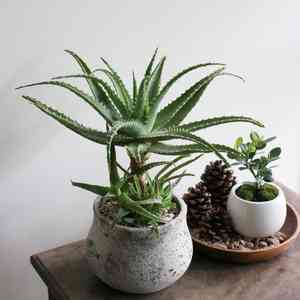
Candelabra aloe(Aloe arborescens)

Candelabra aloe (Aloe arborescens)

Also known as: Octopus plant, Tree aloe

Aloe arborescens, commonly known as Candelabra Aloe, is a flowering succulent indigenous to Southern Africa. It is frequently used as a natural barrier around livestock enclosures due to its dense, spiky foliage, which acts as a deterrent. This species is closely related to Aloe vera and is known for attracting birds, bees, and butterflies. The name "arborescens" translates to "tree-like," reflecting its growth habit.

Attributes of Candelabra aloe

Lifespan
Perennial
Plant Type
Succulent, Shrub
Plant Height
1.8 m to 3 m
Spread
2 m
Leaf Color
Green Blue
Flower Size
2.5 cm to 5 cm
Flower Color
Red Orange Yellow

PlantJoy - Identify plants with a snap

Identify and diagnose plants, get toxicity alerts, and explore safety guides for all types of fungi.

Try for Free

Images of Candelabra aloe

Candelabra aloe(Aloe arborescens)

Quickly Identify Candelabra aloe

1
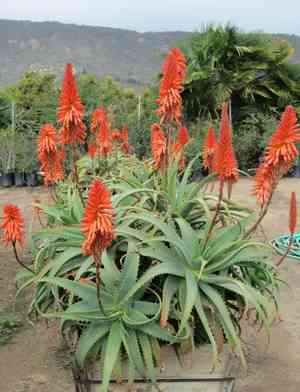
Robust succulent shrub reaching up to 9 feet (2.74 meters) in height and span.
2
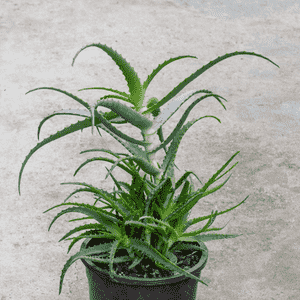
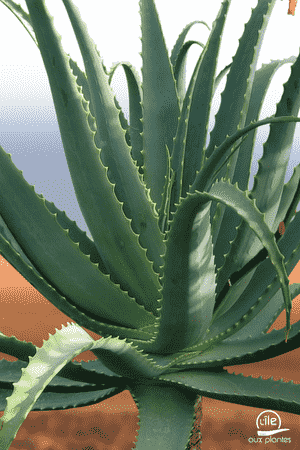
18-inch-wide (45.72 cm) rosettes with narrow leaves having soft teeth, varying from dull green to blue-green.
3
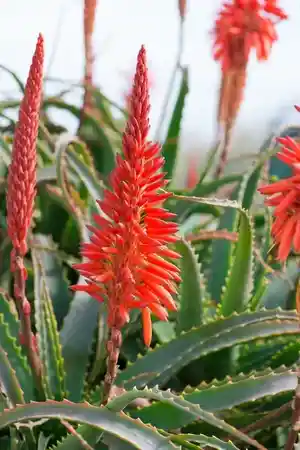
Coral-red flowers appearing in late fall on 2-feet-tall (60.88 cm) unbranched stalks above foliage.

Scientific Classification of Candelabra aloe

Phylum
Vascular plants
Class
Monocotyledons
Order
Asparagales
Family
Asphodel
Genus
Aloe
Species
Candelabra aloe

Planting and Growing of Candelabra aloe

Care Difficulty
Easy
Watering Schedule
Every 3 days
Sunlight Requirements
Full sun
Sunshine Duration
4-8 hours
Ideal Temperature
60-75℉
Soil Type
Potting Mix, Peat Mix
Soil pH
6.5-7.5
Fertilizer Type
Balanced
Pruning Season
Spring, Summer
Pruning Area
Branches, Leaves
Pruning Frequency
2 times a year
Repotting Season
Spring
Pot Type
Plastic, Ceramic

water icon How to Water Candelabra aloe?

Aloe arborescens, like most succulents, requires careful water management. The soil should be soaked thoroughly until water drains from the bottom of the pot, then allow it to dry completely before the next watering. This mimics rainfall in its natural habitat and prevents root rot.
What are the symptoms of an underwatered Candelabra aloe?
What should I do if my Candelabra aloe is not getting enough water?
What are the symptoms of an overwatered Candelabra aloe?
How to save an overwatered Candelabra aloe?

sunlight icon What Are the Sunlight Requirements for Candelabra aloe?

Sunlight Requirements: Full sun, Partial sun
Duration of light: 6 to 8 hours
Aloe arborescens thrives best in partial to full sun, ideally 6 to 8 hours daily. Sufficient sunlight enhances its photosynthetic ability, resulting in a robust, vibrant plant with improved overall health.
How much sunlight does Aloe arborescens need daily?
What are the best positions to achieve ideal lighting?
Why is ideal lighting crucial for Aloe arborescens?

temperature icon What Is the Ideal Temperature Range for Candelabra aloe?

Ideal Temperature: 60 ~ 75℉
Aloe arborescens thrives best in a warm environment with temperatures ranging from 60°F to 75°F. This range provides a balance of warmth that allows the plant to photosynthesize efficiently without the risk of dehydration or heat stress. Maintaining temperatures within this range optimizes growth and contributes to the plant’s overall health.

soil icon What Soil is Best for Candelabra aloe?

Soil type: Sandy soil, Sandy loam, Calcareous soil
Soil PH: 6.5 ~ 7.5
Aloe arborescens thrives in soils that provide excellent drainage properties. Proper drainage prevents root rot, allowing the plant to take up essential nutrients efficiently. This plant performs well in relatively nutrient-poor soils, reflecting its adaptation to rugged environments. Such conditions prevent over-fertilization, promoting sturdy growth. Slightly alkaline soil, with a pH up to 7.5, is ideal for Aloe arborescens, contributing to optimal growth conditions and ensuring nutrient availability over time.

fertilize icon How to Fertilize Candelabra aloe?

Fertilizer type: Balanced
For Aloe arborescens, balanced fertilizers are recommended. Use a diluted liquid fertilizer at half strength for the first application. Around 5 to 10 ml per liter of water is optimal. For slow-release fertilizers, use approximately 2 grams per pot to provide consistent nutrition over several months.

prune icon How to Prune Candelabra aloe?

Pruning Time: Spring, Summer, Autumn, Winter
Begin by inspecting the plant to identify wilted, damaged, or dead leaves. Carefully cut these leaves at their base, taking care not to damage healthy tissue. If the plant is growing too large, trim back excess growth to reshape it. Avoid cutting more than one-third of the plant at once to ensure it remains healthy and vibrant. Ensure that cuts are clean and precise for faster healing.

propagate icon How to Propagate Candelabra aloe plant?

Propagate Time: Spring, Early summer
1
Choose a robust and disease-free parent plant, as this increases the chances of successful propagation. Evaluate the plant for any visible signs of stress or weakness.
2
Use a sharp, sterilized knife to make precise cuts. The ideal cutting should be 10-15 cm long and have at least two leaves for optimal results.
3
Allow the cuttings to dry and callus over a few days before planting. Use a well-draining soil mix to prevent waterlogging and root rot.

repot icon How to Repot Candelabra aloe plant?

Repotting frequency: Every 2-3 years
1
Aloe arborescens needs repotting when its roots become crowded or start growing out of the pot's drainage holes. Additionally, if the soil becomes compacted or doesn't hold water well, it's a clear signal that repotting is needed. Observing these signs helps ensure the plant thrives.
2
Select a pot that is slightly larger than the current one, with drainage holes to prevent waterlogging. Terracotta pots are excellent as they allow excess moisture to evaporate, reducing the risk of root rot, which is crucial for succulent health.
3
Opt for a well-draining cactus mix that mimics the plant's natural habitat. This type of soil prevents root rot by allowing proper water drainage, keeping the roots healthy and aerated, ensuring the plant's robust growth.

PlantJoy - Identify plants with a snap

Find the best spots for them to optimize their health, simply using your phone.

Try for Free

Toxicity of Candelabra aloe

Is Candelabra aloe toxic to humans?

If consumed, candelabra aloe can lead to harmful effects in humans. The consequences of ingesting this plant are generally serious, occasionally culminating in organ failure and even death. The gel, latex, and extracts derived from the plant contain toxins that can cause symptoms like diarrhea, abdominal pain, renal failure, and potentially death. Although gels made from this plant are widely used for topical application, they can pose significant risks if children access and ingest the gel. Additionally, some individuals may utilize candelabra aloe extract for therapeutic reasons without fully understanding the associated dangers.

Is Candelabra aloe toxic to cat?

Candelabra aloe contains toxins that can pose a significant threat to cats. Should felines consume the sap or juice of this plant, they might display symptoms of distress or illness, although the specific toxic compounds remain unidentified. The risk of toxicity in cats arises from unintentional ingestion, highlighting the necessity of supervising pets in settings where candelabra aloe is found. If you believe your cat has ingested any part of candelabra aloe, it is crucial to obtain prompt veterinary assistance to manage any potential health concerns stemming from exposure to this plant.

Is Candelabra aloe toxic to dog?

Candelabra aloe is identified as a toxic species for dogs. When dogs consume any part of this plant, especially its sap or juice, they risk poisoning. This often occurs when dogs inadvertently eat portions of the plant, resulting in a range of symptoms that indicate toxicity. Such symptoms can encompass vomiting, diarrhea, lethargy, and alterations in urine color, among others. It is essential for dog owners to remain observant and prevent their pets from coming into contact with candelabra aloe. Should a dog ingest candelabra aloe, it is vital to seek prompt veterinary assistance to guarantee the best possible outcome for the affected animal.

Identify toxic plants for your safety

Learn which plants are harmful to you and your pets, and make informed choices for a safer home!

Try for Free
WARNING
The judgment on toxicity and danger is for reference only. We DO NOT GUARANTEE any accuracy of such judgment. Therefore, you SHALL NOT rely on such judgment. It is IMPORTANT TO SEEK PROFESSIONAL ADVICE in advance when necessary.