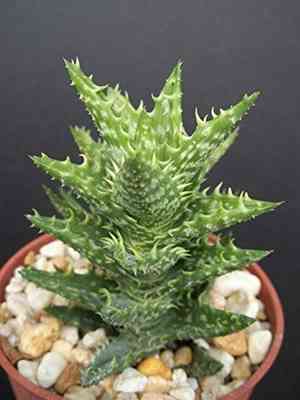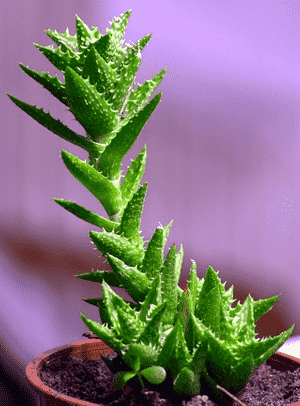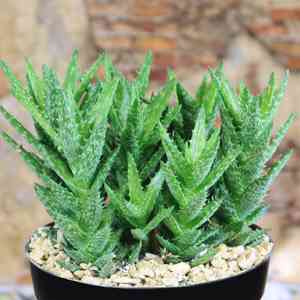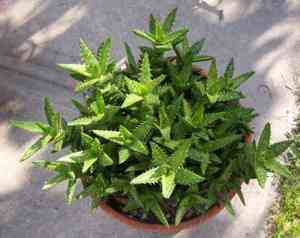
Tiger tooth aloe(Aloe juvenna)

Tiger tooth aloe (Aloe juvenna)

Also known as: Tiger Tooth Aloe

Aloe juvenna gets its common name, tiger tooth aloe, from its menacing-looking spiny teethed leaves. However, this plant is all bark and no bite, as the spines are harmless and will not prick you if touched. In 1979 some unknowing person incorrectly labeled the plant as "possible juvenile Aloe," which turned into the Latin word "juvenna," which eventually became the official species name.

Attributes of Tiger tooth aloe

Lifespan
Perennial
Plant Type
Succulent
Plant Height
25 cm
Spread
5 cm to 8 cm
Leaf Color
Green
Flower Size
2.5 cm to 5 cm
Flower Color
Red Orange

PlantJoy - Identify plants with a snap

Identify and diagnose plants, get toxicity alerts, and explore safety guides for all types of fungi.

Try for Free

Images of Tiger tooth aloe

Tiger tooth aloe(Aloe juvenna)

Quickly Identify Tiger tooth aloe

1
Stems grow 1-2 feet long, arching over, densely adorned with bright green toothy-margined leaves.
2
Leaves exhibit lighter green to white flecks on both surfaces, forming tight rosettes at stem tips.
3
Foliage can turn reddish to brown under full sun exposure.
4
Succulent tends to sucker extensively, creating dense mats or cascading over edges.
5
When flowering in mid to late summer, displays orange-red blooms atop unbranched spike.

Scientific Classification of Tiger tooth aloe

Phylum
Vascular plants
Class
Monocotyledons
Order
Asparagales
Family
Asphodel
Genus
Aloe
Species
Tiger tooth aloe

Planting and Growing of Tiger tooth aloe

Care Difficulty
Easy
Watering Schedule
Every 2 days
Sunlight Requirements
Full sun
Sunshine Duration
6-10 hours
Ideal Temperature
65-75℉
Soil Type
Potting Mix, Peat Mix
Soil pH
6.5-7.5
Fertilizer Type
Balanced
Pruning Season
Spring, Summer
Pruning Area
Branches, Leaves
Pruning Frequency
2 times a year
Repotting Season
Spring
Pot Type
Plastic, Ceramic

water icon How to Water Tiger tooth aloe?

Aloe juvenna requires a thoughtful approach when it comes to watering. Ideally, you should allow the soil to dry out completely between waterings. When you do water, ensure it's enough to soak the soil thoroughly, around 200 ml for a medium-sized pot. The goal is to mimic the natural arid environment of this succulent, avoiding waterlogging.
What are the symptoms of an underwatered Tiger tooth aloe?
What should I do if my Tiger tooth aloe is not getting enough water?
What are the symptoms of an overwatered Tiger tooth aloe?
How to save an overwatered Tiger tooth aloe?

sunlight icon What Are the Sunlight Requirements for Tiger tooth aloe?

Sunlight Requirements: Full sun, Partial sun
Duration of light: 6 to 8 hours
Aloe juvenna thrives in partial to full sun exposure, ideally 6-8 hours a day. Adequate light strengthens its succulent leaves and maintains its robust structure, enhancing its beauty and resilience.
What is the preferred sunlight condition for Aloe juvenna?
How can one ensure Aloe juvenna receives optimal sunlight?
What benefits does Aloe juvenna gain from ideal lighting?

temperature icon What Is the Ideal Temperature Range for Tiger tooth aloe?

Ideal Temperature: 65 ~ 75℉
The ideal temperature range for Aloe juvenna, often known as Tiger Tooth Aloe, is between 65°F and 75°F. This succulent thrives in warm environments that mimic its native climate. Providing consistent warmth within this range encourages optimal growth and prevents stress-related issues.

soil icon What Soil is Best for Tiger tooth aloe?

Soil type: Sandy soil, Loam, Sandy loam
Soil PH: 6.5 ~ 7.5
Aloe juvenna thrives in well-draining soil to prevent waterlogging and root rot. Proper drainage ensures sufficient aeration and oxygen to the roots, fostering healthy growth and reducing the risk of diseases. This plant prefers soil with a pH range from 6.5 to 7.5, which supports optimal nutrient uptake. A balanced pH ensures Aloe juvenna can efficiently absorb essential minerals, leading to robust overall health. Aloe juvenna can grow in soils with low fertility, mimicking its natural environment. This characteristic allows the plant to adapt well to sparse conditions without needing constant fertilization.

fertilize icon How to Fertilize Tiger tooth aloe?

Fertilizer type: Balanced
For Aloe juvenna, a succulent plant, the fertilizer amount should be modest. Use a diluted liquid succulent fertilizer, mixed at half-strength, typically around 1/4 teaspoon per gallon of water. This ensures that the plant receives nutrients without the risk of over-fertilization, which can be detrimental to its health.

prune icon How to Prune Tiger tooth aloe?

Pruning Time: Spring, Summer
Begin by identifying any dead or yellowing leaves on your Aloe juvenna. Using sharp, clean scissors or pruning shears, carefully cut these leaves at the base near the plant’s stem without damaging healthy tissue. Removing dead leaves helps improve the plant's appearance and encourages better air circulation. If your Aloe juvenna has become leggy or you want to control its size, trim the stems back by about one-third. Make your cut just above a leaf node to encourage branching. This practice will help maintain the plant's shape and keep it looking its best.

propagate icon How to Propagate Tiger tooth aloe plant?

Propagate Time: Spring, Early summer
1
Select a healthy and mature Aloe juvenna plant with no signs of disease or pest infestation. This increases the likelihood that the new cuttings or divisions will root successfully and grow into healthy plants.
2
Use sterile shears to cut an offset or divide a cluster of leaves from the parent plant. Ensure that each cut has a few leaves and some roots attached to maximize the chances of successful rooting.
3
Prepare a pot with well-draining potting mix. Moisten it lightly and make a small hole in the center where the cutting or division will be planted.

repot icon How to Repot Tiger tooth aloe plant?

Repotting frequency: Every 2-3 years
1
Aloe juvenna needs repotting when it becomes root-bound, you notice growth stalling, or the soil doesn’t drain well anymore. These signs usually suggest the plant has outgrown its current pot, and repotting will give it the necessary space and nutrients to thrive.
2
Select a pot that's 1-2 inches larger than the current one, ensuring it has drainage holes. Terra cotta pots are excellent as they allow moisture to evaporate from the soil quickly, reducing root rot risk. This choice supports a healthy root system by preventing overwatering.
3
Use a well-draining soil mix like a cactus mix with added perlite or pumice for enhanced drainage. Such a mix is crucial for Aloe juvenna because it prevents water pooling around the roots, reduces the chance of root rot, and supports healthy growth.

PlantJoy - Identify plants with a snap

Find the best spots for them to optimize their health, simply using your phone.

Try for Free

Toxicity of Tiger tooth aloe

Is Tiger tooth aloe toxic to cat?

The tiger tooth aloe is known to possess mild toxicity for felines. Even though the toxicity level is fairly low, it is vital for pet owners to closely observe their cats, as significant ingestion of the plant can result in poisoning. In particular, the leaves of the tiger tooth aloe harbor toxic compounds that may cause various symptoms of discomfort in cats. Pet owners need to remain vigilant and discourage their pets from munching on or swallowing this plant. Should any health issues arise following a cat's interaction with tiger tooth aloe, it should be taken seriously, necessitating prompt veterinary attention. Swift medical intervention at a veterinary facility is essential for effectively managing the cat’s health situation and ensuring its overall well-being.

Is Tiger tooth aloe toxic to dog?

Tiger tooth aloe is recognized as having mild toxic effects on dogs. Canines are at risk of poisoning primarily when they consume large quantities of the plant's leaves. The symptoms associated with this toxicity can vary but may include gastrointestinal distress, vomiting, or diarrhea. Therefore, it is essential for dog owners to keep a watchful eye on their pets and take steps to prevent any ingestion of tiger tooth aloe, particularly ensuring that the leaves are stored out of reach. If a dog happens to ingest tiger tooth aloe and displays any signs of adverse reactions, it is vital to seek immediate medical attention at a veterinary clinic to safeguard the animal's health and well-being.

Identify toxic plants for your safety

Learn which plants are harmful to you and your pets, and make informed choices for a safer home!

Try for Free
WARNING
The judgment on toxicity and danger is for reference only. We DO NOT GUARANTEE any accuracy of such judgment. Therefore, you SHALL NOT rely on such judgment. It is IMPORTANT TO SEEK PROFESSIONAL ADVICE in advance when necessary.