Aloe vera(Aloe vera)

Aloe vera (Aloe vera)

Also known as: Chinese aloe, Wand of heaven, Burn aloe

Aloe vera, an evergreen succulent from the Arabian Peninsula, has become a favored houseplant. Its thick, fleshy leaves retain water, aiding its survival in desert environments. Aloe vera is extensively used in various cosmetics and skin-care products for its beneficial properties.

Attributes of Aloe vera

Lifespan
Perennial
Plant Type
Succulent, Herb
Plant Height
20 cm to 1 m
Spread
20 cm to 50 cm
Leaf Color
Green Gray Silver Blue
Flower Size
5 cm to 10 cm
Flower Color
Yellow Orange Green

PlantJoy - Identify plants with a snap

Identify and diagnose plants, get toxicity alerts, and explore safety guides for all types of fungi.

Try for Free

Images of Aloe vera

Aloe vera(Aloe vera)

Quickly Identify Aloe vera

1
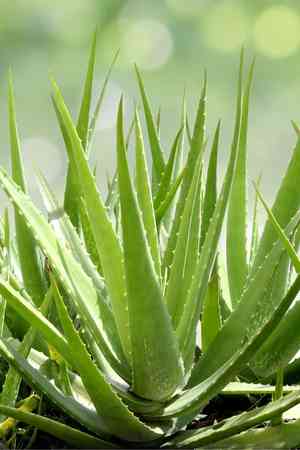
Rosettes of gray-green, fleshy leaves, 2-3 feet (60-90 cm) long.
2
Yellow flowers on 3-5 foot tall (0.9-1.5 m) panicles.
3
Red or yellow-orange flowers in 3-foot (90 cm) spikes.
4
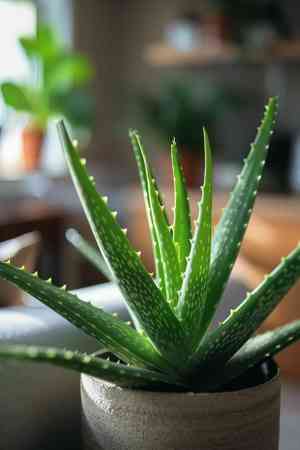
Triangular, pointed leaves with white spots, 18 inches (45 cm) long.
5
Short, stout green stem with fleshy leaves in a rosette.

Scientific Classification of Aloe vera

Phylum
Vascular plants
Class
Monocotyledons
Order
Asparagus and allies
Family
Asphodel
Genus
Aloe
Species
Aloe vera

Planting and Growing of Aloe vera

Care Difficulty
Easy
Watering Schedule
Every 2 days
Sunlight Requirements
Full sun
Sunshine Duration
6-10 hours
Ideal Temperature
65-75℉
Soil Type
Potting Mix, Peat Mix
Soil pH
6.5-7.5
Fertilizer Type
Balanced
Pruning Season
Spring, Summer
Pruning Area
Branches, Leaves
Pruning Frequency
2 times a year
Repotting Season
Spring
Pot Type
Plastic, Ceramic

water icon How to Water Aloe vera?

When watering Aloe vera, aim to provide around 200 ml of water, ensuring the soil is moistened but not soaked. The key principle is to allow the soil to dry out completely between waterings, as this succulent stores water in its leaves and is highly susceptible to root rot if overwatered.
What are the symptoms of an underwatered Aloe vera?
What should I do if my Aloe vera is not getting enough water?
What are the symptoms of an overwatered Aloe vera?
How to save an overwatered Aloe vera?
More About Watering Techniques Group

sunlight icon What Are the Sunlight Requirements for Aloe vera?

Sunlight Requirements: Full sun, Partial sun
Duration of light: 6-8 hours daily
Aloe vera benefits from partial to full sun exposure. This ensures robust growth, improves leaf health, and increases natural compound production, enhancing its therapeutic properties.
Optimal Lighting Duration
Solution for Ideal Lighting
Benefits of Ideal Lighting
More About Sunlight Requirements Techniques Group

temperature icon What Is the Ideal Temperature Range for Aloe vera?

Ideal Temperature: 65 ~ 75℉
The ideal temperature for Aloe vera growth lies between 65°F and 75°F. This range promotes healthy growth without stressing the plants. Aloe vera prefers a consistent temperature without sudden drops, mimicking its native mild desert climate. The plant thrives in this range with sufficient sunlight, ensuring balanced photosynthesis, hydration, and nutrient uptake.

soil icon What Soil is Best for Aloe vera?

Soil type: Sandy soil, Loam, Sandy loam
Soil PH: 6.5 ~ 7.5
Aloe vera requires soil that drains well to prevent waterlogging, which can cause root rot. Opt for a mix that includes sand or gravel to enhance drainage, ensuring the plant's roots receive adequate air. While Aloe vera is hardy, it thrives in loam that's rich in organic matter. Adding compost can provide essential nutrients, promoting healthy growth and vibrant coloration in the leaves. A balance of moisture retention and drainage is critical. Sandy loam offers this balance, helping to keep roots moist without becoming waterlogged, thus maintaining optimal growth. More About Soil Group

fertilize icon How to Fertilize Aloe vera?

Fertilizer type: Balanced
Aloe vera doesn't require much fertilizer. For liquid fertilizers, use a diluted solution of about 0.5 teaspoons per gallon of water. For solid fertilizers, use a small amount, merely covering the surface in a thin layer.

prune icon How to Prune Aloe vera?

Pruning Time: Spring, Summer, Autumn, Winter
Carefully inspect the Aloe vera for any discolored, dried, or damaged leaves. Favor removing these leaves as they can make the plant look untidy and drain its resources. Cut them off at the base, close to the main stem, for a cleaner look. If Aloe vera has too many leaves growing in one area, consider thinning them out to allow better air circulation and light penetration. This helps prevent fungal infections and promotes more robust growth. Aloe vera often produces offshoots, or 'pups', which are baby plants growing at the base. To prevent overcrowding, gently remove these offshoots by digging around their base and replant them separately if desired.

propagate icon How to Propagate Aloe vera plant?

Propagate Time: Spring, Early summer
1
Carefully remove the Aloe vera plant from its pot. Gently brush away excess soil to expose the base of the plant. Identify the offsets or pups that can be separated for propagation.
2
Using a sharp knife or pruning shears, cut the offsets away from the mother plant. Ensure each pup has a good root system attached. Leave the pups in a dry, shaded area for a few days to allow the cuts to callous over.
3
After callousing, plant the offsets in small pots filled with a well-draining potting mix. Water lightly and place the pots in a bright, indirect sunlight area to encourage root development.

repot icon How to Repot Aloe vera plant?

Repotting frequency: Every 2-3 years
1
Aloe vera typically signals its need for repotting when you notice roots overgrowing through the drainage holes, or if the plant becomes top-heavy, causing the pot to tip over. Additionally, if you observe that the soil has compacted and stopped draining well, it's time for a change. Ideally, repot in spring or summer when the plant is actively growing, ensuring a smooth transition to a new pot.
2
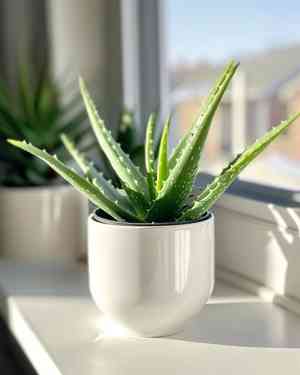
Choosing the right pot for Aloe vera is crucial for its health. Opt for a terra-cotta or clay pot with ample drainage holes to prevent waterlogging. The breathability of these materials helps to evaporate excess moisture, reducing the risk of root rot. The pot should be slightly larger than the current one, giving roots room to expand while maintaining a stable structure to avoid tipping.
3
The ideal soil for Aloe vera is a well-draining cactus or succulent mix, often containing sand, perlite, or pumice. These components ensure excellent aeration and drainage, mimicking the plant's natural arid habitat and preventing water retention, which could lead to root rot. Good soil mix supports healthy root development and nutrient absorption.
More About Repotting Techniques Group

PlantJoy - Identify plants with a snap

Find the best spots for them to optimize their health, simply using your phone.

Try for Free

Toxicity of Aloe vera

Is Aloe vera toxic to humans?

Aloe vera, similar to various Aloe species, contains aloin, which can act as a mild skin irritant in those with sensitivities, along with a digestive irritant that may lead to serious complications, particularly in older individuals. The toxic substance resides in the plant's latex. Consuming a significant quantity, especially, can result in gastrointestinal disturbances such as diarrhea, cramping, vomiting, and potentially cause liver damage in humans. Prolonged exposure to this toxin can lead to imbalances in electrolytes, as well as harm to the kidneys and liver. Contact with the skin may result in irritation and/or unintended ingestion. It is essential to wash hands thoroughly after handling this plant and ensure it is kept beyond the reach of children and individuals with cognitive impairments.

Is Aloe vera toxic to cat?

While aloe vera (Aloe vera) is beneficial for humans, it possesses moderate toxicity to cats if ingested, primarily because of the presence of saponins in its succulent stems. The signs of toxicity may not manifest for several hours or even days post-consumption, and can include vomiting, lethargy, and signs of depression. It is strongly recommended to seek veterinary assistance, as there have been reported cases of fatalities.

Is Aloe vera toxic to dog?

The toxicity of Aloe vera is classified as mild to moderate for dogs if ingested. Should your dog consume any portion of this plant, possible symptoms may encompass vomiting, diarrhea, lethargy, depressive behavior, tremors, and alterations in urine coloration. Usually, these symptoms are transient, and dogs almost always make a complete recovery.

Identify toxic plants for your safety

Learn which plants are harmful to you and your pets, and make informed choices for a safer home!

Try for Free
WARNING
The judgment on toxicity and danger is for reference only. We DO NOT GUARANTEE any accuracy of such judgment. Therefore, you SHALL NOT rely on such judgment. It is IMPORTANT TO SEEK PROFESSIONAL ADVICE in advance when necessary.
More About Toxic Techniques Group