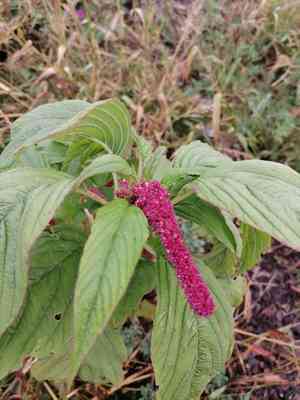
Love-lies-bleeding(Amaranthus caudatus)

Love-lies-bleeding (Amaranthus caudatus)

Also known as: Quilete , Pendant amaranth, Foxtail amaranth

Love-lies-bleeding (Amaranthus caudatus) is an annual plant recognized for its dramatic, trailing red or gold flower clusters, often likened to tassels or fox tails. It serves multiple purposes:

1. **Decorative Use:** Widely cultivated for its stunning visual appeal in gardens and floral decorations.
2. **Edible Components:** Both the leaves and seeds are consumable. The leaves can be cooked similarly to spinach, while the seeds can be processed into flour or used as a grain substitute.
3. **Nutritional Benefits:** Known for being rich in protein, vitamins, and essential minerals.
4. **Medicinal Use:** Historically, various parts of the plant have been employed in traditional medicine for their potential health benefits, including anti-inflammatory and diuretic effects.

These diverse applications highlight the plant’s aesthetic, nutritional, and medicinal value.

Attributes of Love-lies-bleeding

Lifespan
Annual
Plant Type
Herb
Plant Height
15 m
Spread
30 cm to 90 cm
Leaf Color
Green Red
Flower Size
1 cm
Flower Color
Red Yellow Green

PlantJoy - Identify plants with a snap

Identify and diagnose plants, get toxicity alerts, and explore safety guides for all types of fungi.

Try for Free

Images of Love-lies-bleeding

Love-lies-bleeding(Amaranthus caudatus)

Quickly Identify Love-lies-bleeding

1
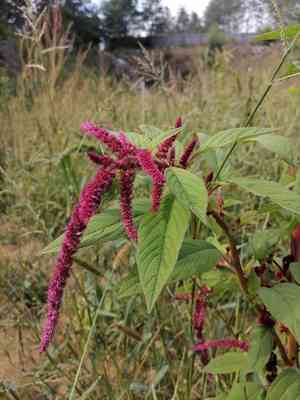
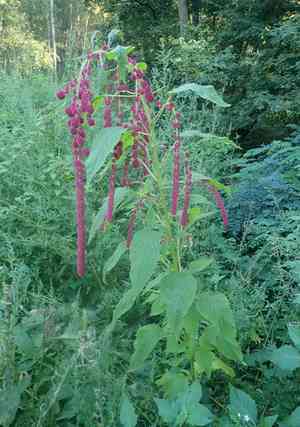
Distinctive cascading tassels in vibrant red or golden hue, 1-2 feet (30-60 cm) long.
2
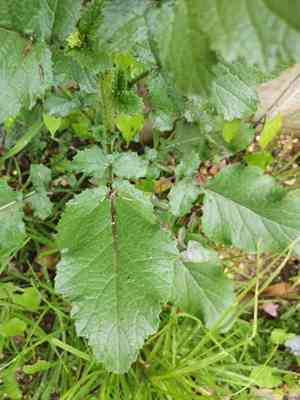
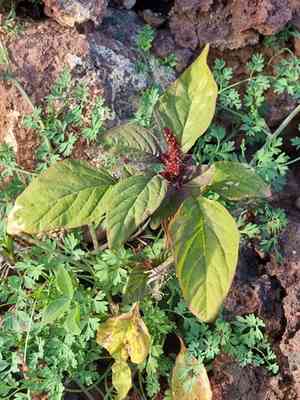
Blood-red, ovate to lanceolate leaves, 2-6 inches (5-15 cm) long, with pinnate venation.
3
Slender tassels or spikes with petal-less flowers, 12 inches (30 cm) long, in red or gold.

Scientific Classification of Love-lies-bleeding

Phylum
Vascular plants
Class
Dicotyledons
Order
Pinks, cacti, and allies
Family
Amaranth
Genus
Amaranths
Species
Love-lies-bleeding

Planting and Growing of Love-lies-bleeding

Care Difficulty
Easy
Watering Schedule
Every 4 days
Sunlight Requirements
Full sun
Sunshine Duration
6-10 hours
Ideal Temperature
65-75℉
Soil Type
Potting Mix, Peat Mix
Soil pH
6.5-7.5
Fertilizer Type
Balanced
Pruning Season
Spring, Summer
Pruning Area
Branches, Leaves
Pruning Frequency
2 times a year
Repotting Season
Spring
Pot Type
Plastic, Ceramic

water icon How to Water Love-lies-bleeding?

Amaranthus caudatus thrives when watered to ensure the soil remains moist but not waterlogged. Watering 500 ml each time allows the water to saturate the soil evenly, promoting consistent hydration down to the root level without creating standing water, which can cause root rot.
What are the symptoms of an underwatered Love-lies-bleeding?
What should I do if my Love-lies-bleeding is not getting enough water?
What are the symptoms of an overwatered Love-lies-bleeding?
How to save an overwatered Love-lies-bleeding?
More About Watering Techniques

sunlight icon What Are the Sunlight Requirements for Love-lies-bleeding?

Sunlight Requirements: Full sun, Partial sun
Duration of light: 6 to 8 hours
Amaranthus caudatus is best suited for full to partial sun. Ideal lighting supports robust growth and enhances its stunning red tail-like flowers, crucial for its decorative role.
What is the ideal light condition for Amaranthus caudatus?
How can I ensure my Amaranthus caudatus gets ideal lighting?
What are the benefits of ideal light exposure for Amaranthus caudatus?
More About Sunlight Requirements Techniques

temperature icon What Is the Ideal Temperature Range for Love-lies-bleeding?

Ideal Temperature: 65 ~ 75℉
For Amaranthus caudatus, the optimal temperature range is between 65°F and 75°F. This range ensures the plant grows vigorously, with healthy leaves and vibrant colors. Consistency within this range minimizes stress and maximizes photosynthetic efficiency.

soil icon What Soil is Best for Love-lies-bleeding?

Soil type: Loam, Sandy loam
Soil PH: 6.5 ~ 7.5
Amaranthus caudatus thrives in well-draining soil because it prevents waterlogging, which can lead to root rot. Good drainage ensures that the roots have adequate oxygen, promoting healthy growth and vibrant flowering. This plant prefers soil that is moderately fertile. While it can survive in nutrient-poor soils, providing a balanced nutrient profile will help the plant to flourish and produce more lush and colorful blooms. Although the soil should drain well, it should also retain enough moisture to keep the plant hydrated, especially during dry spells. Consistent moisture supports steady growth and bloom production. More About Soil

fertilize icon How to Fertilize Love-lies-bleeding?

Fertilizer type: Balanced
Amaranthus caudatus, also known as love-lies-bleeding, thrives with balanced fertilization. Use approximately 1/2 teaspoon of liquid fertilizer per gallon of water, ensuring thorough mixing to deliver essential nutrients without overwhelming the plant. For solid fertilizers, a handful around the base of the plant is more than sufficient, integrating it lightly into the soil to aid slow nutrient release. More About Fertilizing Techniques

prune icon How to Prune Love-lies-bleeding?

Pruning Time: Spring, Summer, Autumn
It's essential to use clean, sharp pruning tools to make clean cuts and minimize damage or disease. Dull tools can crush stems, increasing the risk of infection. Avoid heavy pruning during the winter as the plant is less active and can suffer from stress. Summer pruning should be light to prevent too much exposure to the harsh sun, which can harm freshly cut areas. More About Pruning Techniques

propagate icon How to Propagate Love-lies-bleeding plant?

Propagate Time: Spring, Early summer
1
Fill the seed tray with a moistened potting mix. Gently firm the mix to eliminate large air pockets but avoid compacting it too tightly. Ensure the surface is even to allow for uniform growth of seedlings.
2
Scatter the Amaranthus caudatus seeds evenly over the surface of the prepared soil. Cover them lightly with a thin layer of potting mix. The seeds are small, so avoid burying them too deep as this may prevent germination.
3
Mist the soil surface lightly with water ensuring it's evenly moist but not oversaturated. Place the tray in a warm, well-lit spot ensuring it's away from direct sunlight which can scorch the delicate new growth.
More About Propagating Techniques

repot icon How to Repot Love-lies-bleeding plant?

Repotting frequency: Every 1-2 years
1
You should consider repotting Amaranthus caudatus when you see roots emerging from the drainage holes, which indicates that the plant is outgrowing its current container. Another signal is if the plant isn’t growing as vigorously as usual, suggesting it needs more space and fresh soil nutrients. Typically, this is best done during the warmer months of spring or summer to ensure optimal recovery and growth.
2
Select a pot that is one size larger than the current one and has good drainage holes. The extra space will allow the roots to spread comfortably, promoting healthier growth. Terracotta pots are often preferred as they help absorb excess moisture, preventing root rot, which is beneficial for plants that prefer well-draining environments.
3
Opt for a light, well-draining potting mix that can hold moisture but also provides good aeration. Such soil usually contains peat moss, perlite, or vermiculite, which ensures that the plant's roots have access to both nutrients and oxygen, thereby encouraging robust and healthy development.

PlantJoy - Identify plants with a snap

Find the best spots for them to optimize their health, simply using your phone.

Try for Free