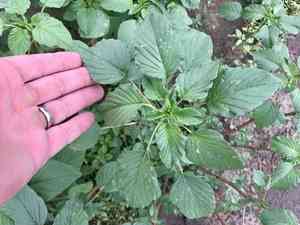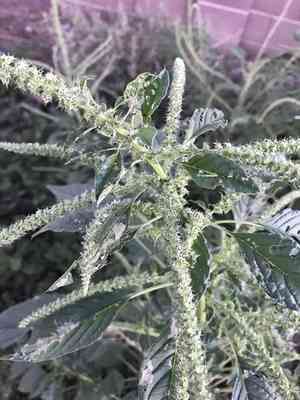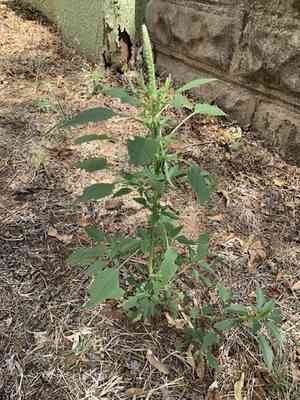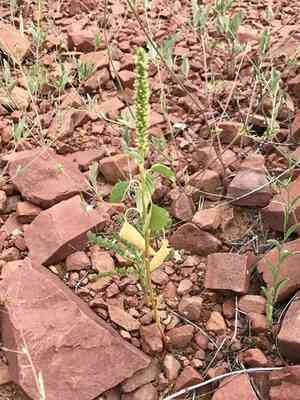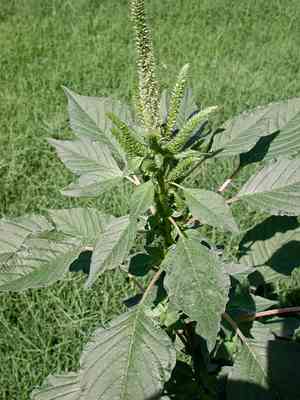
Palmer's amaranth(Amaranthus palmeri)

Palmer's amaranth (Amaranthus palmeri)

Also known as: Dioecious amaranth

**Uses of Palmer's Amaranth (Amaranthus palmeri):**
1. **Nutritional Benefits**: The leaves and seeds are packed with proteins, vitamins, and minerals, making them a valuable food source.
2. **Animal Feed**: It is sometimes utilized as forage due to its substantial biomass and nutritional profile.
3. **Soil Improvement**: Its deep root system aids in soil aeration, thereby enhancing soil health.

**Drawbacks of Palmer's Amaranth:**
1. **Invasive Nature**: It grows rapidly and competes aggressively with crops, leading to significant agricultural losses.
2. **Herbicide Resistance**: The plant has developed resistance to multiple herbicides, complicating its management.
3. **Allergenic Potential**: Its pollen can trigger allergic reactions in sensitive individuals.

Attributes of Palmer's amaranth

Lifespan
Annual
Plant Type
Herb
Plant Height
1.8 m to 2.5 m
Spread
10 cm to 60 cm
Leaf Color
Green
Flower Size
8 cm to 15 cm
Flower Color
Green White Yellow Brown

PlantJoy - Identify plants with a snap

Identify and diagnose plants, get toxicity alerts, and explore safety guides for all types of fungi.

Try for Free

Images of Palmer's amaranth

Palmer's amaranth(Amaranthus palmeri)

Quickly Identify Palmer's amaranth

1
Rapid growth rate of 1 inch (2.54 cm) per day.
2
Leaves with ovoid shape tapering to a point.
3
Sturdy stem with reddish pigmentation.
4
Elongated spikes of small, inconspicuous flowers.
5
Fruits in textured capsules with dark seeds.

Scientific Classification of Palmer's amaranth

Phylum
Vascular plants
Class
Dicotyledons
Order
Caryophyllales
Family
Amaranth
Genus
Amaranths
Species
Palmer's amaranth

Planting and Growing of Palmer's amaranth

Care Difficulty
Easy
Watering Schedule
Every 8 days
Sunlight Requirements
Full sun
Sunshine Duration
4-6 hours
Ideal Temperature
75-85℉
Soil Type
Potting Mix, Peat Mix
Soil pH
6.5-7.5
Fertilizer Type
Balanced
Pruning Season
Spring, Summer
Pruning Area
Branches, Leaves
Pruning Frequency
2 times a year
Repotting Season
Spring
Pot Type
Plastic, Ceramic

water icon How to Water Palmer's amaranth?

The watering amount for Amaranthus palmeri should be around 500 ml per session. This amount ensures that the moisture penetrates deeply into the soil, reaching the roots effectively. The principle is to water generously but less frequently, allowing the soil to dry out slightly between sessions to prevent waterlogging.
What are the symptoms of an underwatered Palmer's amaranth?
What should I do if my Palmer's amaranth is not getting enough water?
What are the symptoms of an overwatered Palmer's amaranth?
How to save an overwatered Palmer's amaranth?

sunlight icon What Are the Sunlight Requirements for Palmer's amaranth?

Sunlight Requirements: Full sun
Duration of light: 8-10 hours daily
Amaranthus palmeri ideally requires full sun exposure. This ensures it synthesizes nutrients effectively, resulting in lush foliage and robust flower and seed production.
How much sunlight does Amaranthus palmeri need?
How to ensure the plant receives ideal sunlight?
What are the benefits of ideal lighting?

temperature icon What Is the Ideal Temperature Range for Palmer's amaranth?

Ideal Temperature: 75 ~ 85℉
The ideal temperature range for Amaranthus palmeri is between 75°F and 85°F. These temperatures provide optimal conditions for growth, photosynthesis, and nutrient uptake, leading to vigorous growth and good plant health.

soil icon What Soil is Best for Palmer's amaranth?

Soil type: Sandy soil, Loam, Clay soil
Soil PH: 6.5 ~ 7.5
Amaranthus palmeri thrives in well-drained soil as it allows for proper root development and prevents waterlogging, which can lead to root rot. Good drainage ensures optimal oxygen availability for the roots, promoting robust growth. This plant prefers soil rich in nutrients, as it supports its rapid growth and flowering. Nutrient-rich soil provides essential minerals that are necessary for the plant’s health, enhancing leaf development and overall vitality. Amaranthus palmeri benefits from soil that retains moderate moisture, ensuring the plant has adequate water supply while avoiding excess saturation. This balance helps maintain plant hydration without compromising soil aeration.

fertilize icon How to Fertilize Palmer's amaranth?

Fertilizer type: Balanced
For Amaranthus palmeri, utilize a balanced fertilizer at half-strength when applying liquid fertilizers. This approach ensures the plant receives the required nutrients without overwhelming its roots. Given the plant's vigorous growth, a light but consistent nutrient supply is preferable.

prune icon How to Prune Palmer's amaranth?

Pruning Time: Summer
Start by gathering your tools, such as sharp pruning shears. Ensure they are sanitized to prevent the spread of diseases. It’s essential to wear gloves to protect your hands from sap or any irritants. Look for the taller stems that are shading other plants or are growing disproportionately. Trim these down to the desired height, focusing on promoting bushiness by cutting just above a leaf node. Prune away any dead or damaged leaves and stems. This will allow more air circulation within the plant, reducing the risk of fungal infections and promoting healthier growth overall. After pruning, clean up the fallen debris to prevent pests and diseases. Consider applying a light layer of mulch around the base to help retain soil moisture and suppress any new unwanted growth.

propagate icon How to Propagate Palmer's amaranth plant?

Propagate Time: Spring, Early summer
1
Use a well-draining potting mix enriched with organic material. Ensure the soil is slightly moist to encourage seed germination or cutting root formation.
2
Scatter seeds evenly over the soil surface, then lightly cover with a thin layer of soil. Gently water them and keep the soil consistently moist until germination occurs.
3
Cut a healthy stem section just below a node. Remove the lower leaves and plant the cutting in a pot prepared with moist soil. Keep the cutting covered to maintain humidity levels.

repot icon How to Repot Palmer's amaranth plant?

Repotting frequency: Every 1-2 years
1
Watch out for Amaranthus palmeri's roots poking out of the pot drainage holes or when the plant appears stunted, indicating it's time to repot. Spring and Summer are ideal, as the plant is actively growing.
2
Choose a pot that's 2-3 inches larger in diameter than the current one. Ensure it has drainage holes to prevent waterlogging. The size provides ample room for root expansion, promoting healthy growth.
3
Opt for well-draining sandy soil to mimic Amaranthus palmeri's natural habitat. This prevents excess moisture around roots, reducing the risk of root rot and fostering a robust plant.

PlantJoy - Identify plants with a snap

Find the best spots for them to optimize their health, simply using your phone.

Try for Free

Toxicity

Ingestion

Identify toxic plants for your safety

Learn which plants are harmful to you and your pets, and make informed choices for a safer home!

Try for Free
WARNING
The judgment on toxicity and danger is for reference only. We DO NOT GUARANTEE any accuracy of such judgment. Therefore, you SHALL NOT rely on such judgment. It is IMPORTANT TO SEEK PROFESSIONAL ADVICE in advance when necessary.