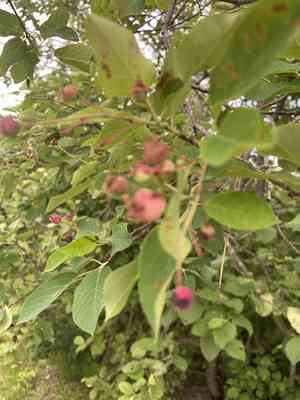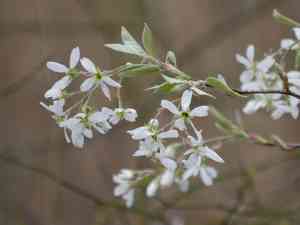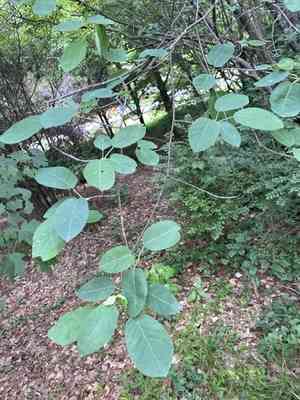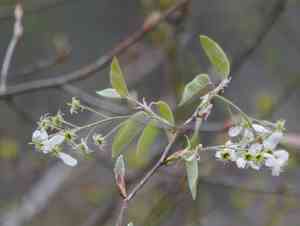
Common serviceberry(Amelanchier arborea)

Common serviceberry (Amelanchier arborea)

Also known as: Shadbush, Juneberries

The common serviceberry tree, Amelanchier arborea, is a small deciduous tree that typically reaches heights of 15-25 feet. It features showy white flowers in early spring, followed by edible berries that mature from red to purple-black in early summer. In the fall, its leaves turn vibrant shades of yellow to red. This tree is a magnet for butterflies, bees, and birds.

**Growing Conditions:**
- **Sun Exposure:** Thrives in full sun to partial shade.
- **Soil Requirements:** Prefers well-drained, loamy soil but is adaptable to various soil types.
- **Water Needs:** Moderate; prefers moist but not waterlogged soil.
- **Hardiness Zones:** 4-9, making it suitable for cold climates.

The common serviceberry is valued for its ornamental beauty, edible fruit, and ability to attract wildlife. It is also low-maintenance, requiring minimal pruning to maintain its shape and health.

Attributes of Common serviceberry

Lifespan
Perennial
Plant Type
Tree, Shrub
Plant Height
4.5 m to 12 m
Spread
4.5 m to 8 m
Leaf Color
Green Yellow Red Bronze
Flower Size
15 cm
Flower Color
White

PlantJoy - Identify plants with a snap

Identify and diagnose plants, get toxicity alerts, and explore safety guides for all types of fungi.

Try for Free

Images of Common serviceberry

Common serviceberry(Amelanchier arborea)

Quickly Identify Common serviceberry

1
Deciduous plant with simple, oval leaves showcasing fine teeth and downy texture beneath.
2
Presence of drooping racemes bearing star-shaped white to pink flowers in early spring.
3
Transitioning fruit from green to dark purple-black, self-fruitful and resembling highbush blueberries.
4
Leaves ranging from purplish-brown to light green, featuring pointed tips and varying textures.
5
Trunk bark transforms with age, transitioning from smooth to rugged furrowed texture.

Scientific Classification of Common serviceberry

Phylum
Vascular plants
Class
Dicotyledons
Order
Rosales
Family
Rose
Genus
Shadbushes
Species
Common serviceberry

Planting and Growing of Common serviceberry

Care Difficulty
Easy
Watering Schedule
Every 2 days
Sunlight Requirements
Full sun
Sunshine Duration
6-10 hours
Ideal Temperature
60-75℉
Soil Type
Potting Mix, Peat Mix
Soil pH
5.5-7.5
Fertilizer Type
Balanced
Pruning Season
Spring, Summer
Pruning Area
Branches, Leaves
Pruning Frequency
2 times a year
Repotting Season
Spring
Pot Type
Plastic, Terracotta

water icon How to Water Common serviceberry?

For Amelanchier arborea, it's vital to provide enough water to keep the soil consistently moist but not waterlogged. A deep watering of around 1000 milliliters ensures the roots can absorb sufficient moisture without drowning. Always ensure that excess water can drain away to prevent root rot.
What are the symptoms of an underwatered Common serviceberry?
What should I do if my Common serviceberry is not getting enough water?
What are the symptoms of an overwatered Common serviceberry?
How to save an overwatered Common serviceberry?

sunlight icon What Are the Sunlight Requirements for Common serviceberry?

Sunlight Requirements: Full sun, Partial sun
Duration of light: 4 to 6 hours
The ideal light range for Amelanchier arborea is full sun to partial sun. This ensures active and balanced growth, as the plant processes sunlight effectively to promote strong branching and prolific flowering, crucial for a healthy lifecycle.
What is the ideal amount of daily sunlight?
How can one ensure the plant receives adequate sunlight?
What are the benefits of optimal sunlight exposure?

temperature icon What Is the Ideal Temperature Range for Common serviceberry?

Ideal Temperature: 60 ~ 75℉
The ideal temperature for Amelanchier arborea, commonly known as the downy serviceberry, is between 60°F and 75°F. This range allows the plant to photosynthesize efficiently and utilize water resources effectively, promoting robust growth and vibrant blooms. Maintaining this temperature range is essential for optimal health and fruiting of the plant.

soil icon What Soil is Best for Common serviceberry?

Soil type: Loam, Sandy loam, Acidic soil
Soil PH: 5.5 ~ 7.5
Amelanchier arborea thrives in well-drained soil, which helps prevent waterlogging and root rot. This requirement ensures the roots have access to oxygen and nutrients, promoting healthy growth. While drainage is important, retaining some moisture is crucial for Amelanchier arborea, especially in dry seasons. Soil with proper organic matter can balance drainage and moisture retention. The plant prefers soil rich in organic matter and nutrients. Ensuring a nutrient-rich medium supports vibrant blooms and foliage, enhancing the overall aesthetics of the plant.

fertilize icon How to Fertilize Common serviceberry?

Fertilizer type: Balanced
Amelanchier arborea thrives with a balanced application of fertilizers, generally about 1 pound of 10-10-10 fertilizer per inch of trunk diameter annually. This ensures the tree has access to required nutrients without the risk of over-fertilizing.

prune icon How to Prune Common serviceberry?

Pruning Time: Spring, Summer
Begin your pruning by identifying any dead, diseased, or damaged branches. Use clean, sharp pruning shears to remove these branches at their base, which will prevent disease from spreading and encourage healthier growth. To shape the canopy, focus on branches that cross over each other, as these can cause wounds and invite disease. Trim them to maintain a balanced and open structure, allowing sunlight to penetrate the interior, fostering the growth of healthy, new shoots. Selectively thin the branches to encourage vigorous growth. Target branches growing inward towards the trunk or those that form acute angles. This promotes the development of outward-growing branches, which help form a strong, resilient structure. Finally, control the overall size of the tree. Cut back any excessively long or unruly branches to the desired length. This helps keep the Amelanchier arborea within bounds and aesthetically pleasing without compromising its natural grace.

propagate icon How to Propagate Common serviceberry plant?

Propagate Time: Spring,Late spring,Early spring
1
Collect ripe seeds from the tree in autumn. Clean and dry them before stratification, which involves cold treatment for a few months in the refrigerator to break dormancy.
2
During early spring, select healthy stems from the parent plant and cut them with sterilized shears. Ensure each cutting is about 4 to 6 inches long with a few leaves.
3
Plant seeds or cuttings in well-drained soil. For seeds, moderate watering is essential, while cuttings may require a humidity dome to retain moisture.

repot icon How to Repot Common serviceberry plant?

Repotting frequency: Every 2-3 years
1
Signs that Amelanchier arborea needs repotting include roots growing through the drainage holes and soil that dries out faster than usual. Spring and autumn are ideal seasons for repotting as these periods offer mild temperatures for recovery.
2
Select a pot that is 2-4 inches larger in diameter than the current one to allow room for root growth. It's beneficial to choose a pot with adequate drainage holes to prevent waterlogging and promote healthy root aeration.
3
Opt for a well-drained loamy soil mix that retains enough moisture without becoming waterlogged, providing essential nutrients and good aeration, ensuring healthy growth and development of the plant's root system.

PlantJoy - Identify plants with a snap

Find the best spots for them to optimize their health, simply using your phone.

Try for Free

Toxicity of Common serviceberry

Is Common serviceberry toxic to cat?

The common serviceberry possesses a moderate toxicity level for felines. If cats consume any portions of the plant, including the stems, leaves, or unripe berries, they may face poisoning risks. The ingestion of these parts can result in physical distress or illness in cats. It is essential for cat guardians to keep their pets away from common serviceberry and monitor for any unusual behaviors or indications of sickness. Should ingestion be suspected, it is vital to obtain prompt veterinary assistance to safeguard the health of the affected cat.

Is Common serviceberry toxic to dog?

The common serviceberry presents a moderate toxicity risk to canine companions. Poisoning usually occurs when a dog consumes various parts of the plant, notably the stems, leaves, or unripe berries. If a dog ingests these components of the common serviceberry, it may display symptoms such as gastrointestinal distress, vomiting, or diarrhea. It is essential for dog owners to keep a vigilant eye on their pets and restrict their access to the common serviceberry, particularly during the growing season when the toxic parts are readily available. Should there be any suspicion that a dog has ingested common serviceberry, prompt veterinary attention is critical to ensure the best possible recovery for the affected pet.

Identify toxic plants for your safety

Learn which plants are harmful to you and your pets, and make informed choices for a safer home!

Try for Free
WARNING
The judgment on toxicity and danger is for reference only. We DO NOT GUARANTEE any accuracy of such judgment. Therefore, you SHALL NOT rely on such judgment. It is IMPORTANT TO SEEK PROFESSIONAL ADVICE in advance when necessary.