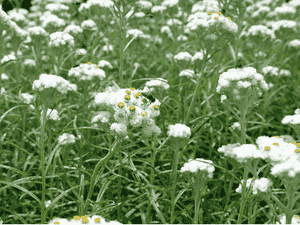
Pearly everlasting (Anaphalis margaritacea)
Also known as: Common Pearleverlasting, Sweet Everlasting
Dusty Miller (Senecio cineraria) is frequently cultivated for its distinctive gray foliage, which contrasts beautifully with more vibrant garden plants. It flourishes in sunny, well-drained soil conditions. Dusty Miller is valued for its resilience and ability to add texture and visual interest to gardens.
In This Article
Attributes of Pearly everlasting
Lifespan
Perennial
Plant Type
Herb
Plant Height
30 cm to 1 m
Spread
60 cm
Leaf Color
Silver Green Gray
Flower Size
1 cm
Flower Color
White Yellow
Images of Pearly everlasting
Quickly Identify Pearly everlasting
1
Distinctive yellowish-white flowers resembling miniature asters
2
Basal rosette of narrow, lance-shaped leaves
3
Sturdy stem with woolly hairs, unbranched in lower half
4
Long-lasting achenes with fluff for wind dispersal
5
Upper leaf surface dark green, lower whitish green with woolly hairs
Scientific Classification of Pearly everlasting
Phylum
Vascular plants
Class
Dicotyledons
Order
Asterales
Family
Daisy
Genus
Pearly everlastings
Species
Pearly everlasting
Planting and Growing of Pearly everlasting
Care Difficulty
Easy
Watering Schedule
Every 2 days
Sunlight Requirements
Full sun
Sunshine Duration
6-10 hours
Ideal Temperature
65-75℉
Soil Type
Potting Mix, Peat Mix
Soil pH
6.5-7.5
Fertilizer Type
Balanced
Pruning Season
Spring, Summer
Pruning Area
Branches, Leaves
Pruning Frequency
2 times a year
Repotting Season
Spring
Pot Type
Plastic, Ceramic
 How to Water Pearly everlasting?
Anaphalis margaritacea, commonly known as pearly everlasting, prefers soil that is moderately dry to slightly moist. When watering, aim for about 500 ml per session to ensure the roots are adequately hydrated but not waterlogged. The key is to maintain a balanced moisture level, ensuring the soil is damp to the touch about an inch below the surface.
What are the symptoms of an underwatered Pearly everlasting?
›
What should I do if my Pearly everlasting is not getting enough water?
›
What are the symptoms of an overwatered Pearly everlasting?
›
How to save an overwatered Pearly everlasting?
›
 What Are the Sunlight Requirements for Pearly everlasting?
Anaphalis margaritacea prospers in full sun to partial sun, receiving six to eight hours of light daily. This ideal range ensures robust growth, maximal blooming, and enhanced resistance to pests and diseases.
More About Sunlight Requirements Techniques→
Where should Anaphalis margaritacea be placed?
›
How can I ensure it gets ideal light?
›
What benefits come from providing ideal light?
›
 What Is the Ideal Temperature Range for Pearly everlasting?
Anaphalis margaritacea grows best within a temperature range of 65 to 75°F. This range provides optimal conditions for photosynthesis, nutrient uptake, and overall growth. Ensuring a stable environment within this range will promote strong, healthy plants with vibrant foliage and prolific flowering.
 What Soil is Best for Pearly everlasting?
Anaphalis margaritacea thrives in well-drained soil that prevents water from pooling around the roots. This helps to avoid root rot and ensures healthy growth. Well-drained soil maintains aeration around the root zone, which supports the plant's oxygen needs. This plant prefers soil that is moderately rich in nutrients, providing essential minerals for healthy development. Balanced nutrients enable the plant to produce vibrant foliage and blooms, enhancing its ornamental value. Anaphalis margaritacea is suited to drier soil conditions, making it ideal for xeriscaping and areas with less frequent watering. Its ability to tolerate dry soil supports its survival in harsher climates with minimal maintenance required.
 How to Fertilize Pearly everlasting?
Anaphalis margaritacea thrives with a balanced approach to fertilization. Typically, apply a diluted liquid fertilizer at half strength once a month during the growing season, and use slow-release granules sparingly, around 1 to 2 tablespoons per plant, to avoid nutrient overload.
 How to Prune Pearly everlasting?
Begin by assessing the plant and identifying any dead, damaged, or diseased stems. These are typically discolored or feel brittle. Removing these will allow the plant to focus energy on healthy growth. Trim back stems to maintain a balanced shape. This not only makes the plant look tidy but also ensures even sunlight exposure and air circulation, reducing disease risk. Once the flowering season is done, cut back the flower stalks. This prevents the plant from putting energy into seed production, redirecting it towards new growth.
More About Pruning Techniques→
 How to Propagate Pearly everlasting plant?
1
To propagate via seeds, collect mature seeds from the Anaphalis margaritacea. Clean and dry them before planting. Soak seeds in water for 24 hours to encourage germination.
2
Take a 4-6 inch cutting from a healthy Anaphalis margaritacea plant. Remove lower leaves to expose nodes and dip the cut end in rooting hormone for better root development.
3
In early spring, dig up mature Anaphalis margaritacea plants. Gently separate the roots into smaller clumps ensuring each has shoots and roots. Replant divisions in prepared soil.
 How to Repot Pearly everlasting plant?
1
Repot your Anaphalis margaritacea when its growth appears stunted, roots start to circle the pot, or the soil dries out rapidly after watering. These signals indicate that the plant has outgrown its current container and needs more space.
2
Select a pot that is one size larger than the current one, ensuring it has adequate drainage holes. A slightly larger pot provides room for growth without overwhelming the plant, promoting healthy root development and preventing waterlogging.
3
Opt for a well-draining, sandy loam soil mix to prevent root rot and support robust growth. This type of soil maintains necessary moisture while allowing excess water to escape, creating a balanced environment for Anaphalis margaritacea.



