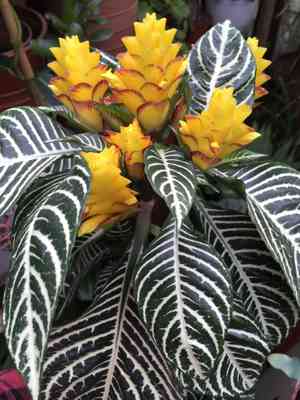
Zebra plant (Aphelandra squarrosa)
Also known as: Zebra plant
Zebra plant (Aphelandra squarrosa) is a flowering plant species that is often cultivated as a houseplant. This species grows best in bright sunlight and high humidity. Zebra plant soil should be kept moist without overwatering for best results indoors.
In This Article
Attributes of Zebra plant
Lifespan
Perennial
Plant Type
Herb, Shrub
Plant Height
30 cm to 1.8 m
Spread
1.5 m
Leaf Color
Green White Variegated
Flower Size
2.5 cm to 5 cm
Flower Color
Yellow Gold
Images of Zebra plant
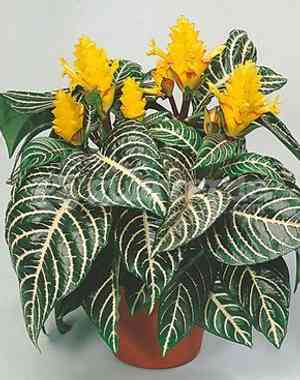
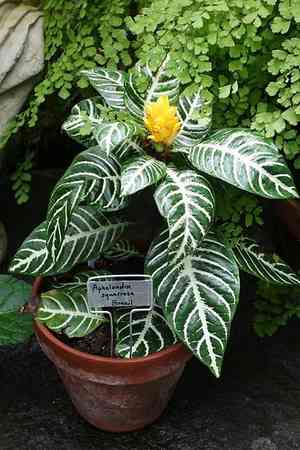
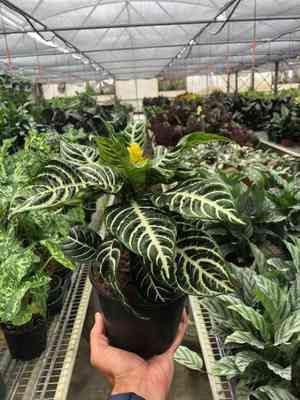
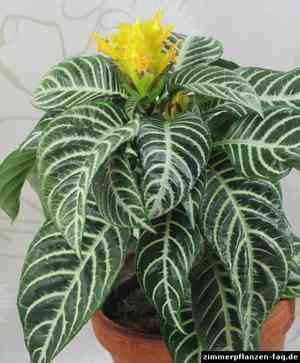
Quickly Identify Zebra plant
1
Bold zebra-like pattern on glossy dark green leaves
2
Tubular bright yellow flowers in vertical spikes
3
Elongated leaves with wavy margins and pointed tips
4
Sturdy, upright stems with moderate branching pattern
5
Prominent white veins on dark green oval leaves
Scientific Classification of Zebra plant
Phylum
Vascular plants
Class
Dicotyledons
Order
Lamiales
Family
Acanthus
Genus
Aphelandra
Species
Zebra plant
Planting and Growing of Zebra plant
Care Difficulty
Hard
Watering Schedule
Every 4 days
Sunlight Requirements
Partial sun
Sunshine Duration
6-10 hours
Ideal Temperature
65-75℉
Soil Type
Potting Mix, Peat Mix
Soil pH
6.5-7.5
Fertilizer Type
Balanced
Pruning Season
Spring, Summer
Pruning Area
Branches, Leaves
Pruning Frequency
Once a year
Repotting Season
Spring
Pot Type
Terracotta, Plastic
 How to Water Zebra plant?
Watering for Aphelandra squarrosa should be generous but controlled. Ensure each watering session provides about 250 milliliters of water. The soil needs to be moistened thoroughly, allowing excess water to drain out properly, which mimics its natural tropical habitat.
More About Watering Techniques→
What are the symptoms of an underwatered Zebra plant?
›
What should I do if my Zebra plant is not getting enough water?
›
What are the symptoms of an overwatered Zebra plant?
›
How to save an overwatered Zebra plant?
›
 What Are the Sunlight Requirements for Zebra plant?
Partial sun to full shade is ideal for Aphelandra squarrosa, as this range supports healthy leaf coloration and growth. Adequate light exposure prevents legginess and encourages vibrant, lush foliage.
More About Sunlight Requirements Techniques→
How much light does Aphelandra squarrosa need?
›
How to provide the right light conditions?
›
What are the benefits of ideal light conditions?
›
 What Is the Ideal Temperature Range for Zebra plant?
For Aphelandra squarrosa to thrive, maintaining a temperature range between 65°F and 75°F is ideal. This range closely mimics its native tropical environment, allowing the plant to perform critical physiological functions efficiently. Keeping the plant in this range supports lush growth and vibrant foliage, as cooler temperatures might slow growth and too warm conditions could lead to stress.
 What Soil is Best for Zebra plant?
Aphelandra squarrosa thrives in well-draining soil, which prevents root rot and ensures healthy growth. This type of soil allows for adequate water removal while still providing necessary moisture retention. The plant requires a nutrient-rich soil that is teeming with organic matter. This supports robust leaf development and vibrant flowers, providing essential nutrients for optimal health. Maintaining consistent soil moisture is vital for Aphelandra squarrosa, preventing wilting and promoting lush, green foliage. The soil should remain evenly damp but never waterlogged.
More About Soil→
 How to Fertilize Zebra plant?
For Aphelandra squarrosa, striking a balance in nutrient supply is vital. During the growing season, a diluted liquid fertilizer should be used at one-quarter strength every few weeks. This level helps prevent over-fertilization while ensuring the plant receives the necessary nutrients for vigorous growth and vivid foliage.
More About Fertilizing Techniques→
 How to Prune Zebra plant?
Always use sharp and sterilized pruning shears to prevent the spread of pathogens. Dull or dirty tools can introduce diseases and make jagged cuts that hinder the plant's ability to heal. While regular pruning is beneficial, removing too much foliage can stress the plant. Aim to remove no more than one-third of the plant's total foliage at a time to maintain its health and vigor.
More About Pruning Techniques→
 How to Propagate Zebra plant plant?
1
Choose a healthy, non-flowering stem from the parent plant, ideally about 4-6 inches long. Ensure the stem has several leaves and is free from any diseases or pests.
2
Use pruning shears to cut the selected stem at a 45-degree angle just below a leaf node. Remove the leaves on the lower half of the stem to avoid rot when planting.
3
Dip the cut end of the stem in rooting hormone, and plant it in a pot filled with a well-draining potting mix. Firm the soil around the cutting and water it lightly to settle it.
 How to Repot Zebra plant plant?
1
The ideal time to repot Aphelandra squarrosa is when you notice the roots growing out of the drainage holes or if the plant becomes pot-bound. Another signal is a diminished rate of growth due to root congestion. Spring or early summer, when the plant is actively growing, provides the best conditions for recovery and adaptation.
2
Select a pot that is just one size larger than its current pot to avoid excessive soil that can retain too much moisture and lead to root rot. Clay pots are often a good choice because they allow better air circulation to the roots, promoting healthy growth. Ensure the new pot has sufficient drainage holes to prevent waterlogging.
3
Choose a well-draining potting mix, preferably one enriched with some organic matter such as peat or bark. This ensures the roots have access to nutrients while allowing excess water to escape easily, preventing root rot. Such soil mimics the plant's natural habitat, supporting its growth and vibrancy.
Toxicity
Ingestion
WARNING
The judgment on toxicity and danger is for reference only. We DO NOT GUARANTEE any accuracy of such judgment. Therefore, you SHALL NOT rely on such judgment. It is IMPORTANT TO SEEK PROFESSIONAL ADVICE in advance when necessary.



