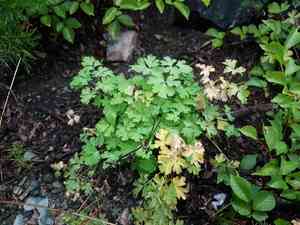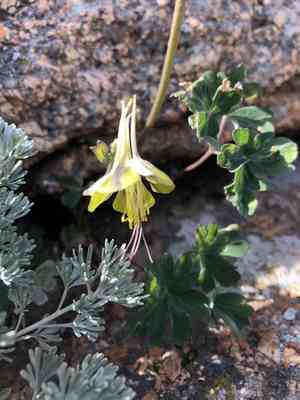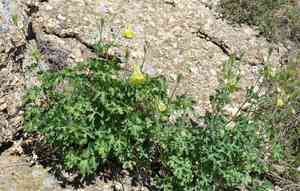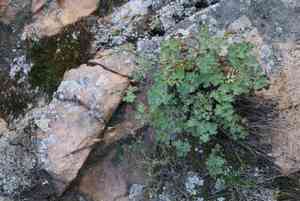
Green-flowered columbine(Aquilegia viridiflora)

Green-flowered columbine (Aquilegia viridiflora)

Also known as: Green Columbine

The green-flowered columbine (*Aquilegia viridiflora*) is often used in horticulture and makes great cut flowers. This short-lived perennial, like all members of its genus, is named after the flowers that resemble eagle claws: the name *Aquilegia* comes from the Latin word for eagle (*aquila*). The most popular cultivar is called 'Chocolate Soldier' and is prized for the chocolate-brown flowers.

In This Article
Care Tips Toxicity

Attributes of Green-flowered columbine

Lifespan
Perennial
Plant Type
Herb
Plant Height
23 cm to 30 cm
Spread
23 cm to 30 cm
Leaf Color
Green
Flower Size
3 cm to 5 cm
Flower Color
Green Purple Yellow Brown Black

PlantJoy - Identify plants with a snap

Identify and diagnose plants, get toxicity alerts, and explore safety guides for all types of fungi.

Try for Free

Images of Green-flowered columbine

Green-flowered columbine(Aquilegia viridiflora)

Quickly Identify Green-flowered columbine

1
Erect habit, basal mound, 1-3 feet (30-90 cm) tall, distinct greenish flowers.
2
5 elongated spurs on each flower bloom, resembling an eagle's talon.
3
Ternately compound leaves with deeply incised apex, grayish-blue green color.
4
Long, pubescent petioles, alternate leaf arrangement, structured and textured appearance.
5
Terminal cymes with 3-7 blossoms, 3/4 inch (2 cm) wide, pendent to erect arrangement.

Scientific Classification of Green-flowered columbine

Phylum
Vascular plants
Class
Dicotyledons
Order
Ranunculales
Family
Buttercup
Genus
Columbine
Species
Green-flowered columbine

Toxicity of Green-flowered columbine

Is Green-flowered columbine toxic to humans?

The green-flowered columbine belongs to the buttercup family and is significantly less toxic compared to its relatives within this family. This particular cultivar has been selectively bred for its appealing blooms, making it a favored choice in ornamental gardens. While numerous references indicate that this plant is non-toxic, some sources caution that ingestion may lead to gastrointestinal discomfort, hence it is advisable to steer clear of it, even though it does not pose a serious health hazard. The seeds and roots are typically the most toxic components of plants in this family.


Identify toxic plants for your safety

Learn which plants are harmful to you and your pets, and make informed choices for a safer home!

Try for Free
WARNING
The judgment on toxicity and danger is for reference only. We DO NOT GUARANTEE any accuracy of such judgment. Therefore, you SHALL NOT rely on such judgment. It is IMPORTANT TO SEEK PROFESSIONAL ADVICE in advance when necessary.