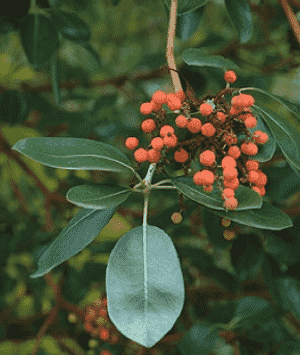
Pacific madrone (Arbutus menziesii)
Also known as: Pacific madrone, madroa, bearberry
The Pacific madrone is an evergreen tree notable for its coppery bark, which naturally peels off in thin sheets as it matures. This peeling reveals a smooth, silver-green surface underneath. In addition to its unique bark, the tree blooms with flowers in the spring and produces berries in the autumn.
In This Article
Attributes of Pacific madrone
Lifespan
Perennial
Plant Type
Tree
Plant Height
22 m to 30 m
Spread
15 m
Leaf Color
Green
Flower Size
2.5 cm
Flower Color
White Pink
Images of Pacific madrone
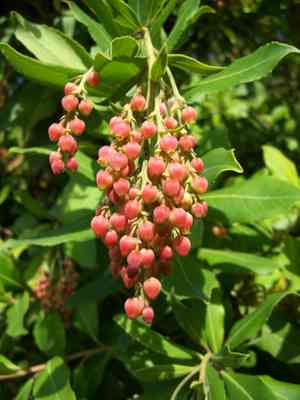
Quickly Identify Pacific madrone
1
Bell-shaped white flowers in 3-9 inch (7.6-23 cm) clusters.
2
Bright red fruits with persistent barbs and small seeds.
3
Oval, glossy green leaves ranging from 2-6 inches (5-15 cm).
4
Smooth reddish-brown stem, 1-2 feet (30-60 cm) thick.
5
Cinnamon red-brown trunk with exfoliating bark revealing smooth red layer.
Scientific Classification of Pacific madrone
Phylum
Vascular plants
Class
Dicotyledons
Order
Ericales
Family
Heath
Genus
Madronas
Species
Pacific madrone
Planting and Growing of Pacific madrone
Care Difficulty
Hard
Watering Schedule
Every 2 days
Sunlight Requirements
Full sun
Sunshine Duration
6-12 hours
Ideal Temperature
60-75℉
Soil Type
Potting Mix, Peat Mix
Soil pH
6.5-7.5
Fertilizer Type
Balanced
Pruning Season
Spring, Summer
Pruning Area
Branches, Leaves
Pruning Frequency
2 times a year
Repotting Season
Spring
Pot Type
Plastic, Ceramic
 How to Water Pacific madrone?
For Arbutus menziesii, it's crucial to provide approximately 2000 ml of water per session. The goal is to thoroughly saturate the root zone, ensuring the soil is moist at least 6 to 8 inches deep, which mimics its natural environment.
More About Watering Techniques→
What are the symptoms of an underwatered Pacific madrone?
›
What should I do if my Pacific madrone is not getting enough water?
›
What are the symptoms of an overwatered Pacific madrone?
›
How to save an overwatered Pacific madrone?
›
 What Are the Sunlight Requirements for Pacific madrone?
Arbutus menziesii should ideally be in full sun or partial sun conditions. This lighting ensures robust growth, vibrant leaves, and ample flowering, contributing to a healthy and visually appealing plant.
More About Sunlight Requirements Techniques→
Ideal Sun Exposure
›
Solution for Optimal Light
›
Benefits of Ideal Light
›
 What Is the Ideal Temperature Range for Pacific madrone?
The ideal temperature range for Arbutus menziesii is between 60°F and 75°F. This range provides optimal conditions for photosynthesis and respiration, ensuring robust growth and foliage development. Cool mornings and warm afternoons mimic its natural habitat, promoting strong and healthy growth.
 What Soil is Best for Pacific madrone?
Arbutus menziesii thrives in well-drained soil, which prevents waterlogging and root rot, ensuring healthy growth and resilience against diseases. It is crucial to provide ample drainage for optimal tree health. This plant prefers moderately fertile soil. Enriched environments help support its nutrient needs, promoting lush foliage and vibrant flowers, thus enhancing its ornamental appeal. Arbutus menziesii requires slightly acidic to neutral pH levels. Maintaining this range ensures optimal nutrient availability, which supports the tree’s robust growth and overall vitality.
More About Soil→
 How to Fertilize Pacific madrone?
For Arbutus menziesii, a modest amount of fertilizer is often required. A balance of 10-10-10 NPK (Nitrogen-Phosphorus-Potassium) is ideal. Apply about half a pound per mature tree, ensuring not to overburden the soil's nutrient capacity.
More About Fertilizing Techniques→
 How to Prune Pacific madrone?
Examine the tree for dead, diseased, or damaged branches, recognizable by their brittle nature and absence of leaves. Remove these first to promote tree health. Selectively prune to thin out overcrowded branches, particularly where branches cross or rub against each other. This increases airflow and light penetration. Prune to enhance the tree's natural shape. Keep cuts near growth buds and at a slight angle to facilitate regrowth and natural healing.
More About Pruning Techniques→
 How to Propagate Pacific madrone plant?
1
Start by collecting ripe berries from Arbutus menziesii and extract seeds. Clean and soak them in warm water for 24 hours to soften the seed coat and enhance germination rates.
2
Select healthy, non-flowering stems and cut them at a 45-degree angle. Aim for a length of 4-6 inches and remove leaves from the lower half to reduce water loss.
3
Use a well-draining medium like a mix of sand and peat. Fill pots or trays with this medium and ensure it is moist but not waterlogged before inserting seeds or cuttings.
 How to Repot Pacific madrone plant?
1
Arbutus menziesii shows it's time for repotting when its roots start circling the pot or sticking out of drainage holes. Another sign is when growth appears stunted or slower than usual despite regular care. Ideally, check the root system in spring or autumn as these seasons provide optimal conditions for recovery and growth.
2
Select a pot with excellent drainage to accommodate Arbutus menziesii's preference for drier conditions. The new pot should be only a couple of inches larger in diameter than the current one, allowing space for root growth without water stagnation. Such a choice prevents root rot and promotes healthier development.
3
Opt for sandy loam soil that's well-draining to mimic the tree's native conditions. This soil type prevents waterlogging, which can lead to root rot, and facilitates access to necessary nutrients, ensuring robust growth and maintaining the overall health of Arbutus menziesii.



