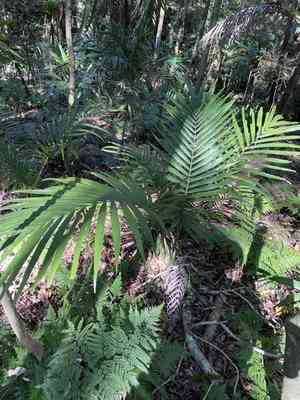
King palm (Archontophoenix cunninghamiana)
Also known as: Illawara palm
The king palm (Archontophoenix cunninghamiana) is native to tropical regions of Australia. Its lifespan is from 50 to 150 years. The small red fruit attracts a wide variety of birds. In countries where it has been introduced as an ornamental, it can become invasive.
In This Article
Attributes of King palm
Lifespan
Perennial
Plant Type
Tree
Plant Height
20 m
Spread
3 m to 4.5 m
Leaf Color
Green
Flower Size
2.5 cm
Flower Color
Purple
Images of King palm
Quickly Identify King palm
1
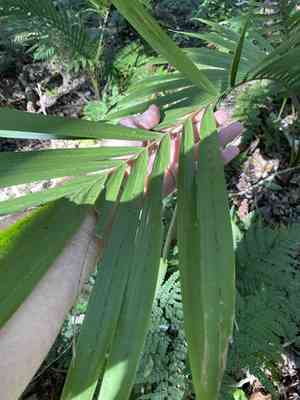
Impressive height of 60 feet (18 meters) distinguishes king palm from shorter plants.
2
Crownshaft with color transition from green to purplish-brown is unique at 3 feet (91 cm).
3
Vibrant pinkish flowers in drooping clusters enhance ornamental beauty of king palm.
4
Thrives in various light conditions from full sun to partial shade, showcasing adaptability.
5
Wind-resistant and aids in soil stabilization, showcasing resilience and environmental benefits.
Scientific Classification of King palm
Phylum
Vascular plants
Class
Monocotyledons
Order
Arecales
Family
Palm
Genus
Archontophoenix
Species
King palm
Planting and Growing of King palm
Care Difficulty
Easy
Watering Schedule
Every 3 days
Sunlight Requirements
Full sun
Sunshine Duration
4-10 hours
Ideal Temperature
60-85℉
Soil Type
Potting Mix, Peat Mix
Soil pH
5.5-7.5
Fertilizer Type
Balanced
Pruning Season
Spring, Summer
Pruning Area
Branches, Leaves
Pruning Frequency
2 times a year
Repotting Season
Spring
Pot Type
Plastic, Terracotta
 How to Water King palm?
When watering Archontophoenix cunninghamiana, aim for around 750 ml per session. It's crucial to ensure that the soil is moist but not soggy. Water until you see some draining out from the bottom of the pot to confirm that moisture has reached the root zone.
What are the symptoms of an underwatered King palm?
›
What should I do if my King palm is not getting enough water?
›
What are the symptoms of an overwatered King palm?
›
How to save an overwatered King palm?
›
 What Is the Ideal Temperature Range for King palm?
Archontophoenix cunninghamiana thrives best in temperatures ranging from 60°F to 85°F. This temperature range supports optimal growth and development, ensuring that the palm maintains healthy foliage and growth rates. Ideally, these conditions mimic the subtropical environments from which the plant originates, fostering a conducive atmosphere for photosynthesis, nutrient absorption, and moisture retention.
 What Soil is Best for King palm?
Archontophoenix cunninghamiana thrives in soil that offers excellent drainage. This is crucial to prevent waterlogging, which can lead to root rot. The good drainage ensures that the roots receive the necessary oxygen and support vigorous growth of your plant. The plant benefits from a nutrient-rich soil which provides the necessary minerals for healthy growth. Using loam or sandy loam, often enriched with organic compost, ensures that the tree has a ready supply of nutrients, enhancing leaf color and promoting robust growth. Keeping the soil consistently moist is important for the palm's health, as it hails from wet subtropical environments. However, it should not be overly saturated as this can harm the roots. Maintaining optimal moisture supports healthy foliage and root development.
 How to Fertilize King palm?
Archontophoenix cunninghamiana, commonly known as the Bangalow Palm, benefits from balanced fertilizers. Ideally, use a formula where the nitrogen (N), phosphorus (P), and potassium (K) ratio is around 10-10-10. For liquid fertilizers, using a half-strength solution every two weeks is optimal during the growing season to avoid nutrient burn while ensuring robust growth.
 How to Prune King palm?
To prune Archontophoenix cunninghamiana, start by removing any dead or yellowing fronds close to the trunk. Use a sharp, clean pruning saw or shears to make clean cuts. Ensure not to cut too close to the trunk to avoid damage. Focus on trimming the older, lower fronds to maintain the natural upward growth of the palm.
More About Pruning Techniques→
 How to Propagate King palm plant?
1
To enhance germination, soak the seeds in warm water for 24 hours before sowing. This process helps break the seed dormancy and encourages faster growth by imitating natural conditions.
2
Scatter the pre-soaked seeds evenly over a damp potting mix in the seed tray. Cover them lightly with soil, ensuring they are not buried too deeply to allow light to aid germination.
3
Keep the seed tray in a warm spot with indirect sunlight. Maintain consistent moisture by misting the soil as needed, but avoid overwatering. Optimal temperature and humidity are crucial for successful germination.
 How to Repot King palm plant?
1
Archontophoenix cunninghamiana shows signs of needing repotting when you observe roots emerging from the drainage holes, stunted growth, or soil that dries out rapidly after watering. These signals suggest that the plant has outgrown its current pot and needs more space or fresh soil for optimal growth.
2
Opt for a pot that's 1-2 inches larger in diameter than the current one. Ensure it has adequate drainage holes to prevent water logging, which is crucial for preventing root rot. A slightly larger pot provides room for growth without overwhelming the plant with excess soil that retains too much moisture.
3
Select a well-draining potting mix rich in organic matter to support healthy root development. The soil should ideally allow excess water to escape while holding enough moisture for the plant to access. This balance helps prevent root rot and supports the plant's speedy recovery post-repotting.



