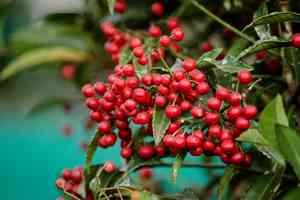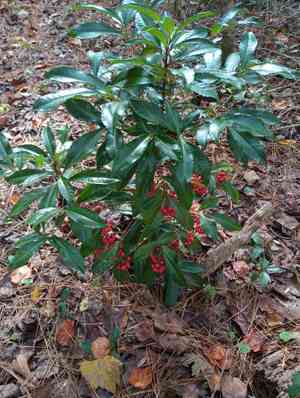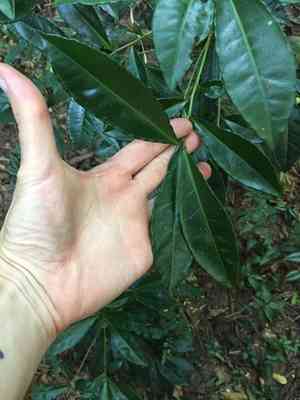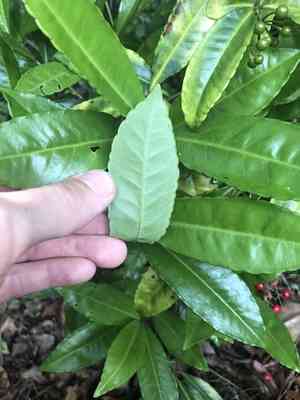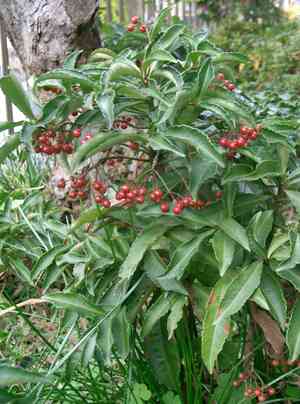
Christmas berry(Ardisia crenata)

Christmas berry (Ardisia crenata)

Also known as: Coral ardisia, Australian holly, Spiceberry, Hilo holly, Scratch throat

The Christmas berry, a small ornamental shrub, is popular as a houseplant due to its vivid red berries and shiny green leaves. Its ease of care makes it a favored choice for indoor decoration. While it's especially popular during the holiday season, its vibrant berries provide charm year-round.

Attributes of Christmas berry

Lifespan
Perennial
Plant Type
Shrub
Plant Height
46 cm to 1.8 m
Spread
1.2 m to 1.5 m
Leaf Color
Green
Flower Size
4 mm to 6 mm
Flower Color
White Pink

PlantJoy - Identify plants with a snap

Identify and diagnose plants, get toxicity alerts, and explore safety guides for all types of fungi.

Try for Free

Images of Christmas berry

Christmas berry(Ardisia crenata)

Quickly Identify Christmas berry

1
Vertical growth up to 6 feet (1.83 meters)
2
Leaves with crenulated edges and pointed anthers
3
Star-shaped white to pink flowers in clusters
4
Glossy red berries persistently attached to branches
5
Thick, glossy, leathery leaves with wavy margins

Scientific Classification of Christmas berry

Phylum
Vascular plants
Class
Dicotyledons
Order
Heathers and allies
Family
Primrose
Genus
Marlberry
Species
Christmas berry

Planting and Growing of Christmas berry

Care Difficulty
Easy
Watering Schedule
Every 4 days
Sunlight Requirements
Partial sun
Sunshine Duration
6-12 hours
Ideal Temperature
60-75℉
Soil Type
Potting Mix, Peat Mix
Soil pH
5.5-6.5
Fertilizer Type
Balanced
Pruning Season
Spring, Summer
Pruning Area
Branches, Leaves
Pruning Frequency
2 times a year
Repotting Season
Spring
Pot Type
Terracotta, Plastic

water icon How to Water Christmas berry?

When watering Ardisia crenata, it is best to ensure the soil is thoroughly moist, but not waterlogged. Use approximately 200 ml of water, ensuring even distribution to prevent any dry pockets but stopping before water pools at the surface.
What are the symptoms of an underwatered Christmas berry?
What should I do if my Christmas berry is not getting enough water?
What are the symptoms of an overwatered Christmas berry?
How to save an overwatered Christmas berry?

sunlight icon What Are the Sunlight Requirements for Christmas berry?

Sunlight Requirements: Partial sun, Full shade
Duration of light: 2 to 4 hours daily
Ardisia crenata thrives best in partial sun to full shade, allowing it to photosynthesize efficiently without risk of leaf burn. Ideal lighting helps maintain lush foliage, encourages flowering and overall plant health, contributing to a more robust and attractive appearance.
What conditions are ideal for Ardisia crenata?
How can one achieve ideal lighting conditions?
What are the benefits of ideal lighting for Ardisia crenata?

temperature icon What Is the Ideal Temperature Range for Christmas berry?

Ideal Temperature: 60 ~ 75℉
Ardisia crenata thrives best in temperatures ranging from 60°F to 75°F. This range optimizes its physiological functions and growth. Within this temperature bracket, the plant's metabolic processes are at their peak efficiency, ensuring vibrant foliage and healthy flowering.

soil icon What Soil is Best for Christmas berry?

Soil type: Loam, Sandy loam
Soil PH: 5.5 ~ 6.5
Ardisia crenata thrives in soil that is rich in organic matter. This ensures that the plant has access to nutrients necessary for robust growth and vibrant foliage. Adding compost or well-rotted manure can enhance soil fertility. The plant requires well-draining soil to prevent root rot, which can occur if water remains stagnant around the roots. Proper drainage can be achieved by ensuring a good mix of sand and organic material. While drainage is crucial, the soil should also retain some moisture to keep the roots adequately hydrated. This balance ensures the plant remains healthy and can sustain growth throughout dry spells.

fertilize icon How to Fertilize Christmas berry?

Fertilizer type: Balanced
Ardisia crenata requires moderate fertilization. For liquid fertilizers, a balanced water-soluble formula diluted at half the recommended rate is sufficient. For slow-release fertilizers, apply about one teaspoon per six-inch pot to provide consistent nutrients over time.

prune icon How to Prune Christmas berry?

Pruning Time: Spring, Summer
Begin by inspecting the plant for any dead or damaged leaves, which should be removed first. Next, trim back any overly long branches to maintain the plant’s desired shape. Focus on the outer and topmost branches to encourage a bushy and compact form. Finally, remove any shoots growing from the base to prevent them from sapping energy from the main plant. When pruning, pay close attention to any signs of disease such as discolored or wilting leaves. Remove these parts promptly and ensure that your tools are disinfected before and after use to prevent the spread of disease.

propagate icon How to Propagate Christmas berry plant?

Propagate Time: Spring, Early spring
1
Harvest mature seeds from a healthy Ardisia crenata plant. Ensure seeds are fully ripe by waiting for the berries to become soft and red. Clean them by removing any pulp before sowing or storing them.
2
Select a healthy stem with several nodes and at least 15 cm in length. Use sterilized pruning shears to cut the stem at an angle just below a node. Remove any flowers or fruits and leaves along the lower half to reduce stress.
3
Division involves separating a mature plant into smaller sections, each with roots. Gently loosen the soil and carefully divide the plant, ensuring each section has enough root mass to sustain itself when replanted.

repot icon How to Repot Christmas berry plant?

Repotting frequency: Every 2-3 years
1
You should consider repotting Ardisia crenata when you notice its roots start poking out of the drainage holes or the soil seems compacted. Another sign is stunted growth, where the plant appears to not be thriving in its current container. Spring and autumn are optimal, as this is when the plant is actively growing or preparing to rest.
2
Opt for a pot that's slightly larger than the current one, with good drainage holes. Terracotta pots are ideal because they allow excess moisture to evaporate, preventing root rot. Having a marginally bigger pot gives roots room to expand without drowning the plant in excessive soil that retains too much moisture.
3
Use a well-draining potting mix, ideally one rich in organic matter like peat and perlite. This kind of soil ensures that excess water doesn't cling to roots, reducing the risk of root rot. The added organic matter keeps the substrate fertile, providing essential nutrients for healthy growth.

PlantJoy - Identify plants with a snap

Find the best spots for them to optimize their health, simply using your phone.

Try for Free

Toxicity of Christmas berry

Is Christmas berry toxic to humans?

The Christmas berry plant features glossy leaves and vivid red berries that may attract the attention of young children, necessitating that it be placed well beyond their reach. Although extensive research regarding its potential toxicity to humans remains limited, this shrub has been held responsible for several fatalities among livestock, and consuming its leaves or berries can lead to significant discomfort. Symptoms may include loss of appetite, nausea, and vomiting, particularly if substantial quantities are consumed. It is crucial to ensure that young children are kept away from this plant.

Is Christmas berry toxic to cat?

Christmas berry presents a slight toxicity risk for cats. The toxic effects typically arise only when significant amounts are ingested; however, owners should remain vigilant regarding their pets consuming any portion of the christmas berry, especially the fruits and leaves. Exposure can result in symptoms of physical discomfort, necessitating urgent veterinary care. To safeguard your cat, restrict their access to christmas berry and seek immediate treatment if any ingestion occurs.

Is Christmas berry toxic to dog?

Christmas berry carries a slight toxicity risk for dogs. Although it is not extremely toxic, consuming large amounts can result in poisoning. Dogs may be drawn to the fruits and leaves of the christmas berry, which are the harmful components of the plant. Signs of poisoning may include gastrointestinal distress, vomiting, and diarrhea. It is essential for dog owners to supervise their pets and restrict access to these parts of the plant. If a dog does ingest christmas berry, it is vital to seek veterinary attention promptly to ensure appropriate treatment and management of any symptoms.

Identify toxic plants for your safety

Learn which plants are harmful to you and your pets, and make informed choices for a safer home!

Try for Free
WARNING
The judgment on toxicity and danger is for reference only. We DO NOT GUARANTEE any accuracy of such judgment. Therefore, you SHALL NOT rely on such judgment. It is IMPORTANT TO SEEK PROFESSIONAL ADVICE in advance when necessary.