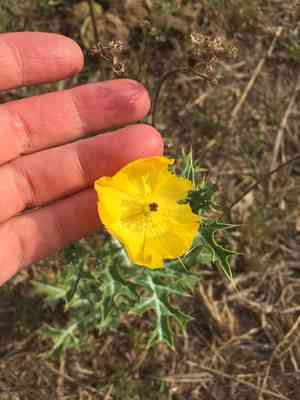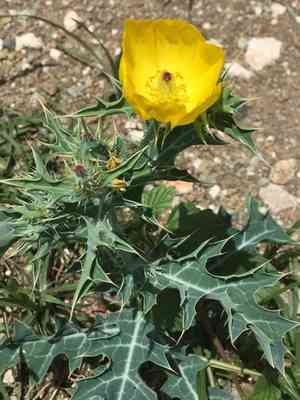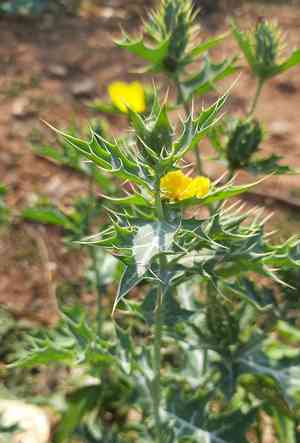
Mexican prickly poppy(Argemone mexicana)

Mexican prickly poppy (Argemone mexicana)

Also known as: Flowering thistle, Cardo

Argemone mexicana, commonly known as the Mexican prickly poppy, is highly adaptable to drought and poor soil conditions. Notably, it is toxic to grazing animals. When its seed pods are cut, they release a pale yellow latex. In India, this plant plays a role in the Holika Dahan festival, where both adults and children offer its flowers during the worship rituals.

Attributes of Mexican prickly poppy

Lifespan
Annual, Biennial, Perennial
Plant Type
Herb
Plant Height
1 m
Spread
40 cm
Leaf Color
Green Blue Gray Silver
Flower Size
6 cm
Flower Color
Yellow

PlantJoy - Identify plants with a snap

Identify and diagnose plants, get toxicity alerts, and explore safety guides for all types of fungi.

Try for Free

Images of Mexican prickly poppy

Mexican prickly poppy(Argemone mexicana)

Quickly Identify Mexican prickly poppy

1
Yellow flowers, 2-4 inches (5-10 cm) in diameter, with numerous stamens.
2
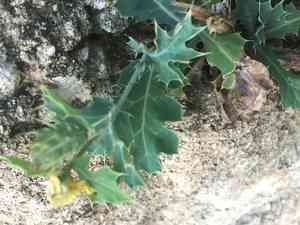
Leaves thorny, deeply lobed, up to 6 inches (15 cm) long.
3
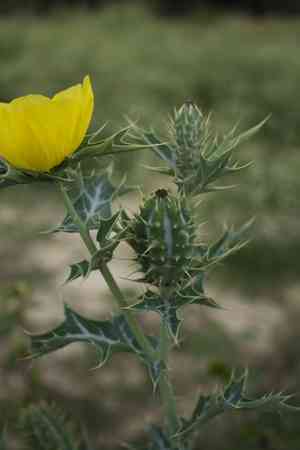
Fruit a dry, spiny capsule, 1-2 inches (2.5-5 cm) in length.
4
Flowers with 4-6 bright yellow petals, up to 1.5 inches (4 cm) across.
5
Stem upright, smooth to spiny, with scattered prickles, 1-1.5 inches (2.5-4 cm) thick.

Scientific Classification of Mexican prickly poppy

Phylum
Vascular plants
Class
Dicotyledons
Order
Ranunculales
Family
Poppy
Genus
Prickly poppies
Species
Mexican prickly poppy

Planting and Growing of Mexican prickly poppy

Care Difficulty
Easy
Watering Schedule
Every 2 days
Sunlight Requirements
Full sun
Sunshine Duration
3-6 hours
Ideal Temperature
68-86℉
Soil Type
Potting Mix, Peat Mix
Soil pH
6.5-7.5
Fertilizer Type
Balanced
Pruning Season
Spring, Summer
Pruning Area
Branches, Leaves
Pruning Frequency
2 times a year
Repotting Season
Spring
Pot Type
Plastic, Ceramic

water icon How to Water Mexican prickly poppy?

When watering Argemone mexicana, aim to saturate the soil with about 200ml of water each time, ensuring the topsoil is moist but not waterlogged. This plant prefers dry conditions, so allow the soil to dry out completely before the next watering session.
What are the symptoms of an underwatered Mexican prickly poppy?
What should I do if my Mexican prickly poppy is not getting enough water?
What are the symptoms of an overwatered Mexican prickly poppy?
How to save an overwatered Mexican prickly poppy?

sunlight icon What Are the Sunlight Requirements for Mexican prickly poppy?

Sunlight Requirements: Full sun
Duration of light: 6 to 8 hours daily
Argemone mexicana thrives under full sun exposure, optimizing flower production and overall growth. Adequate sun encourages robust health and drought resistance.
How much sunlight does Argemone mexicana need?
What if I can't provide full sun?
What are the benefits of optimal lighting?

temperature icon What Is the Ideal Temperature Range for Mexican prickly poppy?

Ideal Temperature: 68 ~ 86℉
For healthy growth, Argemone mexicana thrives best within an ideal temperature range of 68-86°F. This range ensures optimal physiological processes, including photosynthesis, respiration, and nutrient uptake, contributing to vigorous development and vibrant blooms.

soil icon What Soil is Best for Mexican prickly poppy?

Soil type: Sandy soil, Loam, Clay soil, Calcareous soil, Sandy loam
Soil PH: 6.5 ~ 7.5
Argemone mexicana thrives in well-drained soil to prevent root rot. This soil requirement ensures adequate aeration and prevents waterlogging, allowing the roots to absorb nutrients more efficiently and promoting healthy growth. This plant prefers soils that aren't overly fertile, which simulates its natural habitat. By choosing nutrient-poor conditions, you mimic its native environments, allowing it to grow without overexerting on unnecessary leafiness instead of blooming. While it is adaptable, Argemone mexicana often does well in slightly alkaline soils. The pH balance provides optimal conditions for this plant to absorb minerals, improving its resilience and flowering capability.

fertilize icon How to Fertilize Mexican prickly poppy?

Fertilizer type: Balanced
When fertilizing Argemone mexicana, it is essential to apply nutrients sparingly as this plant thrives in nutrient-poor soils. Typically, when using liquid fertilizers, apply no more than half a tablespoon diluted in a gallon of water per application. For solid, slow-release fertilizers, a small pinch (about 1/8 cup) scattered around the base in the growing season should suffice.

prune icon How to Prune Mexican prickly poppy?

Pruning Time: Spring, Summer
Begin by cutting away any dead or damaged stems to enhance airflow and reduce disease risk. Aim to make clean cuts at a 45-degree angle close to the main stem. Trim overly long or unbalanced stems to maintain a pleasing shape, enhancing both aesthetics and the plant's health. This encourages a more uniform growth pattern. After the blooming period, deadhead the spent flowers to direct energy back to new buds, promoting more vigorous flowering in the next cycle.

propagate icon How to Propagate Mexican prickly poppy plant?

Propagate Time: Spring, Early summer
1
Soak the seeds in warm water overnight to soften the seed coat, which can improve germination rates. This step mimics natural conditions and makes it easier for the seed to absorb water and begin germination.
2
Sow the seeds evenly over the surface of the potting mix. Cover them lightly with a thin layer of the potting mixture, ensuring they are not too deep, as this can hinder their germination.
3
Place the seed trays in a warm, bright area but out of direct sunlight. Keep the soil consistently moist but not waterlogged. A greenhouse or a windowsill propagator can help maintain the desired temperature and humidity.

repot icon How to Repot Mexican prickly poppy plant?

Repotting frequency: Every 2-3 years
1
Mexican Poppy, or Argemone mexicana, indicates its need for repotting when roots begin to emerge from the drainage holes or the growth appears stunted. Best to carry out in spring or summer when the plant is in its growing season, ensuring minimal stress during the process.
2
Select a pot that is 1-2 inches larger in diameter than the current one, preferably made from porous materials like terracotta. This improves aeration and helps prevent root rot by allowing excess moisture to evaporate, promoting healthier plant roots.
3
Opt for a well-draining sandy loam mix, rich in organic matter. Such soil supports the Mexican Poppy's natural preference for well-drained environments, mimicking its natural habitat while preventing waterlogging and ensuring roots receive adequate aeration.

PlantJoy - Identify plants with a snap

Find the best spots for them to optimize their health, simply using your phone.

Try for Free

Toxicity of Mexican prickly poppy

Is Mexican prickly poppy toxic to humans?

Poisoning caused by Mexican prickly poppy results from ingestion of its parts. The level of urgency can vary from moderate to severe, contingent upon the quantity consumed. This plant possesses highly severe toxic properties. The oil present in the seeds is extremely poisonous. Consumption leads to gastrointestinal disturbances such as pain, vomiting, and diarrhea. Eating significant amounts can lead to outbreaks of 'epidemic dropsy' across numerous tropical regions. Accidental ingestion is possible since the seeds closely mimic mustard seeds and may be confused with them.

Identify toxic plants for your safety

Learn which plants are harmful to you and your pets, and make informed choices for a safer home!

Try for Free
WARNING
The judgment on toxicity and danger is for reference only. We DO NOT GUARANTEE any accuracy of such judgment. Therefore, you SHALL NOT rely on such judgment. It is IMPORTANT TO SEEK PROFESSIONAL ADVICE in advance when necessary.