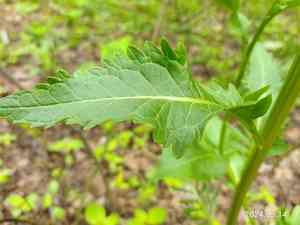
Horseradish(Armoracia rusticana)

Horseradish (Armoracia rusticana)

Also known as: Red cole, Pepper turnip

Horseradish (Armoracia rusticana) is a perennial plant related to mustard and cabbage. It is known for its large white root, which has a sharp, spicy flavor and aroma. This root is commonly used as a condiment in various dishes.

Attributes of Horseradish

Lifespan
Perennial, Annual
Plant Type
Herb
Plant Height
61 cm to 76 cm
Spread
50 cm
Leaf Color
Green
Flower Size
2.5 cm
Flower Color
White

PlantJoy - Identify plants with a snap

Identify and diagnose plants, get toxicity alerts, and explore safety guides for all types of fungi.

Try for Free

Images of Horseradish

Horseradish(Armoracia rusticana)

Quickly Identify Horseradish

1
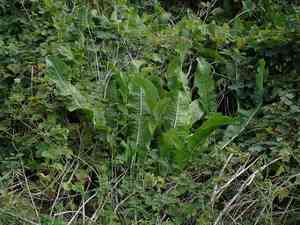
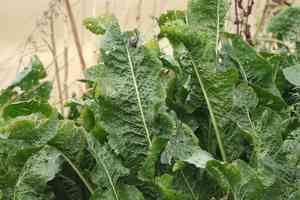
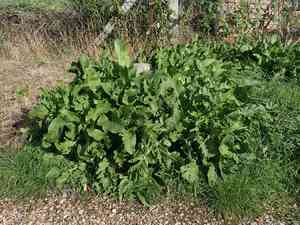
Basal leaves up to 2 feet (60 cm) long, crinkled with sinusoidal margin.
2
Stiff, erect flowering stems reaching 5 feet (1.5 meters) in height.
3
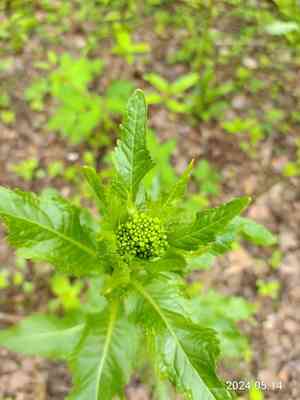
Small, white flowers in panicles, less than 0.5 inches (1.27 cm) in diameter.
4
Oblong, slightly rough seed pods with up to 8 seeds.
5
Prominently veined dark green leaves, diminishing in size along the stem.

Scientific Classification of Horseradish

Phylum
Vascular plants
Class
Dicotyledons
Order
Brassicales
Family
Cruciferae
Genus
Horseradishes
Species
Horseradish

Planting and Growing of Horseradish

Care Difficulty
Easy
Watering Schedule
Every 4 days
Sunlight Requirements
Full sun
Sunshine Duration
4-8 hours
Ideal Temperature
60-75℉
Soil Type
Potting Mix, Peat Mix
Soil pH
6.5-7.5
Fertilizer Type
Balanced
Pruning Season
Spring, Summer
Pruning Area
Branches, Leaves
Pruning Frequency
2 times a year
Repotting Season
Spring
Pot Type
Plastic, Ceramic

water icon How to Water Horseradish?

Watering Armoracia rusticana requires a balance, ensuring the soil is moist but not saturated. Aim to water until the soil feels uniformly moist, down to about 2-3 inches deep. Use approximately 500 ml of water per session to maintain this level of moisture without waterlogging the roots.
What are the symptoms of an underwatered Horseradish?
What should I do if my Horseradish is not getting enough water?
What are the symptoms of an overwatered Horseradish?
How to save an overwatered Horseradish?

sunlight icon What Are the Sunlight Requirements for Horseradish?

Sunlight Requirements: Full sun, Partial sun
Duration of light: 6 to 8 hours daily
Armoracia rusticana thrives best under full to partial sun, significantly enhancing its growth and flavor profile, leading to a more robust and resilient plant.
What is the best environment for Armoracia rusticana?
How can I ensure enough sunlight for Armoracia rusticana indoors?
What are the benefits of providing ideal light conditions for Armoracia rusticana?

temperature icon What Is the Ideal Temperature Range for Horseradish?

Ideal Temperature: 60 ~ 75℉
Armoracia rusticana thrives best when grown in temperatures ranging from 60 to 75 degrees Fahrenheit. This temperature range supports optimal enzymatic activities and metabolic processes, leading to healthy growth and development.

soil icon What Soil is Best for Horseradish?

Soil type: Loam, Sandy loam
Soil PH: 6.5 ~ 7.5
Armoracia rusticana thrives in nutrient-rich soils that provide a steady release of essential nutrients like nitrogen, phosphorus, and potassium. This ensures robust growth and a bountiful harvest of pungent horseradish roots. The plant demands soil that retains moisture yet drains well. Well-drained conditions prevent root rot and other moisture-related issues, ensuring the plant develops its characteristic spicy roots without any hinderances. While well-drained, the soil should also have good moisture retention capabilities to cater to the plant's needs during dry periods. This balance helps in sustaining growth and keeping the horseradish roots succulent.

fertilize icon How to Fertilize Horseradish?

Fertilizer type: Balanced
For Armoracia rusticana, a plant that thrives on nutrient-rich soil, it is crucial to provide modest amounts of fertilizer. Generally, liquid fertilizers should be applied at a dilution of one tablespoon per gallon of water, ensuring not to over-concentrate which could harm the roots.

prune icon How to Prune Horseradish?

Pruning Time: Autumn, Winter
Start your pruning process by removing any dead or damaged foliage. This is essential not only for aesthetic reasons but also to prevent the spread of disease. Use sharp, clean pruning shears to make precise cuts, ensuring you don't damage healthy parts of the plant. If Armoracia rusticana is becoming too large for its space, you can trim back some of the foliage. Be careful not to overdo it, as this can stress the plant. Aim to cut back only up to one-third of the plant to maintain its vigor.

propagate icon How to Propagate Horseradish plant?

Propagate Time: Early spring, Late autumn
1
Select a healthy mature plant and loosen the soil around it using a garden fork. Carefully lift the plant to avoid damaging the roots before dividing or cutting them.
2
Once the plant is lifted, gently separate the root clumps into smaller sections using your hands or a sharp knife. Each section should have sufficient roots and shoots to form a new plant.
3
Place the root sections or cuttings into pots or directly into well-prepared soil. Cover with soil and water adequately to encourage the establishment of the new plants.

repot icon How to Repot Horseradish plant?

Repotting frequency: Every 2-3 years
1
Horseradish, or Armoracia rusticana, signals its need for repotting when roots start penetrating the drainage holes, or if growth becomes stunted in its current container. Ideally, aim for a bright spring or summer day when the plant has a chance to adjust smoothly to its new environment.
2
Opt for a pot that’s one size larger than the current one, ensuring it has ample drainage holes. The benefit of this choice is to provide ample room for root expansion and effective water drainage, crucial for the plant’s thriving underground root structure.
3
Select a well-draining, sandy loam for repotting horseradish. This soil mixture allows for optimal moisture retention without becoming waterlogged, providing necessary aeration and nutrients for healthy horseradish root development.

PlantJoy - Identify plants with a snap

Find the best spots for them to optimize their health, simply using your phone.

Try for Free

Toxicity of Horseradish

Is Horseradish toxic to humans?

Consuming a significant quantity of horseradish can lead to adverse effects in humans. Given that various parts of this plant are commonly incorporated in culinary recipes, individuals may experience these detrimental effects if they consume excessive amounts of horseradish roots, particularly when using them as foraged food. The symptoms typically manifest as moderate due to the glucosinolates found in the subterranean roots. Ingesting a sufficient quantity of these roots may provoke symptoms like sweating, gastrointestinal disturbances, weakness, and sensations of confusion.

Is Horseradish toxic to cat?

Horseradish presents a minor toxicity hazard to felines, especially when they consume considerable quantities of its leaves or roots. Although specific toxic substances are not identified, cat guardians should remain watchful since ingesting it in large quantities could lead to physical distress necessitating veterinary intervention. If there is a suspicion that a cat has ingested horseradish, it is crucial to promptly seek veterinary assistance to safeguard the pet's health and well-being.

Is Horseradish toxic to dog?

Horseradish presents a mild toxicity risk for dogs. While small amounts may not result in serious harm, consuming large quantities can lead to poisoning. Both the leaves and roots of the plant pose a risk to canines. Dogs that have eaten these parts of horseradish might display symptoms such as gastrointestinal distress, excessive drooling, or other indications of discomfort. It is essential for dog owners to keep a watchful eye on their pets and prevent them from ingesting significant amounts of this plant. If a dog ingests horseradish and begins to show any negative reactions, it is crucial to seek immediate attention at a veterinary clinic to ensure their health and safety.

Identify toxic plants for your safety

Learn which plants are harmful to you and your pets, and make informed choices for a safer home!

Try for Free
WARNING
The judgment on toxicity and danger is for reference only. We DO NOT GUARANTEE any accuracy of such judgment. Therefore, you SHALL NOT rely on such judgment. It is IMPORTANT TO SEEK PROFESSIONAL ADVICE in advance when necessary.