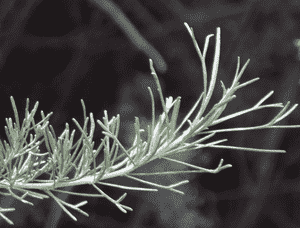
California sagebrush (Artemisia californica)
Also known as: California sagebrush, Coastal sagewort
Rabbitbrush is a hardy, perennial shrub well-suited for poor, well-draining soils. It typically grows up to 91 cm tall and is known for its silvery foliage. This shrub flourishes in higher, drier elevations, producing yellowish to red flowers.
In This Article
Attributes of California sagebrush
Lifespan
Perennial
Plant Type
Herb, Shrub
Plant Height
1.8 m
Spread
1.8 m
Leaf Color
Green
Flower Size
0.1 to 0.2 inches
Flower Color
Yellow Green Brown
Images of California sagebrush
Quickly Identify California sagebrush
1
Evergreen subshrub reaching 3-4 feet (91-122 cm) with finely divided, light gray-green foliage.
2
Threadlike lobes on leaves measuring 1-2 inches (2.5-5 cm) long.
3
Inconspicuous flowers blending with leafy inflorescence.
4
Thrives in full to partial sun, prefers well-draining sandy to clay soils.
5
Emits pleasant aroma when foliage is crushed.
Scientific Classification of California sagebrush
Phylum
Vascular plants
Class
Dicotyledons
Order
Asterales
Family
Daisy
Genus
Mugworts
Species
California sagebrush
Planting and Growing of California sagebrush
Care Difficulty
Easy
Watering Schedule
Every day
Sunlight Requirements
Full sun
Sunshine Duration
4-6 hours
Ideal Temperature
60-75℉
Soil Type
Potting Mix, Peat Mix
Soil pH
6.5-7.5
Fertilizer Type
Balanced
Pruning Season
Spring, Summer
Pruning Area
Branches, Leaves
Pruning Frequency
2 times a year
Repotting Season
Spring
Pot Type
Plastic, Terracotta
 How to Water California sagebrush?
Artemisia californica thrives in conditions that mimic its native arid environment. This means it requires minimal watering—a thorough soaking is sufficient when watering. Ensure the soil is well-drained and dry before the next watering to prevent root rot. The plant appreciates having its roots dry out completely between waterings.
More About Watering Techniques→
What are the symptoms of an underwatered California sagebrush?
›
What should I do if my California sagebrush is not getting enough water?
›
What are the symptoms of an overwatered California sagebrush?
›
How to save an overwatered California sagebrush?
›
 What Are the Sunlight Requirements for California sagebrush?
Artemisia californica thrives best in full sun environments, preferring at least 6-8 hours of sunlight daily. This ideal light range promotes vigorous growth, enhances aroma production, and bolsters its resilience against environmental challenges.
More About Sunlight Requirements Techniques→
What is the ideal lighting condition?
›
How can you achieve these lighting conditions?
›
What are the benefits of ideal lighting?
›
 What Is the Ideal Temperature Range for California sagebrush?
Artemisia californica thrives in a temperate climate, with ideal temperatures ranging between 60°F and 75°F. This range provides the optimal conditions for growth, simulating the coastal environments where the plant is naturally found. Maintaining this temperature range helps ensure the plant's physiological processes such as photosynthesis and nutrient uptake function effectively.
 What Soil is Best for California sagebrush?
Artemisia californica thrives in well-drained soils. Good drainage prevents waterlogging, which can lead to root rot. Ensuring proper drainage guarantees the plant can absorb necessary nutrients without being overwhelmed by excess water. This plant requires soils with moderate fertility. Excessively rich soils can cause uncharacteristic growth, leading to weakened plants. A balance in fertility levels ensures robust but controlled growth, enhancing the plant’s natural form. Artemisia californica adapts well to dry soil conditions. This drought tolerance means it requires less frequent watering, conserving water resources. Dry conditions also mimic its native habitat, promoting optimal growth and health.
More About Soil→
 How to Fertilize California sagebrush?
Artemisia californica doesn't require heavy fertilization. It's best to use a balanced, low-nitrogen fertilizer at half the recommended strength. This plant thrives in nutrient-poor soils, so too much fertilizer can do more harm than good.
More About Fertilizing Techniques→
 How to Prune California sagebrush?
Start by identifying dead, damaged, or diseased stems and remove them entirely. Use sharp pruning shears to make clean cuts at a 45-degree angle. This encourages faster healing and prevents water accumulation. Trim back the outer growth to maintain the desired shape and size. Focus on thinning out overcrowded areas to improve air circulation, which can reduce the risk of fungal diseases. Be sure to step back occasionally to assess your work from a distance. After initial shaping, slightly prune the tips of the branches. This gentle trimming promotes bushier growth and can lead to more flowers. Avoid cutting back too hard into the old wood, as Artemisia may struggle to regenerate from severe cuts.
More About Pruning Techniques→
 How to Propagate California sagebrush plant?
1
Gather seeds from mature Artemisia californica plants in the late summer to early autumn when seeds have fully matured. Ensure seeds are dry before storage.
2
Select healthy, non-flowering stems for cuttings. Cut a 4-6 inch section, ensuring that at least two leaf nodes are included.
3
Choose a low-growing branch and gently secure it under the soil. Ensure that contact points have been slightly wounded to encourage rooting.
 How to Repot California sagebrush plant?
1
Artemisia californica should be repotted when the roots start to crowd the pot, or when soil drainage becomes poor. The ideal signs to look out for include roots poking out of drainage holes, slower plant growth, and soil compacting.
2
The new pot should be only slightly larger than the previous one to prevent water retention issues. Opt for clay or terracotta pots, which allow for better breathability and natural airflow to the roots, helping prevent water-logged soil and root rot.
3
Select a well-draining sandy soil mix. The soil should mimic its natural arid environment to prevent overwatering. This type of soil provides excellent aeration and encourages healthy root growth by allowing excess water to easily escape.
Learn More About California sagebrush Diseases
Anthracnose
Bacterial Leaf Spot
Bacterial Wilt
Chemical Injury
Crown Gall
Cyst Nematode
Damping-off
Downy Mildew
Drought Stress
Fusarium Wilt
Gray Mold
Leaf Spot
Mosaic
Nutrient Deficiency
Nutrient Toxicity
Powdery Mildew
Root Rot
Root-knot Nematode
Rusts
Sooty Mold
Spider Mites
Temperature Stress
Thrips Damage
White Mold



