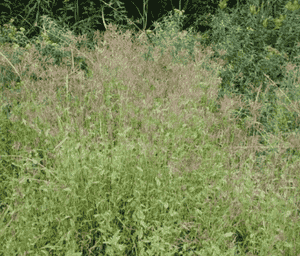
Small carpetgrass (Arthraxon hispidus)
Also known as: Creek grass, Hairy jointgrass
Arthraxon hispidus, also known as small carpetgrass or hairy jointgrass, originates from East Asia. It was unintentionally introduced to the United States, where it has since become invasive. Managing this weed can involve manually removing it before it seeds or using a wetland-specific herbicide.
In This Article
Attributes of Small carpetgrass
Lifespan
Annual
Plant Type
Grass
Plant Height
46 cm
Spread
Not applicable
Leaf Color
Green
Flower Size
2.5 cm to 8 cm
Flower Color
Yellow Green Purple Brown
Images of Small carpetgrass


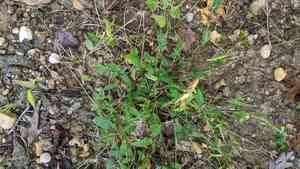
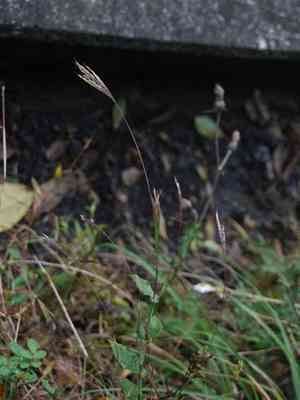
Quickly Identify Small carpetgrass
1
Stems up to 40 inches (1 meter) long, flattened, wiry texture.
2
Leaves narrow, lance-shaped, rough surface, 1-3 inches (2.5-7.5 cm) long.
3
Flowers in spikes, small spikelets in pale green to purplish colors.
4
Fruit compact caryopsis, yellowish, smooth texture, around 4mm (0.16 inches).
5
Stems round, green with red hues, covered in white hairs, 0.08 inches (2 mm) thick.
Scientific Classification of Small carpetgrass
Phylum
Vascular plants
Class
Monocotyledons
Order
Poales
Family
Grass
Genus
Carpetgrass
Species
Small carpetgrass
Planting and Growing of Small carpetgrass
Care Difficulty
Easy
Watering Schedule
Every 3 days
Sunlight Requirements
Partial sun
Sunshine Duration
4-8 hours
Ideal Temperature
65-77℉
Soil Type
Potting Mix, Peat Mix
Soil pH
6.5-7.5
Fertilizer Type
Balanced
Pruning Season
Spring, Summer
Pruning Area
Branches, Leaves
Pruning Frequency
2 times a year
Repotting Season
Spring
Pot Type
Plastic, Ceramic
 How to Water Small carpetgrass?
Arthraxon hispidus thrives best when its soil is evenly moist but not waterlogged. Aim to provide around 250 ml of water each time to ensure the roots receive sufficient hydration without drowning. The water should permeate the soil completely, reaching the deeper roots but avoid pooling on the surface.
What are the symptoms of an underwatered Small carpetgrass?
›
What should I do if my Small carpetgrass is not getting enough water?
›
What are the symptoms of an overwatered Small carpetgrass?
›
How to save an overwatered Small carpetgrass?
›
 What Are the Sunlight Requirements for Small carpetgrass?
Partial sun: Arthraxon hispidus ideally requires 3 to 6 hours of filtered sunlight. This range supports balanced growth and maintains leaf health without risk of scorching.
More About Sunlight Requirements Techniques→
Is Partial Shade Ideal for Arthraxon hispidus?
›
How Do You Achieve Ideal Lighting for Arthraxon hispidus?
›
What Benefits Does Ideal Lighting Offer to Arthraxon hispidus?
›
 What Is the Ideal Temperature Range for Small carpetgrass?
Arthraxon hispidus thrives best in temperatures between 65°F and 77°F. This range provides optimal conditions for growth and overall health. The plant performs photosynthesis efficiently and does not experience undue stress, making it the best temperature range for supporting its metabolic activities.
 What Soil is Best for Small carpetgrass?
Arthraxon hispidus thrives in well-drained soil, which prevents waterlogging and root rot. Providing a substrate where excess water can easily percolate away ensures the roots remain healthy and able to absorb nutrients, leading to a more vigorous growth. This plant benefits from soil with moderate nutrient content. A balanced level of macronutrients ensures that the plant has enough fuel for photosynthesis without the risk of nutrient burn or excessive growth, aiding in maintaining a stable structure. Enriching the soil with organic matter can significantly enhance moisture retention and nutrient availability. This is beneficial for Arthraxon hispidus, as it improves soil structure, provides essential nutrients, and fosters beneficial biological activity.
 How to Fertilize Small carpetgrass?
Arthraxon hispidus should be fertilized with a moderate amount of nutrients to encourage strong growth. Typically, about 1/4 to 1/2 teaspoon of liquid fertilizer per gallon of water is efficient, while slow-release granules can be sprinkled sparingly on the soil's surface at a rate of approximately 1 ounce per square foot.
 How to Prune Small carpetgrass?
Use sharp, clean shears to clip back overgrown areas, focusing on damaged or diseased stems. Ensure cuts are made at a 45-degree angle to prevent water accumulation and promote healthy regrowth. Remove some of the interior stems to open up the plant structure. This practice allows for better air circulation, reducing the risk of fungal diseases and allowing sunlight to penetrate the inner parts of the plant.
More About Pruning Techniques→
 How to Propagate Small carpetgrass plant?
1
Collect mature seeds from the plant and soak them in water for 24 hours to soften their outer shell, aiding germination.
2
Select healthy stems free of disease and pests, cutting a length of 4-6 inches below a node to improve rooting success.
3
Carefully dig around the base of the plant to unearth the root ball. Separate clumps ensuring each division has roots and shoots.
 How to Repot Small carpetgrass plant?
1
Arthraxon hispidus signals it's time for repotting when roots start outgrowing the pot, sneaking out through drainage holes, or when the soil compacts too much affecting drainage and aeration.
2
Opt for a pot that's a couple of inches larger in diameter than the current one. This prevents too much moisture retention which can cause root rot, and provides enough room for the plant to grow.
3
A well-draining loamy mix is ideal. It retains enough moisture for the roots without causing waterlogging, and it enriches the plant with nutrients necessary for vibrant growth.



