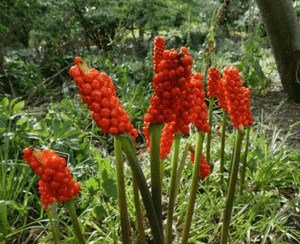
Cuckoo pint (Arum maculatum)
Also known as: Adam and eve, Wake robin, Snakeshead, Adder's-root, Devils and angels, Soldiers diddies, Cheese and toast
Cuckoo pint (Arum maculatum) is a perennial that will grow to 51 cm tall. It blooms in spring with male and female flowers that spring be yellow or purple. Male flowers have tiny hairs to trap insects that are attracted by the scent of the blossoms. This entrapment covers the insect in pollen before it can escape to pollinate other flowers. Female flowers give way to bright red berries in summer that are highly poisonous.
Attributes of Cuckoo pint
Images of Cuckoo pint
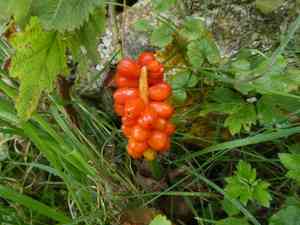
Quickly Identify Cuckoo pint
Scientific Classification of Cuckoo pint
Toxicity of Cuckoo pint
Is Cuckoo pint toxic to humans?
Cuckoo pint presents a considerable toxicity risk to humans if ingested. Each part of the plant contains calcium oxalate, which is harmful when consumed. Individuals who accidentally ingest any portion of this plant may suffer from severe irritation in the mouth and throat, along with swelling of the lips, tongue, and palate, accompanied by significant burning pain. The gastrointestinal system can also be affected, resulting in nausea, vomiting, and diarrhea. In certain instances, the swelling could be serious enough to obstruct breathing, which poses a particular hazard. Given the gravity of these symptoms, it is crucial to exercise extreme caution to prevent unintentional ingestion, especially among children who may be attracted to the plant's berries.
Is Cuckoo pint toxic to cat?
Cuckoo pints are frequently grown as ornamental plants that possess mild to moderate toxicity to cats. When any part of this plant is ingested, it can lead to symptoms such as burning sensations and pain in the mouth and throat, difficulty with swallowing, decreased appetite, vomiting, diarrhea, head shaking, and gagging. Fortunately, the extreme unpleasantness of this plant generally discourages cats from consuming it in large quantities. It is advisable to seek veterinary care if severe manifestations of these symptoms occur.
Is Cuckoo pint toxic to dog?
Cuckoo pints exhibit a range of toxicity from mild to severe in dogs due to the high levels of calcium oxalates present throughout the entire plant. The sap can irritate the skin, and if consumed, it may result in redness or swelling in the mouth and throat, which could subsequently cause a loss of appetite, increased drooling, and challenges in swallowing, along with gastrointestinal discomfort and abdominal pain. Ingesting a substantial amount of the plant can lead to severe cases; fortunately, most dogs are generally deterred by the plant's intense unpleasantness.

