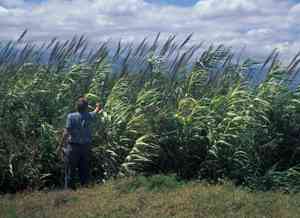
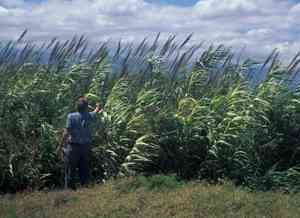
Giant reed (Arundo donax)
Also known as: Wild cane, Spanish cane, Spanish reed, Donax cane
Arundo donax, commonly called giant reed, is a robust grass that flourishes in both standing water and well-drained soil. In warm regions, it can grow as tall as 6 meters and may produce long purple flowers. This plant is notable for providing material to craft reeds used in musical instruments like clarinets and saxophones.
In This Article
Attributes of Giant reed
Lifespan
Perennial
Plant Type
Grass
Plant Height
4 m to 6 m
Spread
1.5 m to 2.5 m
Leaf Color
Green Blue White Gray Variegated Silver
Flower Size
8 cm to 15 cm
Flower Color
Purple White Brown
Images of Giant reed
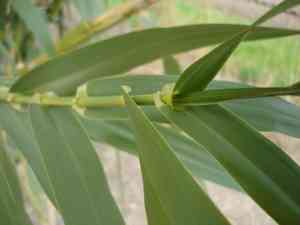
Quickly Identify Giant reed
1
Sturdy, cane-like stems reaching up to 20 feet (6 meters) in height.
2
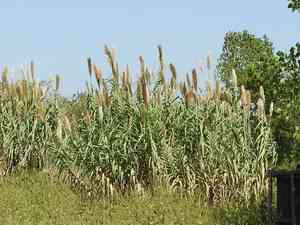
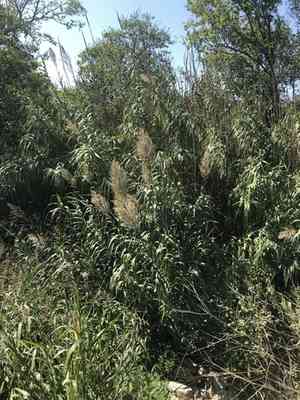
Feathery plumes of flowers transitioning from reddish-brown to fluffy silver.
3
Long, grey-green leaves measuring 2 feet (60 cm) in length with a corn-like appearance.
4
Leaves with a bronze hue in cold conditions, featuring a coarse texture.
Scientific Classification of Giant reed
Phylum
Vascular plants
Class
Monocotyledons
Order
Grasses, sedges and allies
Family
Grass
Genus
Giant reeds
Species
Giant reed
Planting and Growing of Giant reed
Care Difficulty
Easy
Watering Schedule
Every 4 days
Sunlight Requirements
Full sun
Sunshine Duration
6-10 hours
Ideal Temperature
68-86℉
Soil Type
Potting Mix, Peat Mix
Soil pH
6.5-7.5
Fertilizer Type
Balanced
Pruning Season
Spring, Summer
Pruning Area
Branches, Leaves
Pruning Frequency
2 times a year
Repotting Season
Spring
Pot Type
Plastic, Ceramic
 How to Water Giant reed?
Arundo donax requires a deep watering approach. When watering, ensure the soil is soaked thoroughly, aiming for a depth of at least a few inches. This promotes deep root growth and ensures the plant receives enough moisture without waterlogging the roots.
What are the symptoms of an underwatered Giant reed?
›
What should I do if my Giant reed is not getting enough water?
›
What are the symptoms of an overwatered Giant reed?
›
How to save an overwatered Giant reed?
›
 What Are the Sunlight Requirements for Giant reed?
Arundo donax's ideal light range includes full to partial sun exposure, enhancing its growth. Such light conditions improve its photosynthesis abilities, leading to strong, healthy plant development.
More About Sunlight Requirements Techniques→
What is the best lighting condition for Arundo donax?
›
How can I ensure optimal lighting for Arundo donax?
›
What benefits does Arundo donax experience with ideal lighting?
›
 What Is the Ideal Temperature Range for Giant reed?
The ideal temperature range for Arundo donax, between 68°F and 86°F, is crucial because it ensures optimal growth conditions. During this range, physiological processes like photosynthesis and respiration occur efficiently, promoting vigorous growth and health.
 What Soil is Best for Giant reed?
Arundo donax thrives best in well-drained soil conditions which help prevent waterlogging. This reduces the risk of root rot and supports healthy root development, promoting robust growth for this plant. A nutrient-rich soil ensures that Arundo donax receives the essential nutrients that are vital for its vigorous growth. The availability of nitrogen, phosphorus, and potassium can significantly enhance the plant’s overall health and foliage density. While the soil should be well-drained, maintaining adequate moisture is crucial for Arundo donax as it supports this plant's exceptional growth rate. Loamy soil can provide a perfect balance, retaining just enough moisture without creating overly damp conditions.
More About Soil→
 How to Fertilize Giant reed?
For Arundo donax, it's crucial to use a balanced fertilizer, such as 10-10-10 NPK. When using liquid fertilizer, apply at a rate of 1 tablespoon per gallon of water. For slow-release granular fertilizers, use about 1/2 cup per square yard. Ensuring the right dosage will support robust growth and lush foliage.
More About Fertilizing Techniques→
 How to Prune Giant reed?
Start by identifying any overgrown, dead, or damaged canes. These are typically easy to spot as they are discolored or have fewer leaves. Using sharp, sanitized shears, cut the identified canes at the base, close to the ground level. This promotes healthy regrowth and prevents the plant from becoming tangled. Trim back healthy canes to maintain the desired height and shape. This encourages a fuller appearance and prevents the plant from becoming too top-heavy.
 How to Propagate Giant reed plant?
1
Choose a healthy, mature stem of Arundo donax that is free from disease and pest damage for successful cuttings or division propagation. The stem should be firm and show signs of active growth.
2
Cut the selected stems at a 45-degree angle using pruning shears to maximize the surface area for rooting. Remove any leaves from the lower third of the cutting to prevent rot and ensure moisture availability.
3
Plant the cutting in a well-draining potting mix and water thoroughly. Ensure that the soil remains moist, but not waterlogged, to promote healthy root development. Place in a warm, bright location, but away from direct sunlight.
 How to Repot Giant reed plant?
1
Repot when the plant shows signs of outgrowing its container, such as roots coming out of drainage holes or the soil drying out more quickly than usual. Early spring or summer when growth is active is ideal.
2
Select a pot that is 2-3 inches larger in diameter than the current one. A bigger pot encourages healthy growth and provides adequate space for rhizome expansion, thus preventing the plant from becoming root-bound.
3
Choose a rich, loamy soil that retains moisture but drains well. This balance is essential for preventing root rot while ensuring adequate water supply, critical for Arundo donax's lush growth.
Learn More About Giant reed Diseases
Anthracnose
Bacterial Leaf Spot
Bacterial Soft Rot
Bacterial Wilt
Crown Gall
Cyst Nematode
Damping-off
Downy Mildew
Drought Stress
Fusarium Wilt
Gray Mold
Leaf Spot
Mosaic
Nutrient Deficiency
Nutrient Toxicity
Powdery Mildew
Root Rot
Root-knot Nematode
Rusts
Sooty Mold
Spider Mites
Temperature Stress
Thrips Damage
White Mold
Chemical Injury



