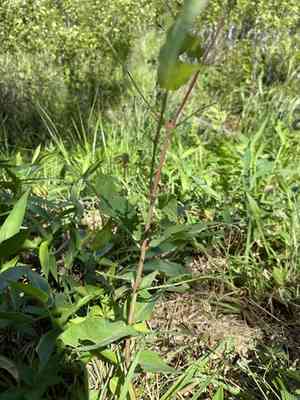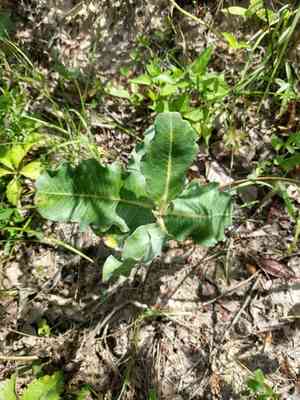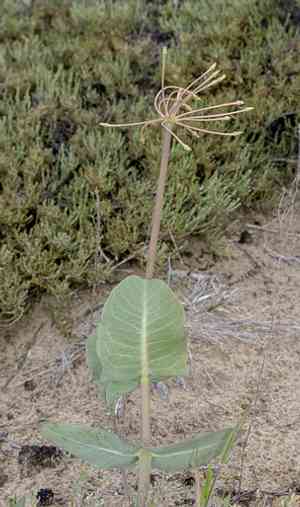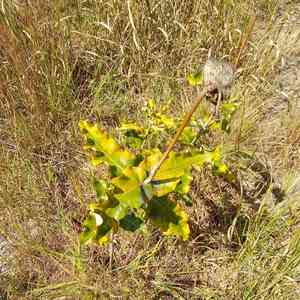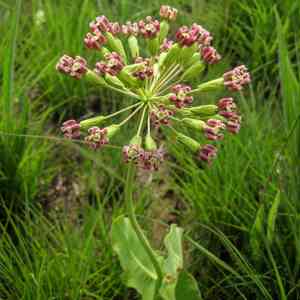
Clasping milkweed(Asclepias amplexicaulis)

Clasping milkweed (Asclepias amplexicaulis)

Also known as: Blunt-leaved milkweed

The Eastern Prairie White Fringed Orchid (Platanthera leucophaea) is a flowering plant indigenous to the eastern United States. This uncommon orchid is protected in several states. It typically blooms during the summer and can be found in dry prairies and fallow fields.

Attributes of Clasping milkweed

Lifespan
Perennial
Plant Type
Herb
Plant Height
30 cm to 76 cm
Spread
60 cm to 90 cm
Leaf Color
Green Gray
Flower Size
2.5 cm
Flower Color
Pink Purple Green

PlantJoy - Identify plants with a snap

Identify and diagnose plants, get toxicity alerts, and explore safety guides for all types of fungi.

Try for Free

Images of Clasping milkweed

Clasping milkweed(Asclepias amplexicaulis)

Quickly Identify Clasping milkweed

1
Opposite, sessile leaves with wavy margins and pink midrib aid in identification.
2
Distinctive deep pink to reddish-purple flowers in tight spherical umbels.
3
Robust stem, up to 3 feet in height, with a slightly glaucous surface.
4
Erect, spindle-shaped brown fruit pods with tufted seeds for wind dispersal.
5
Solitary terminal flower clusters with 5-parted central crown and rose scent.

Scientific Classification of Clasping milkweed

Phylum
Vascular plants
Class
Dicotyledons
Order
Gentianales
Family
Dogbane
Genus
Milkweeds
Species
Clasping milkweed

Planting and Growing of Clasping milkweed

Care Difficulty
Easy
Watering Schedule
Every 2 days
Sunlight Requirements
Full sun
Sunshine Duration
4-8 hours
Ideal Temperature
65-80℉
Soil Type
Potting Mix, Peat Mix
Soil pH
6.5-7.5
Fertilizer Type
Balanced
Pruning Season
Spring, Summer
Pruning Area
Branches, Leaves
Pruning Frequency
2 times a year
Repotting Season
Spring
Pot Type
Plastic, Ceramic

water icon How to Water Clasping milkweed?

Asclepias amplexicaulis prefers deep watering sessions that saturate the soil to about 15 cm in depth. This allows the water to reach the deeper roots while ensuring the surface remains adequately moist. After each watering, the soil should feel damp but not waterlogged, assisting in optimal root health.
What are the symptoms of an underwatered Clasping milkweed?
What should I do if my Clasping milkweed is not getting enough water?
What are the symptoms of an overwatered Clasping milkweed?
How to save an overwatered Clasping milkweed?

sunlight icon What Are the Sunlight Requirements for Clasping milkweed?

Sunlight Requirements: Full sun
Duration of light: 6-8 hours daily
Asclepias amplexicaulis thrives in full sun environments, enjoying 6 to 8 hours of daily sunlight. Adequate light ensures vibrant growth, healthy flowering, and robust foliage that contribute to a visually appealing plant.
How much light does Asclepias amplexicaulis need?
What solutions can provide ideal light for Asclepias amplexicaulis?
What benefits does ideal lighting bring to Asclepias amplexicaulis?

temperature icon What Is the Ideal Temperature Range for Clasping milkweed?

Ideal Temperature: 65 ~ 80℉
Asclepias amplexicaulis thrives best in a temperature range between 65°F to 80°F. This range provides optimal growth conditions necessary for photosynthesis and nutrient uptake. Ensuring an environment within these boundaries supports robust plant health and disease resistance.

soil icon What Soil is Best for Clasping milkweed?

Soil type: Sandy soil, Loam
Soil PH: 6.5 ~ 7.5
Asclepias amplexicaulis thrives in well-drained soil. This requirement ensures that the roots do not retain too much moisture, reducing the risk of root rot and promoting healthy root development. The plant prefers soil of moderate fertility. Excessively rich soil can lead to lush foliage growth but may reduce flowering. A balanced level of nutrients supports its overall health and blooming. This species prefers a soil pH ranging from 6.5 to 7.5. Maintaining this pH range allows optimal nutrient availability, which is crucial for vigorous growth and abundant flowering.

fertilize icon How to Fertilize Clasping milkweed?

Fertilizer type: Balanced
Asclepias amplexicaulis, or blunt-leaved milkweed, requires a delicate balance of nutrients. It's best to use a diluted liquid fertilizer, ensuring that the nitrogen content is not too high. A quarter-strength solution applied during the growing season will suffice, avoiding any nutrient burn or root damage.

prune icon How to Prune Clasping milkweed?

Pruning Time: Spring, Summer, Autumn
Begin by locating any stems that appear dead or damaged. These can be identified by discoloration, brittleness, or an absence of new growth. Using clean, sharp shears, cut back these stems to encourage healthy development. Next, proceed to trim the plant in a way that maintains its natural shape. Focus on removing any cross branches that may cause internal shading, promoting a more open structure that lets light and air reach the inner parts. To encourage new growth, occasionally pinch back the growing tips of Asclepias amplexicaulis. This practice stimulates the development of lateral branches, resulting in a bushier and aesthetically pleasing plant.

propagate icon How to Propagate Clasping milkweed plant?

Propagate Time: Spring, Early summer
1
Begin by filling seed trays with a sterile potting mix. Sow Asclepias amplexicaulis seeds on the surface, lightly pressing them into the soil but not burying them. They require light to germinate. Mist gently to moisten the soil without disturbing the seeds.
2
Place the seed trays under grow lights or in a bright location. Maintain a temperature between 65-75°F (18-24°C) to ensure germination. Keep the potting mix consistently moist but not waterlogged, as overly wet conditions can lead to seed rot.
3
Once seedlings develop two sets of true leaves, they can be carefully transplanted into larger pots or directly into garden beds. Handle seedlings by their leaves to avoid damaging the delicate stems or roots during the transplanting process.

repot icon How to Repot Clasping milkweed plant?

Repotting frequency: Every two to three years
1
Asclepias amplexicaulis signals its need for repotting through slow growth or roots poking out from the drainage holes of the pot. These signs indicate that the plant's root system has outgrown its current space and requires a new pot to thrive.
2
Select a pot that is one size larger than the current one with adequate drainage holes. This ensures the plant's roots have ample room to expand and minimizes the risk of root rot. Clay pots are preferable as they allow excess moisture to evaporate.
3
Opt for a well-draining sandy loam to support Asclepias amplexicaulis. This type of soil aids in preventing waterlogged conditions by allowing excess water to escape, crucial for the plant's health and growth.

PlantJoy - Identify plants with a snap

Find the best spots for them to optimize their health, simply using your phone.

Try for Free

Toxicity of Clasping milkweed

Is Clasping milkweed toxic to humans?

Clasping milkweed is a species that contains cardiac glycosides, which are toxic to humans if consumed. This harmful compound is present throughout the entire plant, with the highest concentrations located in the white, latex-like sap. The signs of poisoning may include symptoms such as nausea, vomiting, abdominal pain, diarrhea, lethargy, and confusion. In more serious cases, it can result in coma, respiratory failure, and potentially death. This plant poses a particularly significant threat to children due to its abundant and widespread nature. Furthermore, it does not resemble commonly consumed food plants, making it unlikely for adults to confuse it with edible options. The sap of clasping milkweed can also lead to skin and eye irritation, though these effects tend to be less severe compared to ingestion.

Identify toxic plants for your safety

Learn which plants are harmful to you and your pets, and make informed choices for a safer home!

Try for Free
WARNING
The judgment on toxicity and danger is for reference only. We DO NOT GUARANTEE any accuracy of such judgment. Therefore, you SHALL NOT rely on such judgment. It is IMPORTANT TO SEEK PROFESSIONAL ADVICE in advance when necessary.
More About Toxic Techniques