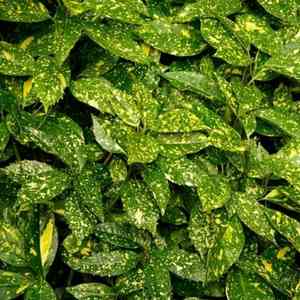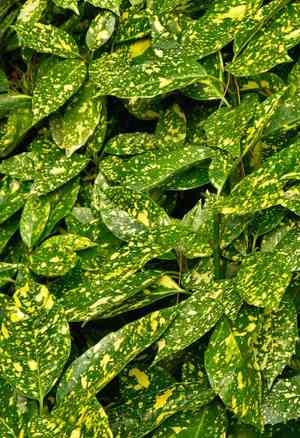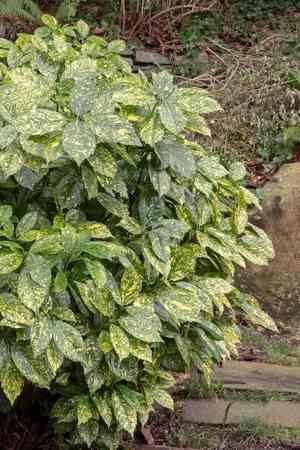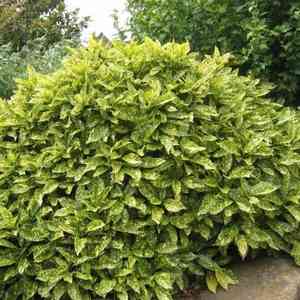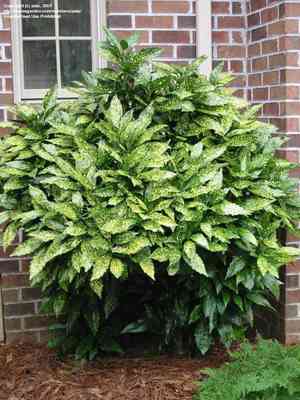
Japanese laurel(Aucuba japonica)

Japanese laurel (Aucuba japonica)

Also known as: Gold dust plant

Japanese laurel (Aucuba japonica) is originally native to Japan and Korea, thriving in moist woodlands and along streams. While it has been introduced as a garden plant in regions such as Europe, East Asia, and the US, it is considered invasive in Virginia, where it can disrupt local ecosystems.

Attributes of Japanese laurel

Lifespan
Perennial
Plant Type
Shrub
Plant Height
1 m to 5 m
Spread
1.5 m to 2.5 m
Leaf Color
Green Yellow Variegated
Flower Size
4 mm to 8 mm
Flower Color
Purple Red

PlantJoy - Identify plants with a snap

Identify and diagnose plants, get toxicity alerts, and explore safety guides for all types of fungi.

Try for Free

Images of Japanese laurel

Japanese laurel(Aucuba japonica)

Quickly Identify Japanese laurel

1
Lustrous, leathery elliptical leaves with variegated patterns and opposite arrangement on stem.
2
Persistent red to burgundy fruit, providing vibrant display from autumn to spring.
3
Small flowers with four purple-maroon petals and white anthers, blooming in early spring.
4
Ellipsoid fruit, vivid red in color, drupe-like berries up to 1/2 inch in length.
5
Fleshy stem, deep green to brownish hue, up to 1 inch in diameter, suitable for propagation.

Scientific Classification of Japanese laurel

Phylum
Vascular plants
Class
Dicotyledons
Order
Garryales
Family
Silk tassel
Genus
Aucuba
Species
Japanese laurel

Planting and Growing of Japanese laurel

Care Difficulty
Easy
Watering Schedule
Every 4 days
Sunlight Requirements
Partial sun
Sunshine Duration
6-10 hours
Ideal Temperature
60-75℉
Soil Type
Potting Mix, Peat Mix
Soil pH
5.5-7.5
Fertilizer Type
Balanced
Pruning Season
Spring, Summer
Pruning Area
Branches, Leaves
Pruning Frequency
2 times a year
Repotting Season
Spring
Pot Type
Plastic, Ceramic

water icon How to Water Japanese laurel?

Aucuba japonica requires about 500 milliliters of water per session. This amount ensures that the soil is moistened adequately without becoming waterlogged. The principle to follow is 'moist, not wet,' which means the soil should feel damp but not soggy after watering. Aim to thoroughly soak the root ball, allowing excess water to drain away.
What are the symptoms of an underwatered Japanese laurel?
What should I do if my Japanese laurel is not getting enough water?
What are the symptoms of an overwatered Japanese laurel?
How to save an overwatered Japanese laurel?
More About Watering Techniques

sunlight icon What Are the Sunlight Requirements for Japanese laurel?

Sunlight Requirements: Partial sun, Full shade
Duration of light: 2-6 hours per day
Partial sun to full shade is best for Aucuba japonica, allowing it to thrive without excessive stress. This range supports strong, lush growth and keeps the leaves vibrant and robust against environmental stresses.
How much sun exposure is ideal for Aucuba japonica?
How can I achieve the ideal lighting for my Aucuba japonica?
What benefits does ideal lighting provide to Aucuba japonica?
More About Sunlight Requirements Techniques

temperature icon What Is the Ideal Temperature Range for Japanese laurel?

Ideal Temperature: 60 ~ 75℉
The ideal temperature range for Aucuba japonica is between 60°F and 75°F. These temperatures provide the right balance for the plant’s metabolic rate, ensuring optimal growth and leaf coloration. At this temperature, the plant is able to photosynthesize effectively and maintain robust growth throughout the year.

soil icon What Soil is Best for Japanese laurel?

Soil type: Loam, Sandy loam, Acidic soil
Soil PH: 5.5 ~ 7.5
Aucuba japonica thrives in well-drained soil to prevent root rot. Ensuring good drainage helps the plant absorb nutrients efficiently, promoting lush and vibrant foliage. Although well-drained soil is important, this plant prefers soil that retains some moisture. This helps maintain consistent hydration, crucial for the plant's growth and leaf health. Aucuba japonica doesn’t require very rich soil but benefits from moderate fertility to support its growth. Balanced nutrients contribute to its resilience and sustaining its attractive foliage. More About Soil

fertilize icon How to Fertilize Japanese laurel?

Fertilizer type: Balanced
When fertilizing Aucuba japonica, it's crucial to provide an appropriate amount without overwhelming the plant. For liquid fertilizers, dilute the solution to half the recommended strength to avoid root burn. For slow-release fertilizers, use about 1 tablespoon per square foot around the plant's base, ensuring even distribution. More About Fertilizing Techniques

prune icon How to Prune Japanese laurel?

Pruning Time: Spring, Summer, Autumn
When pruning Aucuba japonica, use a pair of sharp, clean pruning shears to make precise cuts. Sterilizing the tools before and after use can prevent the spread of plant diseases and ensure healthy growth. Start by removing any dead, damaged, or diseased branches. Cut them back to the base or a healthy outward-facing bud. Focus on thinning out crowded branches to encourage airflow and light penetration, cutting them back to the main stem. To maintain the desired shape, trim the plant's outer edges evenly. You can shape your Aucuba japonica into a neat, round form or allow it to grow naturally for a more informal appearance. Cut just above a leaf node to encourage new growth. More About Pruning Techniques

propagate icon How to Propagate Japanese laurel plant?

Propagate Time: Spring, Early summer
1
Choose a healthy stem with several leaves and a length of about 4-6 inches. Avoid older wood as it may not root as effectively. Use clean shears for cutting.
2
Dip the cut end of the stem cutting into rooting hormone to promote faster root development. Shake off excess hormone before planting it in the soil.
3
Insert the cutting into a pot filled with a well-draining soil mix. Ensure at least one node (a leaf joint) is buried to encourage root growth. Water the soil lightly.
More About Propagating Techniques

repot icon How to Repot Japanese laurel plant?

Repotting frequency: Every 2-3 years
1
Aucuba japonica shows signals like roots growing out of drainage holes or stunted growth. These are signs that it needs repotting. Spring and autumn are perfect as they provide moderate temperatures and growth conditions, ensuring minimal stress.
2
Select a pot just one size larger than the current one with good drainage holes. This ensures excess water escapes, preventing root rot. A slightly larger pot controls growth, focusing Aucuba's energy on establishing and thriving rather than uncontrolled expansion.
3
Use a well-draining, rich soil mix, ideally composed of peat, perlite, and compost. This mixture supports healthy root growth and moisture retention, without causing waterlogging. It provides nutrients Aucuba japonica needs for lush foliage.

PlantJoy - Identify plants with a snap

Find the best spots for them to optimize their health, simply using your phone.

Try for Free

Toxicity of Japanese laurel

Is Japanese laurel toxic to humans?

Japanese laurel is classified as a toxic plant that can be harmful to humans when consumed. The effects of ingestion tend to be mild. The berry-like fruits and leaves contain glycosides that can present a threat to individuals who ingest these parts of the plant. Symptoms can include mild fever, nausea, and vomiting. In survival scenarios, some individuals may eat this plant as a food source, inadvertently consuming the seeds and suffering from these adverse toxic effects. Additionally, some may confuse the berries with a non-toxic variety and inadvertently eat the harmful fruits.

Is Japanese laurel toxic to cat?

Japanese laurel presents a moderate risk of toxicity to cats. Ingestion of any part of the plant can result in poisoning. Since every part of the japanese laurel is toxic, cats may exhibit physical discomfort or indications of pain, necessitating close observation. It is vital for cat owners to keep their pets away from japanese laurel and to remain alert regarding its presence in their surroundings. If there is a suspicion that a cat has ingested japanese laurel, it is imperative to promptly seek veterinary treatment at a clinic.

Is Japanese laurel toxic to dog?

Japanese laurel presents a moderate toxicity threat to dogs. Ingestion of any portion of this plant can result in poisoning. Dogs may suffer from toxicity after chewing on pieces of japanese laurel, a scenario that might occur during their inquisitive exploration or accidental swallowing while outdoors. Typical symptoms of poisoning in dogs can encompass vomiting, diarrhea, abdominal discomfort, and lethargy. It is vital for pet owners to remain alert and keep their dogs away from japanese laurel. Should a dog consume japanese laurel, seeking prompt veterinary attention is imperative to secure the best possible outcome for the animal.

Identify toxic plants for your safety

Learn which plants are harmful to you and your pets, and make informed choices for a safer home!

Try for Free
WARNING
The judgment on toxicity and danger is for reference only. We DO NOT GUARANTEE any accuracy of such judgment. Therefore, you SHALL NOT rely on such judgment. It is IMPORTANT TO SEEK PROFESSIONAL ADVICE in advance when necessary.
More About Toxic Techniques