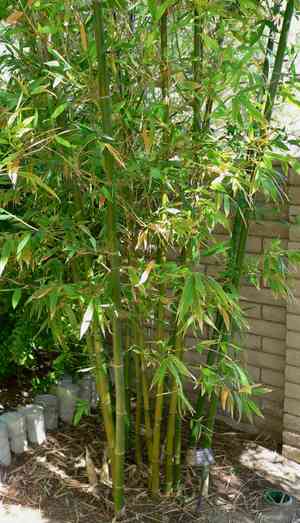
Giant timber bamboo (Bambusa oldhamii)
Also known as: Oldham's Bamboo, Giant Timber Bamboo
A great option for landscaping, especially for privacy and sound barriers, is Giant Timber Bamboo. This impressive clumping bamboo can grow taller than 10 meters and is noted for its robust, green culms and dense foliage. Thriving in warm climates, it creates thick screens that provide both privacy and noise reduction. Its straight, vertical growth and resilience make it a favored choice for both decorative and functional purposes in landscaping.
In This Article
Attributes of Giant timber bamboo
Lifespan
Perennial
Plant Type
Grass
Plant Height
40-60 feet (12-18 meters)
Spread
2-3 inches (5-7.5 cm) culm diameter
Leaf Color
Dark green
Flower Size
Flowers are rare and small
Flower Color
Cream to yellowish
Images of Giant timber bamboo
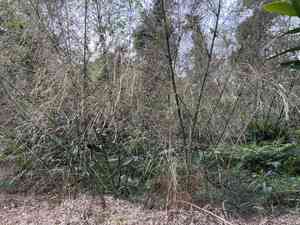
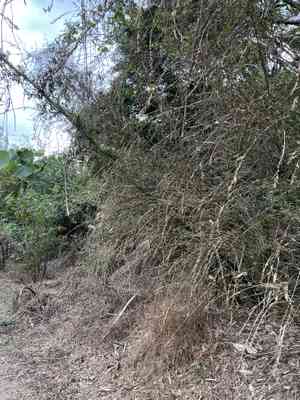
Quickly Identify Giant timber bamboo
1
Towering height of up to 55 feet (16.8 meters)
2
Sturdy culms with diameters reaching 4 inches (10 cm)
3
Dense foliage canopy for privacy screening
4
Thrives in full sunlight with low water requirements
5
Resistant to cool temperatures, enduring lows of 15-20°F (-9 to -6°C)
Scientific Classification of Giant timber bamboo
Phylum
Vascular plants
Class
Monocotyledons
Order
Grasses, sedges and allies
Family
Grass
Genus
Bambusa
Species
Giant timber bamboo
Planting and Growing of Giant timber bamboo
Care Difficulty
Easy
Watering Schedule
Every 8 days
Sunlight Requirements
Full sun
Sunshine Duration
6-10 hours
Ideal Temperature
68-86℉
Soil Type
Potting Mix, Peat Mix
Soil pH
6.5-7.5
Fertilizer Type
Balanced
Pruning Season
Spring, Summer
Pruning Area
Branches, Leaves
Pruning Frequency
2 times a year
Repotting Season
Spring
Pot Type
Ceramic, Plastic
 How to Water Giant timber bamboo?
For Bambusa oldhamii, ensure the soil is moist but not waterlogged. The ideal amount per watering session is around 200 ml. Pay attention to how the water is absorbed and adjust as needed based on the soil and environmental conditions.
What are the symptoms of an underwatered Giant timber bamboo?
›
What should I do if my Giant timber bamboo is not getting enough water?
›
What are the symptoms of an overwatered Giant timber bamboo?
›
How to save an overwatered Giant timber bamboo?
›
 What Are the Sunlight Requirements for Giant timber bamboo?
Bambusa oldhamii ideally thrives best in full to partial sun environments. This light range supports active growth and enhances foliar development. It also plays a role in improving disease resistance.
What is the ideal lighting environment?
›
How to achieve ideal lighting conditions for Bambusa oldhamii?
›
What are the benefits of providing ideal lighting?
›
 What Is the Ideal Temperature Range for Giant timber bamboo?
The ideal temperature range for growing Bambusa oldhamii is between 68°F and 86°F. Within this range, the plant can thrive and maximize its growth potential. This temperature range provides an environment that supports optimal physiological processes such as photosynthesis and nutrient uptake, leading to healthy and vigorous growth of the bamboo.
 What Soil is Best for Giant timber bamboo?
Bambusa oldhamii thrives in nutrient-rich soil, which ensures robust growth and vibrant foliage. Nutrients like nitrogen, phosphorus, and potassium are crucial for the plant’s healthy development. This bamboo variety requires well-draining soil to prevent waterlogging, which can lead to root rot. Adequate drainage allows roots to breathe, promoting optimal growth conditions. The soil should retain consistent moisture to support Bambusa oldhamii's growth needs. Mulching can be beneficial to maintain moisture levels and support efficient water use.
 How to Fertilize Giant timber bamboo?
Bambusa oldhamii, commonly known as Giant Timber Bamboo, requires a balanced fertilization regime. For liquid fertilizers, use a solution of half-strength balanced fertilizer, applying approximately 0.5 liters per plant per session for optimal growth.
 How to Prune Giant timber bamboo?
Begin by identifying any dead, dying, or diseased canes. These should be removed first to prevent any potential spread of disease and to allow space for healthy canes to grow. Cut canes at ground level to remove them entirely. This helps maintain the aesthetic form of the bamboo and ensures a cleaner removal compared to cutting them halfway. Selectively prune to thin out dense clumps. This improves light penetration and air circulation and reduces competition among the canes for resources. Consider the shape of your bamboo clump. Trim canes strategically to enhance the natural look and maintain the desired form. This might include topping tall canes for a uniform height.
More About Pruning Techniques→
 How to Propagate Giant timber bamboo plant?
1
Choose a healthy clump for division, ideally one that is mature and has several stems. Healthy clumps ensure better chances of successful propagation.
2
Use the spade to dig around the clump and gently lift it out. Use the spade or a sharp knife to divide it into smaller sections, each with a few culms and roots.
3
Plant the divisions into containers or directly into the ground. Water thoroughly to help settle the soil around the roots, encouraging new growth.
 How to Repot Giant timber bamboo plant?
1
Repot your Bambusa oldhamii when you notice that the roots are circling the pot or growing out of the bottom. This bamboo species appreciates room to grow, so if you see it becoming root-bound or the growth has slowed down significantly, these are clear signs that it needs a bigger home to continue its vigorous growth.
2
Select a pot that is 2-3 inches larger in diameter than the current one. It should also have adequate drainage holes to prevent waterlogging, which can lead to root rot. A ceramic or plastic pot is preferable as they retain moisture better, ensuring moisture availability even between waterings.
3
Opt for a well-draining sandy loam soil mixture, which provides good aeration and drainage while maintaining sufficient moisture for bamboo's needs. This kind of soil prevents the roots from sitting in water, reducing the risk of root rot and ensuring healthy growth.



