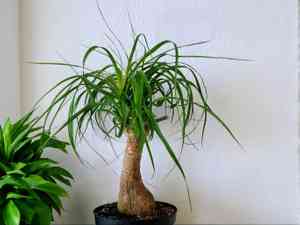
Ponytail palm (Beaucarnea recurvata)
Also known as: Pony tail
The ponytail palm, known for its bulbous base and long, cascading leaves, is actually a succulent related to the agave family, not a true palm. This resilient houseplant prospers in bright, indirect light but can also adapt to lower light settings. It favors dry, well-draining soil, such as a cactus mix, and requires the soil to dry out between waterings to prevent root rot.
In This Article
Attributes of Ponytail palm
Lifespan
Perennial
Plant Type
Succulent, Shrub, Tree
Plant Height
4 m to 15 m
Spread
90 cm to 1.5 m
Leaf Color
Green
Flower Size
1 cm to 1.5 cm
Flower Color
White Pink
Images of Ponytail palm
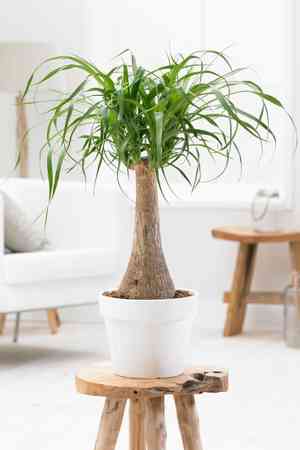
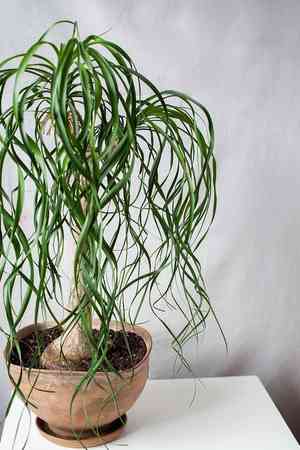
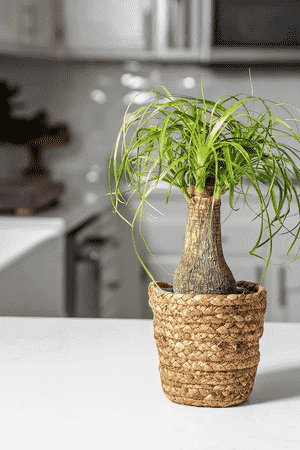
Quickly Identify Ponytail palm
1
Swollen trunk base forming a caudex up to 12 feet (3.6 meters) wide for water storage.
2
Dark green leaves, 3 feet (90 cm) long, gracefully drooping for a fountain-like effect.
3
Cream-colored flowers in pyramidal inflorescence, 2 feet (60 cm) tall, blooming in late spring.
4
Distinctive swollen trunk base with rough bark, branching pattern in mature plants.
5
Large clusters of tiny creamy white flowers, 0.3 inches (0.8 cm) in diameter, lacking strong scent.
Scientific Classification of Ponytail palm
Phylum
Vascular plants
Class
Monocotyledons
Order
Asparagus and allies
Family
Asparagus
Genus
Beaucarnea
Species
Ponytail palm
Planting and Growing of Ponytail palm
Care Difficulty
Easy
Watering Schedule
Every 2 days
Sunlight Requirements
Full sun
Sunshine Duration
6-8 hours
Ideal Temperature
65-75℉
Soil Type
Potting Mix, Peat Mix
Soil pH
6.5-7.5
Fertilizer Type
Balanced
Pruning Season
Spring, Summer
Pruning Area
Branches, Leaves
Pruning Frequency
2 times a year
Repotting Season
Spring
Pot Type
Plastic, Ceramic
 How to Water Ponytail palm?
Beaucarnea recurvata, often known as the Ponytail Palm, thrives when watered deeply but infrequently. Ensure that the entire root ball is saturated, allowing for healthy root growth, but don't leave it sitting in water, as this plant prefers its soil to dry out between waterings.
More About Watering Techniques→
What are the symptoms of an underwatered Ponytail palm?
›
What should I do if my Ponytail palm is not getting enough water?
›
What are the symptoms of an overwatered Ponytail palm?
›
How to save an overwatered Ponytail palm?
›
 What Are the Sunlight Requirements for Ponytail palm?
Beaucarnea recurvata thrives in partial to full sun conditions. Ideal light boosts photosynthesis, ensuring steady growth and vibrant, healthy foliage while preventing excess soil moisture retention.
More About Sunlight Requirements Techniques→
What is the best lighting for Beaucarnea recurvata?
›
How do I ensure Beaucarnea recurvata gets ideal light?
›
What are the benefits of optimal lighting for Beaucarnea recurvata?
›
 What Is the Ideal Temperature Range for Ponytail palm?
The ideal temperature range for Beaucarnea recurvata, commonly known as the Ponytail Palm, is between 65°F and 75°F. This range provides optimal conditions for growth and health, allowing the plant to thrive and produce new leaves. Maintaining this temperature range helps in ensuring that the plant's metabolic processes function efficiently, promoting overall vitality.
 What Soil is Best for Ponytail palm?
Beaucarnea recurvata thrives in well-drained soil, preventing the roots from sitting in water. This is essential because it mimics the plant's natural arid habitat, reducing the risk of root rot and promoting healthy growth. While needing good drainage, the soil should also be nutrient-rich. Adding organic matter such as compost helps supply essential nutrients, supporting the plant's robust and lush foliage. A loose soil texture is ideal for Beaucarnea recurvata. It allows for easy air circulation and penetration of water to the roots, which is crucial for healthy metabolic processes and vigorous growth.
More About Soil→
 How to Fertilize Ponytail palm?
When fertilizing Beaucarnea recurvata, also known as the Ponytail Palm, use a balanced liquid fertilizer diluted to half strength. Apply approximately 50 ml per plant, ensuring it isn't too concentrated to avoid root burn.
 How to Prune Ponytail palm?
Begin by examining your Beaucarnea recurvata for any leaves that appear brown, dry, or damaged. These are the leaves you'll need to remove. Using your sharp and clean pruning tools, carefully cut off the dead or damaged leaves as close to the base as possible without cutting into the trunk. If desired, lightly trim around the plant to maintain a tidy appearance and encourage even growth. Focus on removing leaves that stick out awkwardly.
 How to Propagate Ponytail palm plant?
1
Begin with selecting healthy and viable seeds. Soak the seeds in lukewarm water for 24 hours to soften the seed coat, which can hasten germination. It is essential to ensure that the seeds are not overcrowded in the water to avoid oxygen deprivation.
2
Prepare a well-draining soil mix by combining equal parts of sand and peat moss. The soil should be moist but not waterlogged. Fill the seed trays with this mixture, leaving enough space for covering the seeds lightly after sowing.
3
Choose a healthy Beaucarnea recurvata with strong growth for taking cuttings. Using sterile tools, cut a section of stem with nodes intact. Ensure each cutting is approximately 4-6 inches long to provide enough material for rooting while minimizing stress on the parent plant.
 How to Repot Ponytail palm plant?
1
Beaucarnea recurvata generally needs to be repotted every 2–3 years. These signs indicate it's time for a new pot: roots growing out of the drainage holes, slowed growth despite proper care, or the plant becoming top-heavy and unstable. Choosing the right time can optimize the plant's health and growth.
2
Select a pot that is 1–2 inches wider in diameter than the current one. The material should be breathable, like terracotta, to allow proper air circulation and moisture evaporation. Adequate drainage is crucial; ensure the pot has drainage holes at the bottom to prevent waterlogging which can lead to root rot.
3
Using a well-draining cactus mix is ideal as it closely mimics the soil conditions in its native environment. This type of soil ensures that excess water drains quickly, preventing root rot while providing the necessary nutrients for growth. A balanced mix promotes healthy root development.



