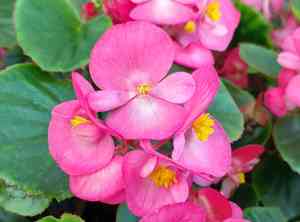
Hardy begonia (Begonia grandis)
Also known as: Hardy Begonia, Japanese Begonia, Chinese Begonia
A great option for your garden is the Japanese Anemone (Anemone hupehensis or Anemone x hybrida). This herbaceous perennial typically reaches up to 1 meter in height. It showcases beautiful blooms from midsummer through late fall. The Japanese Anemone flourishes in partial shade and prefers rich, moist, well-drained soil.
In This Article
Attributes of Hardy begonia
Lifespan
Perennial
Plant Type
Herb
Plant Height
30 cm to 60 cm
Spread
45 cm to 60 cm
Leaf Color
Green Red
Flower Size
2.5 cm
Flower Color
Pink
Images of Hardy begonia
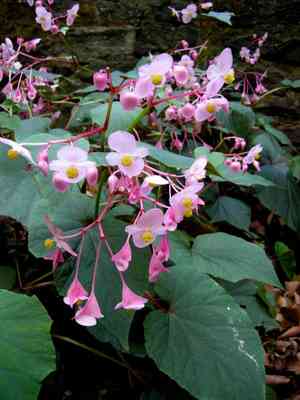
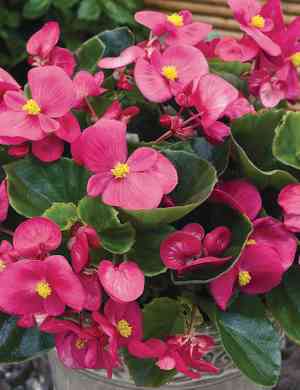
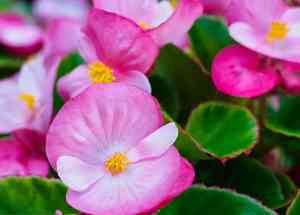
Quickly Identify Hardy begonia
1
Reddish wing-like foliage in fall
2
Pink flowers in arching clusters
3
Distinct three-winged capsules
4
Olive-green leaves with red veins
5
Smooth, arching stems with reddish hues
Scientific Classification of Hardy begonia
Phylum
Vascular plants
Class
Dicotyledons
Order
Cucurbitales
Family
Begonia
Genus
Begonias
Species
Hardy begonia
Planting and Growing of Hardy begonia
Care Difficulty
Easy
Watering Schedule
Every 4 days
Sunlight Requirements
Partial sun
Sunshine Duration
6-10 hours
Ideal Temperature
60-75℉
Soil Type
Potting Mix, Peat Mix
Soil pH
5.5-7
Fertilizer Type
Balanced
Pruning Season
Spring, Summer
Pruning Area
Branches, Leaves
Pruning Frequency
2 times a year
Repotting Season
Spring
Pot Type
Plastic, Ceramic
 How to Water Hardy begonia?
The amount of water needed for Begonia grandis should be around 250 milliliters per watering. The general rule is to water until moisture trickles slightly out of the drainage holes. Ensuring even distribution of water is crucial to reach all the roots thoroughly. Avoid creating standing water, as the plant prefers a well-drained environment.
What are the symptoms of an underwatered Hardy begonia?
›
What should I do if my Hardy begonia is not getting enough water?
›
What are the symptoms of an overwatered Hardy begonia?
›
How to save an overwatered Hardy begonia?
›
 What Are the Sunlight Requirements for Hardy begonia?
Partial sun conditions are ideal, offering a balance of light that supports healthy growth and vibrant leaves. This exposure mimics the plant's natural woodland habitat, sustaining its overall well-being.
More About Sunlight Requirements Techniques→
What is the ideal lighting condition for Begonia grandis?
›
How to achieve ideal lighting for Begonia grandis?
›
What benefits does Begonia grandis get from ideal lighting?
›
 What Is the Ideal Temperature Range for Hardy begonia?
The ideal temperature range for Begonia grandis is between 60°F and 75°F. This range encourages optimal growth by providing a stable environment that supports key physiological processes. Temperatures within this range promote proper cellular function and photosynthesis, ensuring that the plant remains vibrant and healthy.
 What Soil is Best for Hardy begonia?
Begonia grandis thrives in well-drained soil, preventing root rot by allowing excess water to escape. This ensures the roots have access to oxygen, promoting healthy growth and vibrant foliage. The presence of rich organic matter enhances soil fertility, providing essential nutrients for Begonia grandis. This enhances the plant's growth rate and ensures lush and vibrant blooms. While Begonia grandis prefers regular watering, maintaining moderate soil moisture prevents sudden wilting and promotes consistent, healthy growth throughout its lifecycle.
 How to Fertilize Hardy begonia?
When fertilizing Begonia grandis, ensure a balanced application. For liquid fertilizers, use a diluted solution – roughly at half the strength recommended for general houseplants. Solid or slow-release fertilizers should be used sparingly; about one-third the amount typically suggested ensures the plant receives sufficient nutrients without risk of overfeeding.
 How to Prune Hardy begonia?
Begin by sterilizing your pruning shears with rubbing alcohol to prevent disease spread. Identify weak, leggy, or dead stems—these are the primary targets for removal. Cut just above a node or leaf base to encourage new growth. Take this opportunity to shape the plant symmetrically, always cutting at a slight angle to protect the plant from water damage. After major pruning, it's beneficial to lightly water the plant to reduce stress and aid in recovery.
More About Pruning Techniques→
 How to Propagate Hardy begonia plant?
1
Choose a healthy and robust plant to take cuttings from. This ensures that the new plants have the best start, with strong and disease-free genetic material to propagate from.
2
Cut a 4- to 6-inch section from a healthy stem, making sure there are at least two leaves on the cutting. Remove any flowers or additional leaves to reduce stress on the cutting.
3
Place the cuttings in small pots filled with a potting mix. Water the cutting thoroughly, allowing excess water to drain away. Ensure that the cuttings remain moist but not waterlogged.
 How to Repot Hardy begonia plant?
1
Look for signs like roots growing out of the drainage holes or the plant becoming top-heavy. These indicate the Begonia grandis is becoming too large for its current pot. Also, if the growth appears stunted or leaves start yellowing, it might be time to provide it with fresh soil.
2
Opt for a pot that is one size larger than the current one to allow room for growth. Ensure it has drainage holes; this helps prevent waterlogging, which can lead to root rot. A pot with good aeration supports healthier root systems and overall plant vitality.
3
Use a mix that retains moisture but also allows for drainage. A combination of potting soil, perlite, and a bit of organic matter works well. This type of soil ensures good aeration, allowing roots to breathe while providing adequate nutrients.
Toxicity
Ingestion, skin contact
WARNING
The judgment on toxicity and danger is for reference only. We DO NOT GUARANTEE any accuracy of such judgment. Therefore, you SHALL NOT rely on such judgment. It is IMPORTANT TO SEEK PROFESSIONAL ADVICE in advance when necessary.



