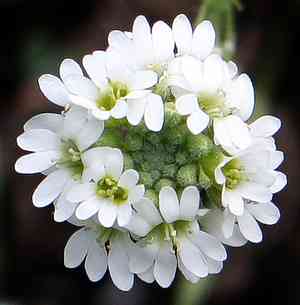
Hoary alyssum (Berteroa incana)
Also known as: Hoary berteroa
Garlic Mustard (Alliaria petiolata) is a flowering plant from the mustard family, originally from Eurasia. Known for its invasive nature, it frequently appears along roadsides and in lawns.
In This Article
Attributes of Hoary alyssum
Lifespan
Annual, Perennial, Biennial
Plant Type
Herb
Plant Height
80 cm
Spread
80 cm
Leaf Color
Green Silver Blue Gray
Flower Size
2.5 cm
Flower Color
White
Images of Hoary alyssum
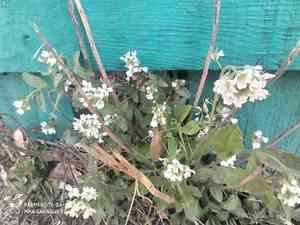
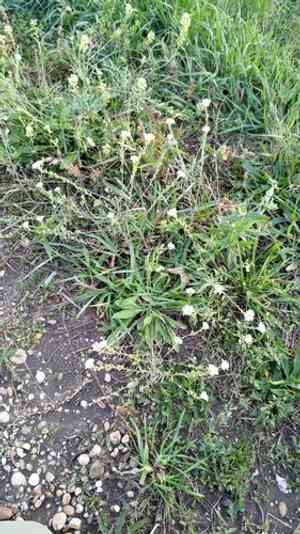
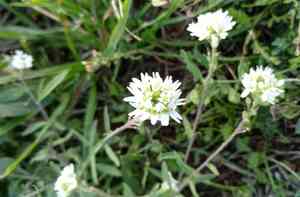
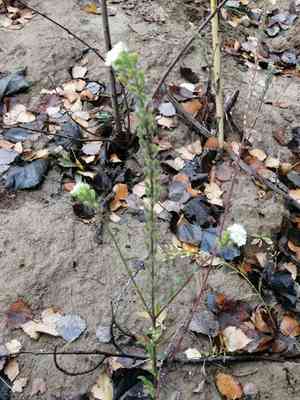
Quickly Identify Hoary alyssum
1
Silvery grey-green foliage due to dense hairs.
2
Racemes of white flowers with 4 deeply lobed petals.
3
Round, flat siliques with persistent style, pale in color.
4
Densely hairy, woolly stems, ranging from 0.1 to 0.3 inches.
5
Toothless, alternate leaves with star-shaped hairs, 1-3 inches long.
Scientific Classification of Hoary alyssum
Phylum
Vascular plants
Class
Dicotyledons
Order
Brassicales
Family
Cruciferae
Genus
False madworts
Species
Hoary alyssum
Planting and Growing of Hoary alyssum
Care Difficulty
Easy
Watering Schedule
Every 2 days
Sunlight Requirements
Full sun
Sunshine Duration
4-6 hours
Ideal Temperature
60-70℉
Soil Type
Potting Mix, Peat Mix
Soil pH
6.5-7.5
Fertilizer Type
Balanced
Pruning Season
Spring, Summer
Pruning Area
Branches, Leaves
Pruning Frequency
2 times a year
Repotting Season
Spring
Pot Type
Plastic, Ceramic
 How to Water Hoary alyssum?
Berteroa incana requires a watering amount of around 200 ml per session. The key is to ensure the soil remains slightly moist but not waterlogged. Aim to water until the top inch of soil feels damp, resembling the dampness of a wrung-out sponge.
What are the symptoms of an underwatered Hoary alyssum?
›
What should I do if my Hoary alyssum is not getting enough water?
›
What are the symptoms of an overwatered Hoary alyssum?
›
How to save an overwatered Hoary alyssum?
›
 What Are the Sunlight Requirements for Hoary alyssum?
For optimal growth, Berteroa incana benefits from a lighting regime of 6 to 8 hours of full sun. This degree of exposure facilitates healthy development, ensuring strong stems, vibrant flowers, and overall plant vitality.
More About Sunlight Requirements Techniques→
What is the best location for Berteroa incana?
›
How can I adjust light exposure during extreme weather?
›
Why is the right lighting important for Berteroa incana?
›
 What Is the Ideal Temperature Range for Hoary alyssum?
The ideal temperature range for growing Berteroa incana is between 60 to 70°F. Maintaining this range ensures optimal growth conditions, resulting in healthy plants with robust foliage and vibrant flowers. This temperature helps to maximize photosynthesis and promotes efficient nutrient uptake.
 What Soil is Best for Hoary alyssum?
Berteroa incana thrives in well-drained soil. This characteristic prevents water from stagnating around the roots, reducing the risks of root rot and fostering healthy growth. This plant prefers nutrient-rich soil. Ensuring a fertile substrate supports robust plant growth, helping it develop strong stems and an abundance of flowers. The soil should retain a moderate level of moisture. Maintaining this balance helps the plant stay hydrated in dry conditions without waterlogging the roots.
More About Soil→
 How to Fertilize Hoary alyssum?
For Berteroa incana, the fertilizer amount should be just enough to support its natural growth without overstimulation. A balanced 10-10-10 (N-P-K) fertilizer at half the recommended strength is ideal. Apply about 1/4 cup around the base of the plant, avoiding direct contact with stems for solid fertilizers.
More About Fertilizing Techniques→
 How to Prune Hoary alyssum?
Begin by assessing the plant’s shape and health. Remove any dead or diseased branches. This not only helps in improving overall plant health but also prevents the spread of disease within the plant. Prune back overgrown stems to promote a compact and tidy shape. Cut at a slight angle just above a healthy bud or joint to encourage new growth in the desired direction. Regularly thin out any dense areas to improve air circulation within the plant. This reduces the risk of fungal infections and increases light penetration, which aids in healthier growth.
 How to Propagate Hoary alyssum plant?
1
Fill the seed tray with potting soil, leaving a slight gap from the top to allow for watering. Firm the soil gently to create an even surface for sowing seeds. This ensures that seeds have consistent contact with the soil, aiding germination.
2
Distribute Berteroa incana seeds evenly across the prepared soil surface. Lightly press the seeds into the soil without burying them too deeply. A light covering of soil is often sufficient to hold the seeds in place and maintain the right moisture level.
3
Water the seeds carefully, using a gentle spray to avoid displacing them. Keep the soil consistently moist but not waterlogged. Ensure the seed tray is in a warm, indirect sunlight location to facilitate steady germination and growth.
 How to Repot Hoary alyssum plant?
1
Berteroa incana needs repotting when roots start to come out of the drainage holes or become bound within the pot. It's also a good time to repot when the plant growth seems stunted, indicating it's running out of nutrients or space.
2
Choose a pot that is one size larger than the current one and ensure it has ample drainage holes. This prevents root rot by allowing excess water to escape, which is crucial for the plant's health. A clay pot is preferable as it facilitates better airflow.
3
Opt for a well-draining potting mix, ideally one that is slightly sandy. Such a soil composition ensures moisture doesn't linger, thereby preventing fungal issues and providing the perfect balance of nutrients for growth.
Toxicity
Ingestion
WARNING
The judgment on toxicity and danger is for reference only. We DO NOT GUARANTEE any accuracy of such judgment. Therefore, you SHALL NOT rely on such judgment. It is IMPORTANT TO SEEK PROFESSIONAL ADVICE in advance when necessary.
Learn More About Hoary alyssum Diseases
Anthracnose
Bacterial Leaf Spot
Bacterial Soft Rot
Clubroot
Crown Gall
Cyst Nematode
Damping-off
Downy Mildew
Drought Stress
Fusarium Wilt
Gray Mold
Leaf Spot
Mosaic
Nutrient Deficiency
Nutrient Toxicity
Powdery Mildew
Root Rot
Root-knot Nematode
Rusts
Sooty Mold
Spider Mites
Temperature Stress
Thrips Damage
White Mold



