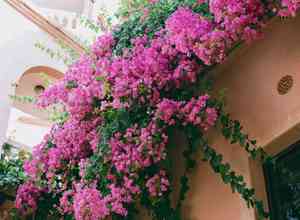
Great bougainvillea (Bougainvillea spectabilis)
Also known as: Garden bougainvillea
The vibrant hibiscus is famous for its stunning flowers and flourishes in warm climates. This tropical plant has become popular in gardens worldwide. The hibiscus is a bushy shrub that can grow quite tall, and its large, colorful blooms make it a favorite among gardeners. Its lush green foliage and ability to thrive in sunny, warm conditions make it an ideal choice for warm-weather gardens.
In This Article
Attributes of Great bougainvillea
Lifespan
Perennial
Plant Type
Shrub, Vine
Plant Height
4.5 m to 12 m
Spread
7 m
Leaf Color
Green Yellow White Variegated Gold Orange
Flower Size
2.5 cm
Flower Color
White Red Pink Purple Orange
Images of Great bougainvillea
Quickly Identify Great bougainvillea
1
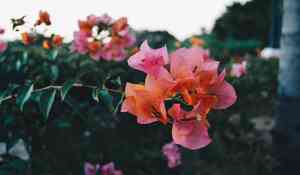
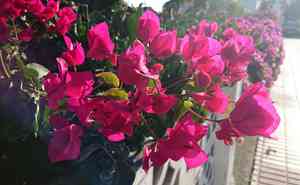
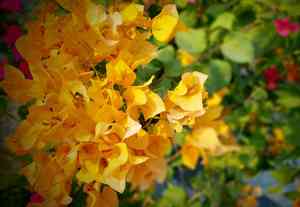
Papery bracts in vibrant colors surrounding small white flowers.
2
Thorny vine with dense foliage capable of climbing long distances.
3
Axillary clusters of small tubular flowers with colorful bracts.
4
Winged achenes with five pronounced ribs for wind dispersal.
5
Green, elliptical leaves with hairy lower surfaces and prominent venation.
Scientific Classification of Great bougainvillea
Phylum
Vascular plants
Class
Dicotyledons
Order
Pinks, cacti, and allies
Family
Four o'clock
Genus
Bougainvillea
Species
Great bougainvillea
Planting and Growing of Great bougainvillea
Care Difficulty
Easy
Watering Schedule
Every 3 days
Sunlight Requirements
Full sun
Sunshine Duration
4-8 hours
Ideal Temperature
65-85℉
Soil Type
Potting Mix, Peat Mix
Soil pH
6.5-7.5
Fertilizer Type
Balanced
Pruning Season
Spring, Summer
Pruning Area
Branches, Leaves
Pruning Frequency
2 times a year
Repotting Season
Spring
Pot Type
Plastic, Ceramic
 How to Water Great bougainvillea?
When watering Bougainvillea spectabilis, apply about 500 milliliters each time. Ensure the water penetrates deeply to encourage the roots to grow downward, avoiding shallow watering that leads to weak, surface-level root systems. Water should fully moisten the soil but not leave it soaking wet.
More About Watering Techniques→
What are the symptoms of an underwatered Great bougainvillea?
›
What should I do if my Great bougainvillea is not getting enough water?
›
What are the symptoms of an overwatered Great bougainvillea?
›
How to save an overwatered Great bougainvillea?
›
 What Are the Sunlight Requirements for Great bougainvillea?
Bougainvillea spectabilis ideally needs full sun to partial sun exposure. Proper sunlight aids in vigorous growth, vibrant colors, and resilience against pests.
More About Sunlight Requirements Techniques→
What is the ideal sunlight Bougainvillea spectabilis needs?
›
How to ensure Bougainvillea spectabilis gets ideal sunlight?
›
What are the benefits of Bougainvillea spectabilis receiving ideal sunlight?
›
 What Is the Ideal Temperature Range for Great bougainvillea?
Bougainvillea spectabilis thrives in a warm environment, ideally between 65°F and 85°F. This tropical plant requires a consistently warm climate to grow and flower abundantly. Cooler temperatures can slow its growth significantly.
 What Soil is Best for Great bougainvillea?
Bougainvillea spectabilis thrives in well-draining soil that prevents waterlogging. Proper drainage mitigates root rot risk, enabling roots to access oxygen efficiently, supporting optimal plant growth and vibrant blooms. A nutrient-rich soil enhances the growth of Bougainvillea, providing essential elements like nitrogen, phosphorus, and potassium. These nutrients contribute to robust foliage, sturdy stems, and abundant flowering. Bougainvillea requires soil with low salinity to prevent salt stress. High salt levels can lead to leaf burn and reduced growth, so maintaining suitable salinity ensures healthy, flourishing plants.
More About Soil→
 How to Fertilize Great bougainvillea?
For Bougainvillea spectabilis, it's important to provide just enough nutrients to encourage blooming without overwhelming the plant. Use a balanced 10-10-10 liquid fertilizer, diluted to half strength, to avoid nutrient burn, and apply it evenly to the soil around the base of the plant.
More About Fertilizing Techniques→
 How to Prune Great bougainvillea?
Begin by inspecting your Bougainvillea spectabilis for any dead, diseased, or damaged branches. Use clean, sharp pruning shears to remove these branches, cutting close to the main stem. This helps prevent disease spread and encourages healthy new growth. Prune back the branches to shape your bougainvillea into the desired form. Aim for a balanced shape with an open center that allows light and air to penetrate, which promotes healthy flowering and reduces the risk of fungal infections. Thinning out the inner growth can improve air circulation and sunlight penetration. Remove any crossing branches or ones that grow inwards towards the plant's center. This practice helps maintain the plant's health and increases flower production. Regularly trim back the plant to control its overall size and prevent it from becoming too leggy. Bougainvillea grows vigorously, so check its size monthly to keep it within your desired dimensions.
More About Pruning Techniques→
 How to Propagate Great bougainvillea plant?
1
Choose healthy stems that are semi-hardwood, typically 4-6 inches long. It's important to select stems from a vigorous plant free of disease and pests to ensure the highest success rate.
2
Remove the leaves from the bottom half of the cutting and dip the cut end into rooting hormone. This helps prevent rot and boosts root development.
3
Insert the cuttings into a potting mix containing equal parts sand and peat moss. Ensure the soil is kept moist but not waterlogged to encourage rooting.
 How to Repot Great bougainvillea plant?
1
You'll know it's time to repot Bougainvillea spectabilis when you see roots emerging from the drainage holes. Additionally, if the plant's growth has slowed despite proper care, it may need repotting. Another signal is when the potting mix depletes nutrients over time or becomes compacted, reducing water drainage and usability.
2
Select a pot that is 1-2 inches larger in diameter than the current one to allow for growth but prevent excess soil moisture. Opt for clay or terracotta pots, which facilitate good air circulation and prevent waterlogging, crucial for this plant. Ensure the pot has adequate drainage holes to prevent root rot.
3
The optimal soil for Bougainvillea spectabilis should be light and well-draining. A mix of garden soil, coarse sand, and perlite ensures drainage and aeration. This prevents water from sitting and causing root rot, mimicking the plant's natural habitat conditions.
Learn More About Great bougainvillea Diseases
Anthracnose
Bacterial Leaf Spot
Black Spot
Chemical Injury
Crown Gall
Damping-off
Downy Mildew
Drought Stress
Fusarium Wilt
Gray Mold
Leaf Curl
Leaf Spot
Mosaic
Nutrient Deficiency
Nutrient Toxicity
Powdery Mildew
Root Rot
Root-knot Nematode
Sooty Mold
Spider Mites
Temperature Stress
Thrips Damage
White Mold



