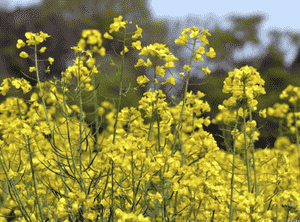
Rutabaga (Brassica napus)
Also known as: Oilseed rape, Canola, Colza, Rapeseed oil seed, Snagger
Rutabaga is a well-known root vegetable in many countries. All parts of the plant are edible, but the fleshy root is commonly cooked and enjoyed in a variety of ways. Baked, steamed, mashed, and boiled are just a few of the ways to enjoy rutabagas. This vegetable is a filling and gives substance to soups and stews, or provides a hearty side dish.
Attributes of Rutabaga
Lifespan
Annual, Biennial
Plant Type
Herb
Plant Height
1 m
Spread
30 cm to 60 cm
Leaf Color
Green Blue
Flower Size
1.7 cm
Flower Color
Yellow Gold
Images of Rutabaga
Quickly Identify Rutabaga
1
Spherical taproot with purple, white, or yellow exterior and vibrant yellow inner flesh.
2
10 cm long sickle-shaped pods turning brownish upon drying, splitting to disperse seeds.
3
Thick, bluish-hued, lobed leaves up to 30 cm long with fleshy, veined texture.
4
Stout, swollen stem forming crown close to ground, green with purple tinges, 5 cm diameter.
5
Small, light yellow flowers in raceme clusters with scentless, cross-like petals in late spring.
Scientific Classification of Rutabaga
Phylum
Vascular plants
Class
Dicotyledons
Order
Brassicales
Family
Cruciferae
Genus
Kales
Species
Rutabaga
Toxicity
Ingestion
WARNING
The judgment on toxicity and danger is for reference only. We DO NOT GUARANTEE any accuracy of such judgment. Therefore, you SHALL NOT rely on such judgment. It is IMPORTANT TO SEEK PROFESSIONAL ADVICE in advance when necessary.

