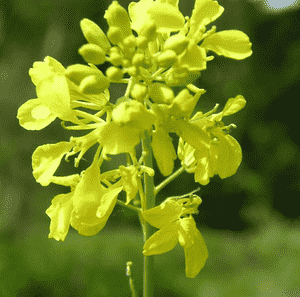
Black mustard (Brassica nigra)
Also known as: Mostaza, True Mustard
Black mustard (*Brassica nigra*) is an annual plant originating from North Africa, Europe, and Asia. It thrives in both tropical and temperate climates. This species is notable for its elongated seed pods, which house four black seeds each. These seeds are commonly used as a spice to produce mustard. In regions like the West Coast of the United States, black mustard is regarded as an invasive weed.
In This Article
Attributes of Black mustard
Lifespan
Annual
Plant Type
Herb
Plant Height
80 cm to 2.5 m
Spread
60 cm
Leaf Color
Green
Flower Size
2.5 mm to 6 mm
Flower Color
Yellow Gold
Images of Black mustard
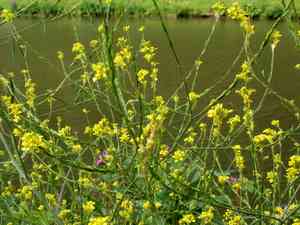
Quickly Identify Black mustard
1
Yellow flowers, 1/3 inch (8 mm) across, arranged in racemes up to 2 feet (60 cm) long.
2
Slender seedpods, 0.67 inches (1.7 cm) long, turning from green to tan/brown when ripe.
3
Broad, hairy upper-surface leaves up to 10 inches (25 cm) long, with lobed lower leaves.
4
Dull gray/green stem with scattered stiff hairs near the base, branchless and robust.
5
Fast-growing winter annual, stalks reaching heights of 2 to 8 feet (0.6 to 2.4 meters).
Scientific Classification of Black mustard
Phylum
Vascular plants
Class
Dicotyledons
Order
Brassicales
Family
Cruciferae
Genus
Kales
Species
Black mustard
Planting and Growing of Black mustard
Care Difficulty
Moderate
Watering Schedule
Every 4 days
Sunlight Requirements
Full sun
Sunshine Duration
4-8 hours
Ideal Temperature
60-68℉
Soil Type
Potting Mix, Peat Mix
Soil pH
6.5-7.5
Fertilizer Type
Balanced
Pruning Season
Spring, Summer
Pruning Area
Branches, Leaves
Pruning Frequency
2 times a year
Repotting Season
Spring
Pot Type
Plastic, Terracotta
 How to Water Black mustard?
Brassica nigra, commonly known as black mustard, requires a consistent water supply to thrive. Ensure that the soil is evenly moist but not waterlogged. Water deeply, allowing the water to reach the root zone, and ensure good drainage to prevent root rot.
What are the symptoms of an underwatered Black mustard?
›
What should I do if my Black mustard is not getting enough water?
›
What are the symptoms of an overwatered Black mustard?
›
How to save an overwatered Black mustard?
›
 What Are the Sunlight Requirements for Black mustard?
Brassica nigra thrives best in full sun to partial sun conditions. The ideal light exposure enhances flowering and foliage growth, improving overall plant health and productivity.
More About Sunlight Requirements Techniques→
What light conditions does Brassica nigra thrive in?
›
How can I ensure my Brassica nigra gets optimal light?
›
What benefits does ideal lighting provide for Brassica nigra?
›
 What Is the Ideal Temperature Range for Black mustard?
The ideal temperature range for growing Brassica nigra, commonly known as black mustard, is between 60°F and 68°F. This range ensures optimal growth and vigor, facilitating proper nutrient uptake and healthy plant development. Maintaining conditions within this range can significantly enhance flowering and seed production, leading to a successful cultivation process.
 What Soil is Best for Black mustard?
Brassica nigra thrives in nutrient-rich soil, which provides essential nutrients that enhance the plant's growth and health. Rich organic matter in the soil supports robust root development and vigorous foliage. Adequate drainage is critical to prevent waterlogging, which can cause root rot. Well-draining soils like sandy loam ensure that excess water is efficiently removed, keeping roots healthy. While drainage is essential, Brassica nigra also benefits from moderate moisture retention. Loamy soils strike a perfect balance, retaining enough moisture to support consistent growth without becoming waterlogged.
 How to Fertilize Black mustard?
Brassica nigra, commonly known as black mustard, requires a moderate amount of fertilizer to thrive. It's important not to over-fertilize as this can lead to excessive leaf growth and reduced seed production. For liquid fertilizers, a concentration of 5-10-5 (N-P-K) is recommended, diluted to half the strength suggested by the manufacturer, applied twice a month during the growing season. For slow-release fertilizers, sprinkle around 200 grams per square meter, once when planting and then two additional times throughout the year.
 How to Prune Black mustard?
Begin by examining the plant for any dead or discolored leaves. Use sharp, clean shears to cut these away, as removing unhealthy foliage encourages new growth and prevents the spread of disease. Next, focus on trimming back any overly long stems by cutting just above a node, which will stimulate new growth in that area. Ensure the shears make a clean cut to avoid damaging the plant further. Regularly prune throughout the season to maintain a compact shape and encourage vibrant, healthy foliage.
 How to Propagate Black mustard plant?
1
Fill seed trays with a well-draining potting mix. Lightly compress the soil to eliminate air pockets, ensuring even distribution. Water the soil prior to sowing seeds so that it's moist but not waterlogged.
2
Scatter Brassica nigra seeds thinly over the soil surface. Cover them lightly with a thin layer of potting mix, no more than 1 cm depth. Light exposure helps in germination, but a gentle covering prevents the seeds from drying out.
3
Place the seed trays in a warm, bright location. Maintain consistent moisture levels by misting the soil surface. Ensure temperatures are between 18-24°C to facilitate germination, which usually takes between 5-10 days.
 How to Repot Black mustard plant?
1
Brassica nigra needs repotting when you notice roots emerging from the drainage holes or when the plant's growth appears stunted. It's also advisable to repot if the soil has compacted or has lost its nutrient profile.
2
Opt for a pot that is one size larger than the current one, ensuring it has good drainage holes. A well-chosen pot allows for healthy root development and prevents waterlogging, which can be detrimental to Brassica nigra.
3
Use a well-draining loamy soil enriched with organic matter. This type of soil retains the necessary moisture while allowing excess water to escape, providing an ideal growth medium for Brassica nigra.
Toxicity
Ingestion
WARNING
The judgment on toxicity and danger is for reference only. We DO NOT GUARANTEE any accuracy of such judgment. Therefore, you SHALL NOT rely on such judgment. It is IMPORTANT TO SEEK PROFESSIONAL ADVICE in advance when necessary.
Learn More About Black mustard Diseases
Bacterial Leaf Spot
Bacterial Soft Rot
Clubroot
Cyst Nematode
Damping-off
Downy Mildew
Fusarium Wilt
Gray Mold
Leaf Spot
Mosaic
Powdery Mildew
Root Rot
Root-knot Nematode
Rusts
White Mold
Chemical Injury
Drought Stress
Nutrient Deficiency
Nutrient Toxicity
Temperature Stress
Spider Mites
Thrips Damage



