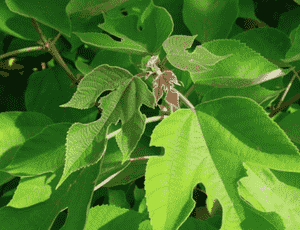
Tapa cloth tree (Broussonetia papyrifera)
Also known as: Aute, Po'a'aha
Another name for the tapa cloth tree (Broussonetia papyrifera) is the paper mulberry. Historically, the inner bark of this tree has been used by various Pacific Island cultures to produce tapa cloth, which is crafted into garments and ceremonial items. Additionally, in China and Japan, the inner bark is valued for making high-quality paper.
In This Article
Attributes of Tapa cloth tree
Lifespan
Perennial
Plant Type
Tree
Plant Height
10 m to 20 m
Spread
9 m to 12 m
Leaf Color
Green Gray Silver
Flower Size
2 cm
Flower Color
Green Yellow Cream Red Orange
Images of Tapa cloth tree
Quickly Identify Tapa cloth tree
1
Distinct bark texture evolves from orange-brown to gray with age.
2
Male flowers in long, slender catkins, while female flowers cluster compactly.
3
Fruits form in spherical clusters with rough purple-red drupes.
4
Leaves vary from oval to lobed with serrated margins, turning yellow-green in fall.
5
Stem is hairy, brownish-red, sturdy, and forms dense clusters.
Scientific Classification of Tapa cloth tree
Phylum
Vascular plants
Class
Dicotyledons
Order
Roses, elms, figs, and allies
Family
Mulberry
Genus
Broussonetia
Species
Tapa cloth tree
Planting and Growing of Tapa cloth tree
Care Difficulty
Easy
Watering Schedule
Every 2 days
Sunlight Requirements
Full sun
Sunshine Duration
6-8 hours
Ideal Temperature
68-86℉
Soil Type
Potting Mix, Peat Mix
Soil pH
6.5-7.5
Fertilizer Type
Balanced
Pruning Season
Spring, Summer
Pruning Area
Branches, Leaves
Pruning Frequency
2 times a year
Repotting Season
Spring
Pot Type
Plastic, Ceramic
 How to Water Tapa cloth tree?
Broussonetia papyrifera, commonly known as paper mulberry, requires moderate watering. Water until the top 5-10 cm of soil is moistened, ensuring it's not soggy. This keeps roots hydrated without drowning them.
What are the symptoms of an underwatered Tapa cloth tree?
›
What should I do if my Tapa cloth tree is not getting enough water?
›
What are the symptoms of an overwatered Tapa cloth tree?
›
How to save an overwatered Tapa cloth tree?
›
 What Are the Sunlight Requirements for Tapa cloth tree?
Broussonetia papyrifera prefers full sun to partial sun. Ideal lighting fosters robust growth and increases the plant's resistance to environmental stressors, enhancing its overall health.
What is the ideal light for Broussonetia papyrifera?
›
How to achieve ideal lighting conditions?
›
What benefits does ideal lighting provide?
›
 What Is the Ideal Temperature Range for Tapa cloth tree?
Broussonetia papyrifera thrives best in temperatures ranging from 68°F to 86°F. This range supports optimal growth and development, ensuring the plant remains healthy and vibrant. Growing the plant outside this range may slow growth or cause stress.
 What Soil is Best for Tapa cloth tree?
Broussonetia papyrifera requires soil with excellent drainage to prevent root rot. A well-drained soil ensures that excess water doesn't accumulate, which can be detrimental to the plant's roots. This need is crucial because it helps the plant absorb nutrients efficiently while maintaining a healthy root system. The plant prefers soils with moderate fertility to thrive without over-nutrification. Soil that is too rich can lead to excessive leaf growth at the expense of the plant's structure and health. Ensuring a balanced nutrient environment helps maintain optimal growth and reduces the risk of diseases. Aeration is vital for Broussonetia papyrifera because it facilitates root growth and improves oxygen flow. The presence of oxygen in the soil promotes healthy microbial activity, which supports nutrient uptake. This requirement ensures that the soil remains loose and suitable for vigorous root development.
 How to Fertilize Tapa cloth tree?
For Broussonetia papyrifera, using an all-purpose liquid fertilizer, dilute it to half-strength to prevent root burn. Apply approximately half a liter per square meter of soil surface to ensure adequate nutrients without overloading the plant.
 How to Prune Tapa cloth tree?
Broussonetia papyrifera tends to grow aggressively, so regular pruning to maintain its size and shape is crucial. Trim back any overgrown branches, especially those disrupting the desired shape of the tree. Pruning fosters tree vigor by reducing competing branches and encouraging the growth of new shoots. Focus on allowing evenly spaced branches, which ensures that sunlight penetrates the canopy, supporting new growth. These are non-productive shoots that drain energy from the tree. Promptly remove suckers and water sprouts during each pruning session to maintain the tree’s health and energy toward productive growth.
 How to Propagate Tapa cloth tree plant?
1
Harvest seeds from mature Broussonetia papyrifera fruits. Ensure the seeds are fully ripe for better germination success.
2
Choose healthy stems, cut them into sections with a few leaves, and ensure each cutting is free from disease to promote healthy growth.
3
Place seeds or cuttings in trays filled with a moist seed-starting mix or soil. Provide warmth and moisture to facilitate rooting and germination.
 How to Repot Tapa cloth tree plant?
1
Watch for signs like roots growing out of the pot's drainage holes or the plant becoming top-heavy and unstable. These are clear indicators that your Broussonetia papyrifera is in need of repotting. It's best to tackle this task in spring or autumn when the plant's growth cycle is taking off, reducing the risk of shock.
2
Select a pot that's one size larger than the current one, with ample drainage holes. This ensures that excess water can escape, thus preventing root rot, which is common when plants linger in soggy conditions. A pot with proper drainage promotes healthy root development and vigorous growth.
3
Opt for well-draining loamy soil that mimics the plant's natural habitat. This soil type helps to retain necessary moisture while allowing excess water to drain away. Proper soil choice supports healthy root growth and helps deter common issues like root rot.



