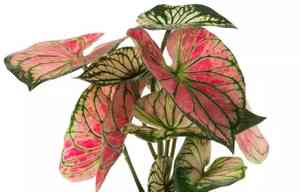
Heart of jesus(Caladium bicolor)

Heart of jesus (Caladium bicolor)

Also known as: Wild eddo, Elephant’s ear

The plant you're asking about is the caladium, also known as "Heart of Jesus," "angel wings," or "elephant ear" due to its delicate, heart-shaped leaves. Originally from South America, caladiums are now extensively cultivated around Lake Placid, Florida. They are celebrated every year at the Caladium Festival, making them a beloved local highlight.

Attributes of Heart of jesus

Lifespan
Perennial
Plant Type
Herb
Plant Height
15 cm to 61 cm
Spread
30 cm to 61 cm
Leaf Color
Green White Red Yellow Variegated Gold
Flower Size
10 cm to 13 cm
Flower Color
White Green Yellow

PlantJoy - Identify plants with a snap

Identify and diagnose plants, get toxicity alerts, and explore safety guides for all types of fungi.

Try for Free

Images of Heart of jesus

Heart of jesus(Caladium bicolor)

Quickly Identify Heart of jesus

1
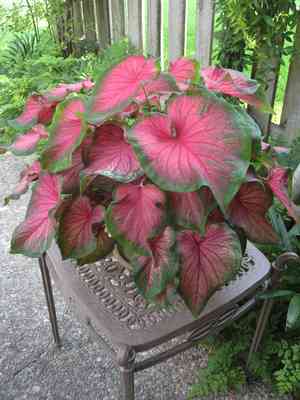
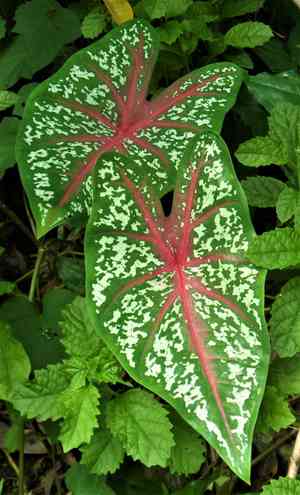
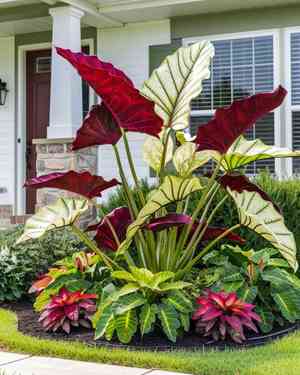
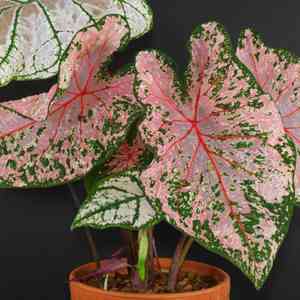
Large, arrow-shaped leaves with variegation in white, pink, red, and various shades of green.
2
Petioles are elongate, peltate, and erect, equal to or longer than the leaf.
3
Inconspicuous, greenish-white flowers on a spadix within a yellow-green tubular spathe.
4
Small, non-showy green berries maturing to pale tan, hidden behind prominent foliage.
5
Fruits form in clusters on a spadix, containing several tiny seeds, less than 0.5 inches in diameter.

Scientific Classification of Heart of jesus

Phylum
Vascular plants
Class
Monocotyledons
Order
Water plantains and allies
Family
Arum
Genus
Angel wings
Species
Heart of jesus

Planting and Growing of Heart of jesus

Care Difficulty
Hard
Watering Schedule
Every 8 days
Sunlight Requirements
Partial sun
Sunshine Duration
6-10 hours
Ideal Temperature
70-85℉
Soil Type
Potting Mix, Peat Mix
Soil pH
6.5-7.5
Fertilizer Type
Balanced
Pruning Season
Spring, Summer
Pruning Area
Branches, Leaves
Pruning Frequency
2 times a year
Repotting Season
Spring
Pot Type
Plastic, Ceramic

water icon How to Water Heart of jesus?

Caladium bicolor thrives in soil that is consistently moist but never waterlogged. Pour approximately 250 ml of water until moisture is evenly distributed through the soil without pooling. Ensure the top inch of soil remains slightly damp between waterings.
What are the symptoms of an underwatered Heart of jesus?
What should I do if my Heart of jesus is not getting enough water?
What are the symptoms of an overwatered Heart of jesus?
How to save an overwatered Heart of jesus?
More About Watering Techniques Group

sunlight icon What Are the Sunlight Requirements for Heart of jesus?

Sunlight Requirements: Partial sun, Full shade
Duration of light: 2-6 hours of sunlight
Partial sun provides the perfect balance of light, allowing Caladium bicolor to maintain vibrant foliage and prevent leaf burn. This environmental condition ensures it remains robust and aesthetically pleasing.
What is the best lighting for Caladium bicolor?
What are the solutions to ensure ideal lighting conditions?
What benefits can the plant gain from ideal lighting?
More About Sunlight Requirements Techniques Group

temperature icon What Is the Ideal Temperature Range for Heart of jesus?

Ideal Temperature: 70 ~ 85℉
Caladium bicolor thrives in warm and humid conditions, where the temperature ranges between 70°F and 85°F. This temperature range provides the optimal environment for robust growth and vibrant leaf coloration. At these temperatures, the plant can efficiently carry out photosynthesis, leading to healthy leaf production and vibrant patterns that are characteristic of this species.

soil icon What Soil is Best for Heart of jesus?

Soil type: Loam, Sandy loam
Soil PH: 6.5 ~ 7.5
Caladium bicolor thrives in soil that ensures adequate drainage, preventing water stagnation which could lead to root rot. Well-drained soil maintains healthy root and plant structure. This plant prefers soil abundant in organic matter. The organic material helps retain moisture and nutrients, allowing the plant to grow vibrant foliage with bright colors. While drainage is crucial, the soil must still retain some moisture. Caladium bicolor benefits from consistently moist soil, which supports continuous growth and leaf development. More About Soil Group

fertilize icon How to Fertilize Heart of jesus?

Fertilizer type: Balanced
When fertilizing Caladium bicolor, it is essential to consider the plant's size and the growth stage. During the growing season, apply liquid fertilizer mixed in a concentration that won't scorch its delicate leaves. Typically, a quarter strength of an all-purpose balanced liquid fertilizer is sufficient. However, always follow the manufacturer's instructions for precise amounts to ensure optimal nutrient supply. More About Fertilizing Techniques Group

prune icon How to Prune Heart of jesus?

Pruning Time: Spring, Summer
Be cautious not to remove too many healthy leaves at once. Caladium bicolor relies on its leaves for energy through photosynthesis. Removing too many can stress the plant and hinder its growth. Caladium bicolor exudes a thin sap that can be irritating to some people. Wearing gloves is advisable during pruning to avoid skin irritation. Before and after pruning, always sanitize your tools. A simple solution of half bleach and half water works well to kill any bacteria or fungal spores that might be lingering.

propagate icon How to Propagate Heart of jesus plant?

Propagate Time: Spring,Summer
1
Identify healthy tubers with visible growth buds. Tubers should be plump and free from signs of rot or disease, ensuring they have the vitality needed to establish new plants.
2
Using a sterilized knife, carefully cut the tubers ensuring each section has at least one bud. Precision during this step reduces the risk of harming the tuber, enhancing the chance of successful propagation.
3
Place the cut sections into well-draining soil. Ensure buds are facing upwards and cover with soil lightly. Proper planting depth and orientation are crucial for optimal growth and health of the new plants.

repot icon How to Repot Heart of jesus plant?

Repotting frequency: Every 1-2 years
1
Caladium bicolor should be repotted when you notice roots protruding from the drainage holes, or the plant's growth appears stunted, usually indicating it's root-bound. Another signal is when the leaves start to droop despite good watering and lighting conditions, suggesting the soil is compacted or depleted of nutrients. Ideally, aim for repotting during the growing seasons of spring or summer for optimal recovery and growth.
2
Select a pot that is 1-2 inches larger in diameter than the current one to accommodate root growth. Ensure the pot has adequate drainage holes, which prevents waterlogged soil and root rot. A pot made of a breathable material like terracotta is preferable as it promotes airflow to the roots, maintaining a healthy root environment essential for vibrant foliage.
3
Choose a well-draining potting mix that retains some moisture but allows excess water to escape freely. A mix containing peat or coco coir, combined with perlite or sand, is ideal. This combination fosters an aerated soil environment that supports healthy root development and nutrient uptake, key factors for the plant's lush growth and vibrant leaf coloration.
More About Repotting Techniques Group

PlantJoy - Identify plants with a snap

Find the best spots for them to optimize their health, simply using your phone.

Try for Free

Toxicity of Heart of jesus

Is Heart of jesus toxic to humans?

The heart of Jesus plant carries a name suggestive of purity; however, it is in fact poisonous. Similar to other *Caladiums*, its sap can be intensely irritating when ingested or even when it merely comes into contact with the skin. A painful and itchy rash occurs upon contact. This rash represents the internal discomfort experienced by individuals who consume it, manifesting in their mouths and along the digestive tract. In addition to considerable pain and irritation, this can result in severe nausea, excessive drooling, vomiting, diarrhea, and often significant swelling. It is essential to keep this plant away from children.

Is Heart of jesus toxic to cat?

Although named Heart of Jesus (Caladium bicolor), this plant is moderately hazardous to cats. When the leaves are chewed, they release toxic calcium crystals that can irritate the delicate soft tissues in the mouth, resulting in swelling of the throat and tongue. In severe cases, this may lead to breathing difficulties. It is crucial to contact a veterinarian promptly, as they can effectively address this situation.

Is Heart of jesus toxic to dog?

The Heart of Jesus plant exhibits moderate toxicity to dogs. Its attractive foliage regrettably harbors calcium oxalate crystals, which can become lodged in your dog's skin and oral tissues, resulting in significant irritation and swelling of the tongue. If ingested, the symptoms may manifest as excessive drooling, difficulty swallowing, and vomiting.

Identify toxic plants for your safety

Learn which plants are harmful to you and your pets, and make informed choices for a safer home!

Try for Free
WARNING
The judgment on toxicity and danger is for reference only. We DO NOT GUARANTEE any accuracy of such judgment. Therefore, you SHALL NOT rely on such judgment. It is IMPORTANT TO SEEK PROFESSIONAL ADVICE in advance when necessary.
More About Toxic Techniques Group