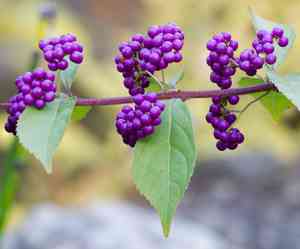
Purple beautyberry (Callicarpa dichotoma)
Also known as: Beautyberry
The Purple beautyberry (Callicarpa dichotoma) is a shrub known for its vibrant berries, commonly grown in gardens. It is originally from East Asia, specifically native to China, Japan, and Korea. The plant's berries attract various small wildlife.
In This Article
Attributes of Purple beautyberry
Lifespan
Perennial
Plant Type
Shrub
Plant Height
1 m to 3 m
Spread
90 cm to 1.5 m
Leaf Color
Green
Flower Size
1 cm to 2.5 cm
Flower Color
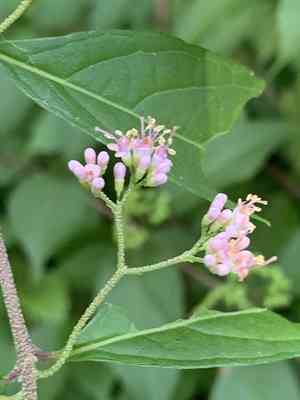
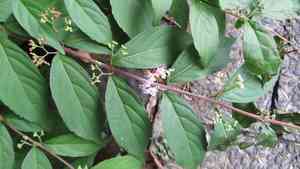
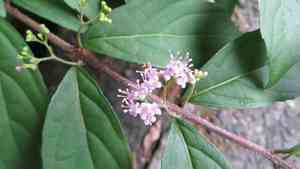
Pink White
Images of Purple beautyberry
Quickly Identify Purple beautyberry
1
Deciduous, rounded shrub reaching 3-4 feet (90-120 cm) in height and spread.
2
Clusters of small, vivid purple berries adorn branches after foliage drops.
3
Slender stem with distinctive reddish color, arching gracefully.
4
Distinct pinkish-lavender, star-like flowers bloom from June to August.
5
Smooth, fleshy lilac-violet berries in clusters persist into early winter.
Scientific Classification of Purple beautyberry
Phylum
Vascular plants
Class
Dicotyledons
Order
Mints plantains olives and allies
Family
Mint
Genus
Beautyberries
Species
Purple beautyberry
Planting and Growing of Purple beautyberry
Care Difficulty
Easy
Watering Schedule
Every 4 days
Sunlight Requirements
Full sun
Sunshine Duration
4-6 hours
Ideal Temperature
60-75℉
Soil Type
Potting Mix, Peat Mix
Soil pH
5.5-7.5
Fertilizer Type
Balanced
Pruning Season
Spring, Summer
Pruning Area
Branches, Leaves
Pruning Frequency
2 times a year
Repotting Season
Spring
Pot Type
Plastic, Ceramic
 How to Water Purple beautyberry?
For Callicarpa dichotoma, ensure the soil is moderately moist. Water until the soil is evenly saturated, but do not let it become waterlogged. Typically, about 500 ml per watering should suffice, adjusting slightly according to seasonal conditions and soil type.
What are the symptoms of an underwatered Purple beautyberry?
›
What should I do if my Purple beautyberry is not getting enough water?
›
What are the symptoms of an overwatered Purple beautyberry?
›
How to save an overwatered Purple beautyberry?
›
 What Are the Sunlight Requirements for Purple beautyberry?
Callicarpa dichotoma flourishes best in conditions with full sun to partial shade, receiving around 6-8 hours of sunlight per day. This range promotes strong growth, vibrant berries, and robust overall health.
More About Sunlight Requirements Techniques→
What is the ideal lighting condition for Callicarpa dichotoma?
›
How can you achieve these ideal lighting conditions?
›
What are the benefits of ideal light exposure?
›
 What Is the Ideal Temperature Range for Purple beautyberry?
Callicarpa dichotoma thrives best in temperatures ranging from 60°F to 75°F. This range creates the perfect environment for optimal growth, supporting healthy foliage and fruit production. Maintaining these temperatures mimics the plant’s natural habitat, encouraging robust development.
 What Soil is Best for Purple beautyberry?
Callicarpa dichotoma thrives in soil that retains moisture well. Consistent moisture allows the plant's roots to absorb nutrients effectively, fostering lush growth and vibrant berry production. Although it requires moisture, the plant also needs soil with good drainage to prevent root rot and fungal infections. Proper drainage ensures healthy root development and overall vitality. Soil rich in organic matter provides the essential nutrients that C. dichotoma needs to blossom profusely. This enriched environment supports vigorous growth and enhances the plant's resilience.
More About Soil→
 How to Fertilize Purple beautyberry?
For Callicarpa dichotoma, a balanced approach to fertilization is key. Use approximately one tablespoon of liquid fertilizer for every gallon of water when applying monthly. This ensures that the plant receives adequate but not excessive nutrients.
More About Fertilizing Techniques→
 How to Prune Purple beautyberry?
For efficient pruning, ensure you have sharp, clean pruning shears to avoid damaging the plant. Dull blades can crush stems rather than cutting them cleanly, which can lead to disease and slow healing. Start by removing any dead or diseased wood back to healthy tissue. Next, trim back any long, straggly branches to a node or fork to encourage better branching. Finally, shape the bush by pruning for an overall balanced form. Spring pruning should be done after the last frost to protect from cold injury. However, dead or damaged branches should be removed as soon as discovered to prevent the spread of disease.
More About Pruning Techniques→
 How to Propagate Purple beautyberry plant?
1
To propagate Callicarpa dichotoma from seed, start by collecting ripe berries. Extract the seeds from these berries and clean them thoroughly to remove any pulp residue.
2
When using cutting propagation, select healthy stems that are semi-ripe. Cut these stems into segments of about 4-6 inches, ensuring each has several nodes for root growth.
3
For division propagation, dig around the base of the plant to lift it from the soil. Carefully divide the root ball into multiple sections, each with several roots attached.
 How to Repot Purple beautyberry plant?
1
Look for signs like roots growing out of drainage holes, soil drying out rapidly, or a lack of new growth. These indicate that Callicarpa dichotoma is ready for a larger space to continue flourishing.
2
Select a pot that's 1-2 inches larger in diameter than the current one. Ensure it has ample drainage holes to prevent waterlogging, which could lead to root rot, detrimental to the plant's health.
3
Opt for a well-drained potting mix high in organic matter. This will ensure proper aeration while retaining enough moisture to support the growth of Callicarpa dichotoma.
Learn More About Purple beautyberry Diseases
Anthracnose
Bacterial Leaf Spot
Black Spot
Chemical Injury
Crown Gall
Damping-off
Downy Mildew
Drought Stress
Fusarium Wilt
Gray Mold
Leaf Curl
Leaf Spot
Mosaic
Nutrient Deficiency
Nutrient Toxicity
Powdery Mildew
Root Rot
Root-knot Nematode
Rusts
Sooty Mold
Spider Mites
Temperature Stress
Thrips Damage
White Mold



