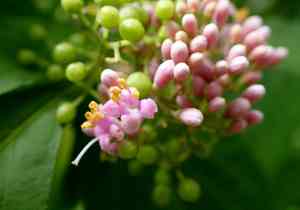
Japanese callicarpa (Callicarpa japonica)
Also known as: Japanese beautyberry, Purple beautyberry
Japanese callicarpa, also known as beautyberry, offers several notable benefits:
1. **Wildlife Attraction**: Its berries serve as a vital food source for birds and deer.
2. **Ornamental Value**: The plant is prized for its striking purple berries and appealing flowers, enhancing garden aesthetics.
3. **Soil Improvement**: It can be effective in rehabilitating poor soils, making it useful for environmental restoration projects.
In This Article
Attributes of Japanese callicarpa
Lifespan
Perennial
Plant Type
Tree
Plant Height
2 m
Spread
1.2 m to 1.8 m
Leaf Color
Green
Flower Size
2 cm
Flower Color
Pink White
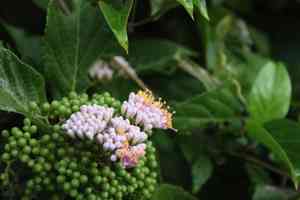
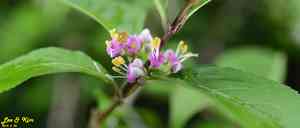
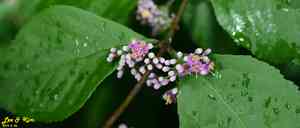
Images of Japanese callicarpa
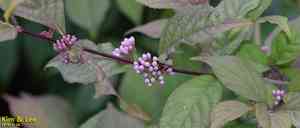
Quickly Identify Japanese callicarpa
1
Oppositely arranged, broad leaves with finely serrated margins, reaching 2-4 inches (5-10 cm) in length.
2
Clusters of small, pink to violet flowers hidden by foliage, measuring 1 to 1.5 inches (2.5 to 3.8 cm) across.
3
Showy, glossy, bright violet berries, each about 1/16 inch (1.5 mm) in diameter, conspicuously clustered.
4
Slender, green stems with star-shaped hairs on young shoots, averaging 0.1 to 0.2 inches (2.5 to 5 mm) in diameter.
5
Relatively slender, upright trunk with smooth bark, featuring circular lenticels for gas exchange, maintain consistent thickness.
Scientific Classification of Japanese callicarpa
Phylum
Vascular plants
Class
Dicotyledons
Order
Lamiales
Family
Mint
Genus
Beautyberries
Species
Japanese callicarpa
Planting and Growing of Japanese callicarpa
Care Difficulty
Easy
Watering Schedule
Every 4 days
Sunlight Requirements
Full sun
Sunshine Duration
6-12 hours
Ideal Temperature
60-75℉
Soil Type
Potting Mix, Peat Mix
Soil pH
5.5-7
Fertilizer Type
Balanced
Pruning Season
Spring, Summer
Pruning Area
Branches, Leaves
Pruning Frequency
2 times a year
Repotting Season
Spring
Pot Type
Plastic, Ceramic
 How to Water Japanese callicarpa?
Callicarpa japonica requires a consistent watering regime, ensuring that the soil remains slightly moist but never waterlogged. Each watering should involve approximately 500ml of water, enough to penetrate and moisten the root zone without oversaturating the soil. Water should be applied evenly, making sure the entire root area receives moisture.
What are the symptoms of an underwatered Japanese callicarpa?
›
What should I do if my Japanese callicarpa is not getting enough water?
›
What are the symptoms of an overwatered Japanese callicarpa?
›
How to save an overwatered Japanese callicarpa?
›
 What Are the Sunlight Requirements for Japanese callicarpa?
Callicarpa japonica prefers full sun to partial sun, ideally around 6-8 hours of sunlight daily. This range supports healthy flowering and lush foliage while preventing foliage damage.
More About Sunlight Requirements Techniques→
What is the best lighting for Callicarpa japonica?
›
How can you mimic these lighting conditions indoors?
›
What are the benefits of providing ideal lighting?
›
 What Is the Ideal Temperature Range for Japanese callicarpa?
Callicarpa japonica thrives best in temperatures ranging from 60°F to 75°F. This range allows the plant to maintain optimal metabolic activities and supports healthy growth patterns. Keeping the plant within this ideal temperature range ensures vibrant foliage and abundant flowering, leading to a healthy and aesthetically pleasing appearance.
 What Soil is Best for Japanese callicarpa?
Callicarpa japonica thrives in well-drained soil which prevents waterlogging and root rot issues. This condition allows roots to access nutrients efficiently, promoting healthy foliage and vibrant berry production. While it appreciates good drainage, this plant also favors soil that can retain some moisture. This balance prevents dehydration during dry spells, supporting sustained growth and berry development. A nutrient-rich soil supports Callicarpa japonica's growth, enhancing leaf vitality and increasing berry yield. Organic matter or compost mixed into the soil can significantly boost its nutrient profile.
 How to Fertilize Japanese callicarpa?
When it comes to fertilizing Callicarpa japonica, it's best to apply a balanced fertilizer. Use approximately 1 cup of a balanced, granular fertilizer per plant each time you fertilize. This will ensure the plant gets a steady intake of the necessary nutrients without being overwhelmed.
 How to Prune Japanese callicarpa?
Begin pruning by removing any dead, damaged, or diseased branches. This will help focus the plant's energy on healthy growth and prevent the spread of disease or decay. Focus on areas where the branches are too dense. Thinning these areas will allow more light and air to penetrate, promoting healthier growth and reducing the risk of fungal infections. After addressing problem areas, shape the plant by trimming branches to maintain a pleasing, natural form. Avoid cutting more than a third of the plant at once to prevent stress.
More About Pruning Techniques→
 How to Propagate Japanese callicarpa plant?
1
To propagate through seeds, start by cleaning the seeds and preparing a well-draining soil mix. Soak the seeds overnight to encourage faster germination before sowing them in seed trays filled with a light, damp soil mixture.
2
Select healthy branches that are semi-hard and cut just below a node. The cuttings should be around 4-6 inches long. Remove the leaves from the lower half of the cutting and dip the cut end in rooting hormone to improve the chances of successful rooting.
3
To divide the plant, carefully lift the mature plant from the soil and gently separate the rootball into two or more sections, ensuring each section has sufficient roots and growth. Replant these divisions into adequately prepared soil immediately.
 How to Repot Japanese callicarpa plant?
1
Callicarpa japonica should be repotted when its roots start to circle the pot, indicating root bound. This is a sign that the plant's growth is restricted and needs more space. React quickly in the spring or autumn when the plant is not in active growth to minimize stress.
2
Choose a pot that is one size larger than the current one and has good drainage holes. This allows for proper root expansion and prevents waterlogging, which is detrimental to the plant's roots. A terra cotta pot is often ideal as it allows the soil to breathe.
3
Opt for a well-draining loamy soil mix. This type of soil ensures that excess water drains away swiftly, reducing the risk of root rot. A balanced nutrient profile in loamy soil supports robust growth and healthier foliage.



