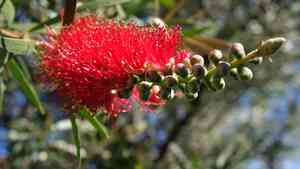
Crimson bottlebrush (Callistemon citrinus)
Also known as: Lemon bottlebrush, Bottlebrush tree
The "crimson bottlebrush" gets its name from its striking, red, brush-like flower spikes, which resemble the cleaning tool known as a bottlebrush. This shrub is often found in wet areas such as swamps and riverbanks. Its flowers are rich in nectar, attracting various bird species. Additionally, the name "citrinus" comes from the citrus-like fragrance released when its leaves are crushed.
In This Article
Attributes of Crimson bottlebrush
Lifespan
Perennial
Plant Type
Shrub
Plant Height
1 m to 5 m
Spread
2.5 m
Leaf Color
Green
Flower Size
4 mm to 6 mm
Flower Color
Red White Pink
Images of Crimson bottlebrush

Quickly Identify Crimson bottlebrush
1
Lanceolate leaves measuring 3 inches (7.6 cm) long and 0.75 inches (1.9 cm) wide, tapering to a sharp tip.
2
Distinctive red stamen flowers, inch-long (2.5 cm) in dense 4-inch (10 cm) bottlebrush-like clusters.
3
Smooth, leathery leaves with a faint citrus fragrance when crushed, especially prominent in young, pinkish leaves.
4
Woody fruit capsules tightly adhering to stems, sessile without a distinct stalk, typically grey or brown.
5
Robust shrub reaching up to 20 feet (6 meters) in height, with grey bark exhibiting deep fissures.
Scientific Classification of Crimson bottlebrush
Phylum
Vascular plants
Class
Dicotyledons
Order
Myrtle order
Family
Myrtle
Genus
Bottlebrushes
Species
Crimson bottlebrush
Planting and Growing of Crimson bottlebrush
Care Difficulty
Easy
Watering Schedule
Every 3 days
Sunlight Requirements
Full sun
Sunshine Duration
4-8 hours
Ideal Temperature
60-80℉
Soil Type
Potting Mix, Peat Mix
Soil pH
6.5-7.5
Fertilizer Type
Balanced
Pruning Season
Spring, Summer
Pruning Area
Branches, Leaves
Pruning Frequency
2 times a year
Repotting Season
Spring
Pot Type
Plastic, Ceramic
 How to Water Crimson bottlebrush?
Water the Callistemon citrinus until the soil feels moist but not waterlogged. Aim for around 500ml per watering, allowing enough moisture to reach the root zone without drowning the plant.
More About Watering Techniques→
What are the symptoms of an underwatered Crimson bottlebrush?
›
What should I do if my Crimson bottlebrush is not getting enough water?
›
What are the symptoms of an overwatered Crimson bottlebrush?
›
How to save an overwatered Crimson bottlebrush?
›
 What Are the Sunlight Requirements for Crimson bottlebrush?
Ideally, Callistemon citrinus should be placed in full sun locations. Adequate light exposure ensures healthy, vibrant blooms, promotes lush foliage, and boosts the plant's resilience against pests and diseases.
More About Sunlight Requirements Techniques→
What are the optimal light conditions for Callistemon citrinus?
›
How can I achieve the ideal lighting conditions for my plant?
›
What benefits does ideal lighting offer to Callistemon citrinus?
›
 What Is the Ideal Temperature Range for Crimson bottlebrush?
The ideal temperature range for Callistemon citrinus is between 60°F to 80°F. Within this range, the plant can thrive and display optimal growth. During this period, the metabolic processes are most efficient, facilitating proper floral development and leaf maintenance.
 What Soil is Best for Crimson bottlebrush?
Callistemon citrinus thrives in well-drained soils that prevent waterlogging. Well-drained soil ensures sufficient aeration around the roots, promoting healthy growth and reducing the risk of root diseases. This plant benefits from a soil rich in organic matter, which provides essential nutrients. Ample nutrients support vigorous leaf and flower development, enhancing the visual appeal of the Bottlebrush. While drainage is crucial, the soil should also retain enough moisture to sustain the plant during dry periods. This balance ensures the plant remains hydrated during sporadic watering sessions.
More About Soil→
 How to Fertilize Crimson bottlebrush?
For Callistemon citrinus, the fertilizer amount should be moderate. Typically, for liquid fertilizer, dilute it to half-strength to avoid root burn. Solid fertilizers require about a tablespoon per plant, but this can vary depending on the soil condition.
More About Fertilizing Techniques→
 How to Prune Crimson bottlebrush?
Begin pruning your Callistemon citrinus by removing any dead, diseased, or damaged wood. Focus on maintaining the plant’s natural shape and encouraging new growth by cutting just above a set of leaves or where a bud emerges. This will help produce beautiful, vibrant blooms in the coming seasons. For shaping, trim back any overly long branches to keep the plant tidy and well-balanced.
More About Pruning Techniques→
 How to Propagate Crimson bottlebrush plant?
1
Begin by collecting mature seeds from the plant. Clean the seeds by removing any surrounding fruit or debris. Soak the seeds in water for 24 hours to enhance germination rates and then sow them in a seed tray filled with a quality potting mix.
2
Select a healthy, disease-free branch from the parent plant. Using sterilized pruning shears, cut a 4 to 6-inch section, preferably with a few leaves. Immediately place the cutting in water to prevent air embolisms while you prepare the rooting medium.
3
Dip the cut end of the cutting into rooting hormone powder. Prepare a pot with a moist, well-draining mix. Insert the cutting into the medium, ensuring the lowest set of leaves is above the soil surface, and firmly press the soil around the base of the cutting.
 How to Repot Crimson bottlebrush plant?
1
Callistemon citrinus needs repotting when you notice the plant outgrowing its current pot, roots poking out of drainage holes, or a decline in its growth and vitality. Early spring or summer is ideal for repotting, allowing the plant ample time to adjust and thrive again.
2
Opt for a pot one size larger than the current one, with good drainage to prevent waterlogging. Ceramic or terracotta pots are excellent; they allow the soil to dry more evenly, reducing the risk of root rot and promoting healthy plant growth.
3
Use a well-draining potting mix, ideally one formulated for native plants. This soil provides the right balance of moisture retention and drainage, ensuring the roots stay healthy and receive adequate nutrients without becoming waterlogged.



