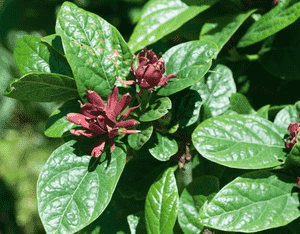
Carolina allspice(Calycanthus floridus)

Carolina allspice (Calycanthus floridus)

Also known as: Common sweetshrub, Carolina spicebush

The Carolina Allspice (Calycanthus floridus) is known for its reddish-brown flowers that emit a delightful banana-strawberry scent. The leaves release a pleasant aroma when crushed, and the bark also produces a nice fragrance, making all parts of this plant suitable for potpourris.

Attributes of Carolina allspice

Lifespan
Perennial
Plant Type
Shrub
Plant Height
1.8 m to 2.5 m
Spread
1.8 m to 3.5 m
Leaf Color
Green Yellow Gray Gold Silver
Flower Size
4 cm to 7 cm
Flower Color
Red Brown Black

PlantJoy - Identify plants with a snap

Identify and diagnose plants, get toxicity alerts, and explore safety guides for all types of fungi.

Try for Free

Images of Carolina allspice

Carolina allspice(Calycanthus floridus)

Quickly Identify Carolina allspice

1
Oppositely arranged, grey-green leaves with pubescent undersides
2
Solitary maroon flowers with a fruit-like scent of pineapple, strawberry, and banana
3
Urns-shaped fruit with wrinkled, leathery exterior enclosing small achenes
4
Stem with a smooth, glabrous surface, emitting a distinctive aroma when bruised
5
Bark with thin texture, distinctive lenticels, and spicy fragrance upon disturbance

Scientific Classification of Carolina allspice

Phylum
Vascular plants
Class
Dicotyledons
Order
Laurales
Family
Sweetshrub
Genus
Sweetshrub
Species
Carolina allspice

Planting and Growing of Carolina allspice

Care Difficulty
Easy
Watering Schedule
Every 4 days
Sunlight Requirements
Partial sun
Sunshine Duration
4-8 hours
Ideal Temperature
50-77℉
Soil Type
Potting Mix, Peat Mix
Soil pH
6.5-7.5
Fertilizer Type
Balanced
Pruning Season
Spring, Summer
Pruning Area
Branches, Leaves
Pruning Frequency
2 times a year
Repotting Season
Spring
Pot Type
Plastic, Ceramic

water icon How to Water Carolina allspice?

The suggested amount of water for Calycanthus floridus is around 500 ml per watering session. The soil should remain consistently moist but not waterlogged. Water until you notice slight moisture on the surface, ensuring the soil isn't drenched beyond its saturation point.
What are the symptoms of an underwatered Carolina allspice?
What should I do if my Carolina allspice is not getting enough water?
What are the symptoms of an overwatered Carolina allspice?
How to save an overwatered Carolina allspice?

sunlight icon What Are the Sunlight Requirements for Carolina allspice?

Sunlight Requirements: Partial sun
Duration of light: 3 to 5 hours
Calycanthus floridus thrives in partial sun, where it receives balanced light, enhancing photosynthesis and bloom production while reducing stress.
What is the best lighting condition?
How can I achieve ideal lighting?
What are the benefits of ideal lighting?

temperature icon What Is the Ideal Temperature Range for Carolina allspice?

Ideal Temperature: 50 ~ 77℉
For optimal growth of Calycanthus floridus, maintaining a temperature range between 50°F and 77°F is recommended. This range supports enzymatic activities and physiological processes essential for its growth. Maintaining these temperatures ensures healthy flowering and leaf development.

soil icon What Soil is Best for Carolina allspice?

Soil type: Loam, Sandy loam
Soil PH: 6.5 ~ 7.5
Calycanthus floridus thrives in well-draining soil, which helps prevent root rot and waterlogging. This soil condition allows the roots to breathe and uptake essential nutrients more effectively, leading to a healthier and more vigorous plant. Incorporating organic matter into the soil is vital for Calycanthus floridus. It enhances the soil's fertility, provides a balanced supply of nutrients, and improves moisture retention, which supports sustained growth. Ensuring the soil maintains moderate moisture levels is crucial for Calycanthus floridus. While the plant does not tolerate soggy conditions, consistent moisture supports its lush foliage and robust flowering.

fertilize icon How to Fertilize Carolina allspice?

Fertilizer type: Balanced
When fertilizing Calycanthus floridus, aim to apply a balanced liquid fertilizer at a concentration of half the manufacturer's recommended rate. This ensures that the plant gets an adequate supply of nutrients without the risk of over-fertilization. Adjust according to plant response and seasonal growth variations.

prune icon How to Prune Carolina allspice?

Pruning Time: Spring, Summer
Start by using well-maintained, sharp pruning shears to avoid causing any damage to the branches. Identify dead, diseased, or crossing branches first and remove them completely, cutting back to healthy wood. Focus on maintaining an open structure by thinning out crowded branches to improve air circulation. To shape, prune back selective branches just above a leaf node to encourage new growth in a preferred direction. Work systematically from the base of the plant upwards while regularly stepping back to gauge the overall symmetry of the bush.

propagate icon How to Propagate Carolina allspice plant?

Propagate Time: Spring,Early spring,Late spring
1
Harvest seeds in autumn once the seed pods are mature and dry. Ensure seeds are clean and dry before storage for winter or immediate sowing.
2
Select healthy stems from a mature Calycanthus floridus during the growing season. Make sure each cutting is about 6 inches long and remove the leaves from the lower half.
3
Before dividing a mature plant, prepare a well-draining soil mix. Enrich the soil with organic matter to support the growth of newly divided plant sections.

repot icon How to Repot Carolina allspice plant?

Repotting frequency: Every 2 to 3 years
1
Calycanthus floridus, or the Carolina Allspice, should be repotted when its roots have filled the current container, or when drainage issues start arising. A clear signal can be yellowing leaves due to restricted root growth. Spring is the best time for this, as it allows the plant to recover and establish itself in the new pot before the growing season kicks into full gear.
2
For a successful repotting, choose a pot that is only slightly larger than the current one, perhaps 2 inches wider in diameter. This ensures the roots have room to grow but not so much space that the soil retains excessive moisture. The material of the pot should provide good drainage, like terracotta, which offers breathability and prevents root rot.
3
Calycanthus floridus thrives in a well-draining soil rich in organic matter. The ideal mix would consist of loamy soil with an added portion of perlite or coarse sand to improve drainage. This combination ensures a balance of moisture retention and air circulation, which helps in robust root development and overall health.

PlantJoy - Identify plants with a snap

Find the best spots for them to optimize their health, simply using your phone.

Try for Free

Toxicity of Carolina allspice

Is Carolina allspice toxic to humans?

The Carolina allspice is a poisonous plant that can cause adverse effects if ingested by humans. The symptoms may vary in severity but can be moderate. The seeds are the toxic components, harboring dangerous substances known as calycanthine. Consuming these seeds may lead to symptoms like convulsions, a drop in blood pressure, and myocardial depression, which impacts heart tissue. Given that this plant is frequently utilized as an ornamental feature in gardens, there is a risk that children may inadvertently eat the seeds.

Is Carolina allspice toxic to cat?

Carolina allspice poses a low toxicity risk to cats. If cats ingest a significant amount of the plant's seeds, they may become poisoned. Contact with carolina allspice can result in cats displaying signs of physical unease, although the intensity of symptoms may differ based on the quantity consumed. Should there be any indications of poisoning, it is essential for cat owners to promptly consult a veterinary professional to address any potential health complications. Although the toxicity is mild, preventing cats from accessing the seeds of carolina allspice remains crucial for their safety and well-being.

Is Carolina allspice toxic to dog?

Carolina allspice carries a mild risk of toxicity for dogs. Although the plant itself is not overly toxic, consuming substantial amounts, especially the seeds, can result in poisoning in dogs. If a dog eats a considerable quantity of carolina allspice seeds, it may show symptoms such as vomiting, diarrhea, and lethargy. These symptoms suggest possible poisoning and necessitate immediate veterinary care. Dog owners need to be alert and ensure their pets do not have access to areas where carolina allspice flourishes to prevent accidental ingestion of its toxic parts. Should a dog ingest any parts of carolina allspice, it is essential to seek timely treatment at a veterinary clinic to safeguard the health and welfare of the animal.

Identify toxic plants for your safety

Learn which plants are harmful to you and your pets, and make informed choices for a safer home!

Try for Free
WARNING
The judgment on toxicity and danger is for reference only. We DO NOT GUARANTEE any accuracy of such judgment. Therefore, you SHALL NOT rely on such judgment. It is IMPORTANT TO SEEK PROFESSIONAL ADVICE in advance when necessary.

