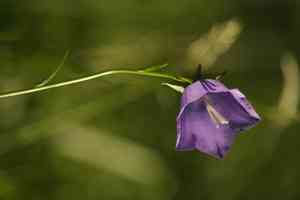
Peach-leaved bellflower(Campanula persicifolia)

Peach-leaved bellflower (Campanula persicifolia)

Also known as: Willow bellflower, Narrow-leaved bellflower

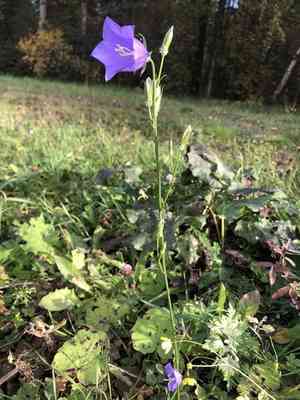
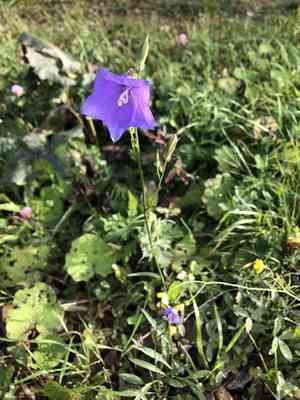
Peach-leaved bellflower (Campanula persicifolia) is a perennial plant that grows up to 91 cm tall and features bell-shaped flowers in shades of violet-blue to white, blooming in summer.

**Ideal Growing Conditions**:
1. **Light**: Both full sun and partial shade are suitable.
2. **Soil**: Prefers well-draining, moderately fertile soil with a neutral to slightly alkaline pH.
3. **Water**: Regular watering to maintain consistent moisture, but avoid waterlogged conditions.

**Maintenance Tips**:
1. **Deadheading**: Remove spent flowers to promote further blooming and prevent unwanted self-seeding.
2. **Mulching**: Apply mulch to conserve soil moisture and reduce weed growth.
3. **Fertilization**: Light fertilization in early spring with a balanced fertilizer.
4. **Division**: Divide the plants every 3-4 years to keep them vigorous.
5. **Pest Control**: Watch for pests like aphids, slugs, and snails, and manage them with suitable measures.

These guidelines will help ensure your Peach-leaved bellflower remains healthy and blooms beautifully.

Attributes of Peach-leaved bellflower

Lifespan
Perennial
Plant Type
Herb
Plant Height
30 cm to 1 m
Spread
25 cm to 30 cm
Leaf Color
Green
Flower Size
2 cm to 5 cm
Flower Color
Blue White Purple

PlantJoy - Identify plants with a snap

Identify and diagnose plants, get toxicity alerts, and explore safety guides for all types of fungi.

Try for Free

Images of Peach-leaved bellflower

Peach-leaved bellflower(Campanula persicifolia)

Quickly Identify Peach-leaved bellflower

1
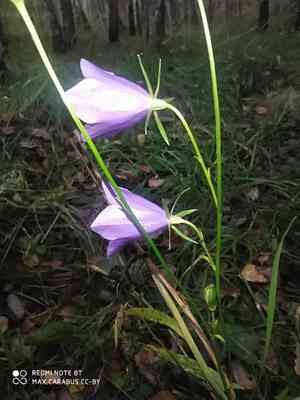
Bell-shaped flowers in white to lavender-blue hues
2
Basal rosettes of lance-shaped, peach-like leaves
3
Distinctive conical fruit with pronounced venation
4
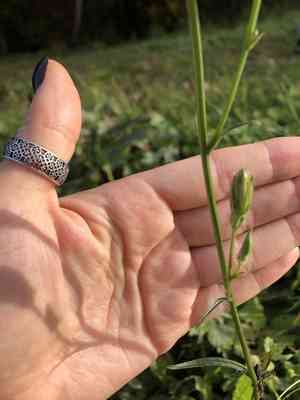
Erect, unbranched stem with angular structure
5
Smooth stem, 0.1-0.2 inches (2.5-5 mm) thick, green to purplish

Scientific Classification of Peach-leaved bellflower

Phylum
Vascular plants
Class
Dicotyledons
Order
Asterales
Family
Bellflower
Genus
Bellflowers
Species
Peach-leaved bellflower

Planting and Growing of Peach-leaved bellflower

Care Difficulty
Easy
Watering Schedule
Every 4 days
Sunlight Requirements
Full sun
Sunshine Duration
6-10 hours
Ideal Temperature
60-70℉
Soil Type
Potting Mix, Peat Mix
Soil pH
6.5-7.5
Fertilizer Type
Balanced
Pruning Season
Spring, Summer
Pruning Area
Branches, Leaves
Pruning Frequency
Once a year
Repotting Season
Spring
Pot Type
Plastic, Ceramic

water icon How to Water Peach-leaved bellflower?

For Campanula persicifolia, the watering amount should be sufficient to moisten the root zone thoroughly without making the soil soggy. A good rule of thumb is to aim for about 500 ml per watering session. Adjust based on the plant's environment and pot size, ensuring the soil is kept moist but not waterlogged.
What are the symptoms of an underwatered Peach-leaved bellflower?
What should I do if my Peach-leaved bellflower is not getting enough water?
What are the symptoms of an overwatered Peach-leaved bellflower?
How to save an overwatered Peach-leaved bellflower?

sunlight icon What Are the Sunlight Requirements for Peach-leaved bellflower?

Sunlight Requirements: Full sun, Partial sun
Duration of light: 4 to 6 hours
An ideal light range for Campanula persicifolia involves partial sun to full sun. This encourages optimal growth and blooming, maximizes photosynthesis, and enhances floral productivity and resilience.
What is the ideal lighting?
How can I provide the ideal light?
What benefits can ideal lighting bring?

temperature icon What Is the Ideal Temperature Range for Peach-leaved bellflower?

Ideal Temperature: 60 ~ 70℉
The ideal temperature range for growing Campanula persicifolia is between 60 and 70 degrees Fahrenheit. These temperatures provide a comfortable environment for the plant's growth and flowering phase. Maintaining this range will ensure optimal health and robust blossoming.

soil icon What Soil is Best for Peach-leaved bellflower?

Soil type: Loam, Sandy loam
Soil PH: 6.5 ~ 7.5
Campanula persicifolia thrives in well-drained soil that prevents waterlogging and root rot. Ensuring the soil drains well will help the plant develop strong roots and abundant blooms, essential for a healthy growth cycle. This plant benefits from nutrient-rich soil with ample organic matter. Incorporating compost or leaf mold enriches the soil, providing essential nutrients and supporting robust growth and vibrant flowers. The soil should hold enough moisture to sustain the plant between waterings, avoiding extremes of dryness or saturation. Proper moisture retention encourages steady growth and prevents stress-related issues.

fertilize icon How to Fertilize Peach-leaved bellflower?

Fertilizer type: Balanced
For Campanula persicifolia, an appropriate amount of fertilizer is crucial for its optimal growth. During the growing season, use a balanced liquid fertilizer diluted to half strength once a month. Ensure the soil is moist before applying to prevent root burn.

prune icon How to Prune Peach-leaved bellflower?

Pruning Time: Spring, Summer, Autumn
Start by looking for faded or spent blooms along the stems. Removing these deadheads encourages the plant to focus its energy on developing new buds. Carefully cut the stems back to a set of healthy leaves. This ensures that you are maintaining an even and compact shape for your plant while encouraging future growth. As fall approaches, trim the plant down to its basal leaves. This not only tidies up the appearance but also helps the plant conserve energy for the next growing season.

propagate icon How to Propagate Peach-leaved bellflower plant?

Propagate Time: Spring, Early spring
1
Begin by filling the seed trays with a well-draining potting mix. Sow the seeds thinly across the surface and lightly cover them with fine compost or vermiculite. Maintain a constant temperature and moisture level to aid germination.
2
To propagate via division, dig up mature Campanula persicifolia plants gently. Use a sharp knife or spade to separate the plant into smaller sections, ensuring each section has roots attached. Replant the divisions promptly at the same depth they were growing before.
3
Once the seedlings have grown several pairs of leaves, they are ready for transplanting. Carefully move them to individual pots or a prepared garden bed, spacing them adequately to promote healthy growth. Water them gently to settle the soil around their roots.

repot icon How to Repot Peach-leaved bellflower plant?

Repotting frequency: Every 2-3 years
1
The ideal time to repot Campanula persicifolia is when growth becomes stunted and roots appear through drainage holes. These signs indicate that the plant is root-bound and requires more space to thrive.
2
Opt for a pot that is 1-2 inches larger in diameter than the current one, with adequate drainage holes. This prevents water from pooling, which can lead to root rot and ensures that the plant has enough room to grow.
3
Select a light, well-drained potting soil enriched with organic matter. This type of soil provides essential nutrients while allowing excess water to drain, promoting healthy root development and preventing waterlogging.

PlantJoy - Identify plants with a snap

Find the best spots for them to optimize their health, simply using your phone.

Try for Free