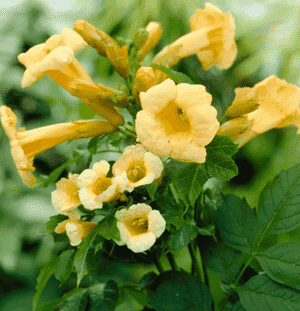
Trumpet creeper (Campsis radicans)
Also known as: Cow itch vine, Trumpet vine
The trumpet vine, also known as Campsis radicans, is a climbing plant native to eastern North America. Its vibrant, trumpet-shaped flowers attract hummingbirds, drawn to the nectar inside.
Attributes of Trumpet creeper
Images of Trumpet creeper

Quickly Identify Trumpet creeper
Scientific Classification of Trumpet creeper
Planting and Growing of Trumpet creeper
 How to Water Trumpet creeper?
 What Are the Sunlight Requirements for Trumpet creeper?
 What Is the Ideal Temperature Range for Trumpet creeper?
 What Soil is Best for Trumpet creeper?
 How to Fertilize Trumpet creeper?
 How to Prune Trumpet creeper?
 How to Propagate Trumpet creeper plant?
 How to Repot Trumpet creeper plant?
Toxicity of Trumpet creeper
Is Trumpet creeper toxic to humans?
Trumpet creeper possesses a mild level of toxicity if its flowers or leaves are consumed. Individuals may experience symptoms such as abdominal discomfort or digestive issues. Additionally, direct contact with the sap of this plant can result in skin irritation. This irritation, also referred to as contact dermatitis, may manifest as redness, swelling, and itching. Instances of poisoning from trumpet creeper are most often due to unintentional contact or accidental ingestion, as these vines are commonly found in gardens.
Is Trumpet creeper toxic to cat?
The trumpet creeper is recognized as a toxic species for cats, emphasizing the need for caution among feline caregivers. If a cat inadvertently consumes any portion of the trumpet creeper, it can lead to poisoning, given that all parts of the plant are deemed harmful. Following ingestion, a cat might show signs of discomfort or illness, yet the exact toxic compounds causing these symptoms remain unidentified. Therefore, it is crucial for cat owners to stay alert, and if their pet exhibits any abnormal behaviors after exposure to trumpet creeper, they should urgently seek professional veterinary assistance.
Is Trumpet creeper toxic to dog?
The trumpet creeper is identified as a toxic plant for dogs. If any part of this plant is consumed, dogs can suffer poisoning, as all its components are deemed poisonous. Ingestion may lead to symptoms such as gastrointestinal disturbances, vomiting, and diarrhea. It is essential for dog owners to closely supervise their pets and restrict their access to trumpet creeper, particularly since dogs may unintentionally consume portions of the plant. If a dog does ingest trumpet creeper, it is critical to obtain prompt veterinary assistance to secure the best possible outcome for the animal.



